
Spirit and Frontier again close to a merger
Talks between the two American low-cost airlines for a deal by the end of the month have begun. They had already attempted the deal in the past without succeeding
by Mara Monti
Key points
After numerous attempts in the past, the merger between the two American low-cost airlines Spirit Airlines and Frontier Airlines may be close. Talks have restarted after the risks of a third bankruptcy of Spirit within a year. To avoid this umpteenth downfall, Spirit secured a $100 million credit line to extend flight operations over the Christmas period, financing that probably prevented the airline from closing down for good. This risk had been rumoured in the market for days to the extent that competing airlines were preparing to cover the low-cost airline's operations in the event of a stoppage.
The resumption of merger talks
Both carriers have announced that they have resumed merger talks, but currently lack a final agreement, which could come by the end of the month. The two airlines had previously planned a deal in 2022, but the process was blocked by a higher bid from JetBlue. The deal was then blocked in 2024 by the Baiden administration having raised a competition issue and so Spirit remained an independent airline. Frontier did not give up and has since submitted two more bids, both rejected by Spirit Airlines, including the $2.16 billion bid, claiming it was below the terms previously discussed.
Spirit close to third bankruptcy in a year
Spirit Airlines filed for bankruptcy twice in 2025 and could have gone out of business if it had not received a new round of financing, $50 million allocated immediately, while another $50 million is pending pending a revival plan or potential sale. This has allowed the company to continue operations, although it is still in a dire financial situation.
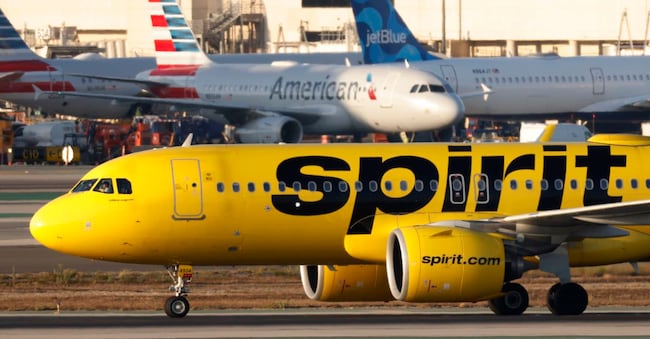
Although Frontier itself is having a difficult time financially, Spirit Airlines is undoubtedly the weaker of the two. Therefore, a possible merger with Frontier could lead to the disappearance of the Spirit Airlines brand and its yellow aircraft.
Merger numbers, who wins and who loses
From Frontier's point of view, the main advantage of a merger is resources, namely aircraft, personnel and airport gates: Spirit Airlines currently operates only 102 aircraft, while Frontier has a fleet of 172 aircraft. If Frontier were to acquire Spirit, it would end up with 279 aircraft, making it comparable in size to JetBlue as the sixth largest airline in the US. Both Spirit and Frontier use exclusively Airbus A320 family aircraft, employing A320neo and A321neo with Pratt & Whitney engines.


