
Spirit, green light for agreement between Airbus and Boeing
Breakdown of US supplier's production units completed for a deal worth $8.3 billion
by Mara Monti
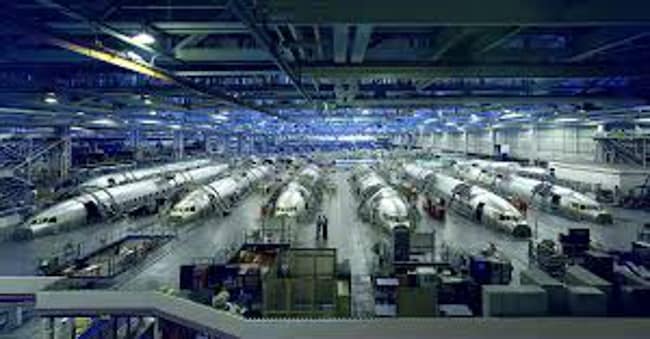
The split of Spirit Aerosystems into two parts between Airbus and Boeing was finalised after months of work in defining which plants would change hands and to whom. Spirit is the main supplier to the world's aircraft manufacturers and had been identified as one of the causes of the poor quality performance of the Boeing 737 Max, as in the case of the reverse-mounted bolts in the tailgate of the Alaska Airlines plane that only a fortuitous chance did not cause a fatal accident.
The deal, announced in July last year, has a total value of $8.3 billion and represents a major reorganisation of the commercial aerospace supply chain, giving Airbus and Boeing direct control over parts of their supply chain. Boeing, for its part, announced that it had completed the acquisition of Spirit AeroSystems for $4.7 billion through a reverse merger since the manufacturer had outsourced Spirit itself in 2005, which at that stage was wholly owned by Boeing: its operations in Oklahoma and Kansas passed to the Onex fund. Spirit produces fuselages for the 737 and the main structures for the 767, 777 and 787 Dreamliner models. From the plants taken over by Airbus in North Carolina, Northern Ireland, Scotland, France and Morocco come parts for the A350, A220, A320 and A321.
The transition to Airbus also includes 400,000 employees. "This milestone marks a special moment for all of us at Airbus. We are proud to welcome more than 4,000 new colleagues, with whom we will open a new chapter in our industrial operations by taking on critical activities for our commercial aircraft programmes," commented Florent Massou, executive vice president operations for Airbus' Commercial Aircraft division, in a statement.
The handover of the divisions to the two manufacturers became protracted because inearly December 2024, the US antitrust authority, the Federal Trade Commission (FTC), declared that the deal could proceed on condition that Boeing completed the divestments negotiated earlier in the year with Airbus and Composites Technology Research Malaysia and that Spirit remained a supplier to Boeing's competitors for future military aircraft programmes. The US antitrust authorities were concerned that Boeing's acquisition of Spirit would give it unfair influence over competitors. In October, Boeing won approval from the European antitrust authority after agreeing to sell some of Spirit's assets to address competition concerns. Under the agreement, 15,000 Spirit employees will join Boeing of which about 6,000 are members of the International Association of Machinists and Aerospace Workers those who staged a seven-week strike last year.


