Ready-to-wear spoons, clothes made from kitchen towels, zips and buttons
Ellen Hodakova Larsson's collections are based on the second-hand samples she manages to intercept. Giving life to pieces that interpret planned obsolescence.
5' min read
5' min read
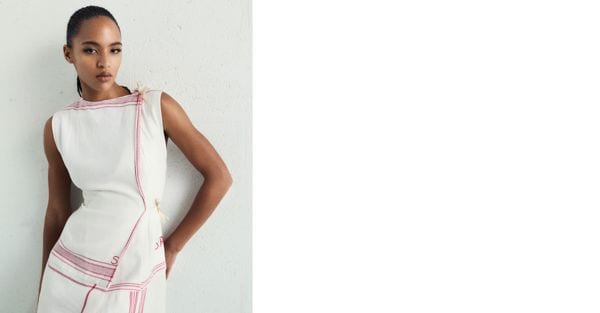
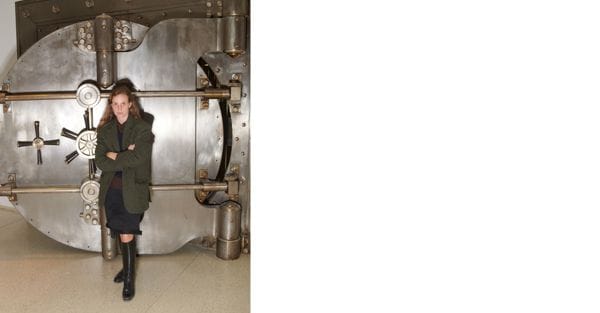
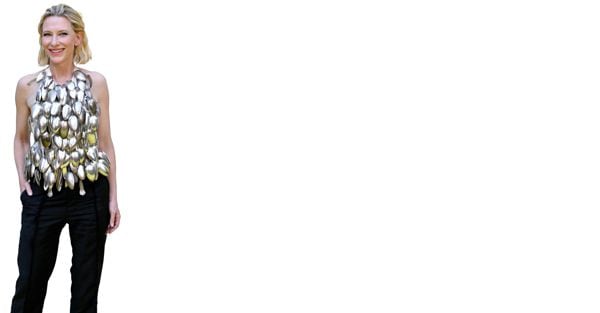
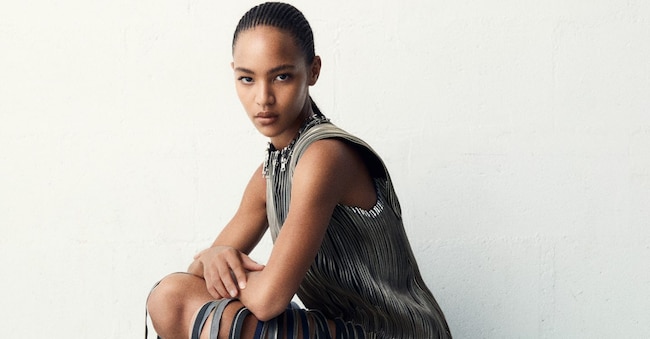
If it is true that need sharpens the wit, for Ellen Hodakova Larsson ingenious reinvention could be the driving force behind desire. The Swedish-born designer, winner of the Lvmh 2024 Prize, transforms unsold items destined for the dump into extraordinary designs. Imagine a shimmering dress made of hundreds of zips, a shapely corset constructed from spliced black and brown leather riding boots, or a sack dress assembled from hundreds of mother-of-pearl buttons. "It all stems from my interest in communication and how we can start conversations using old stories," says Larsson, explaining his vision. Larsson's unmistakable clothes and sustainable approach make her a leader for a generation of creatives determined to reuse rather than create objects out of new materials. Many stars have asked to become her ambassadors. When Cate Blanchett showed up at a Los Angeles premiere last year in a Hodakova top adorned with 102 antique silver spoons, the look went viral and WWD called the designer "the Greta Thunberg of fashion". Rosé, the star of K-pop group Blackpink, recently appeared on The Tonight Show Starring Jimmy Fallon in a reworked jumper from the Argyle brand. Actresses Emma Corrin and Saoirse Ronan also wore creations by Hodakova. "Working with these brilliant people and fitting into their narrative, creating tension and contrast, is a dream," Larsson admits.
At 32, with his face free of make-up and wearing one of his reworked men's shirts, Larsson exudes freshness. As we speak, he is in his Stockholm studio finalising the F/W 25-26 collection, just presented at Fashion Week in Paris. With a small team of eight he carries on his work with determination and a sense of humour (one of his best-selling pieces is a top made from discarded padded bras, 580 euros).
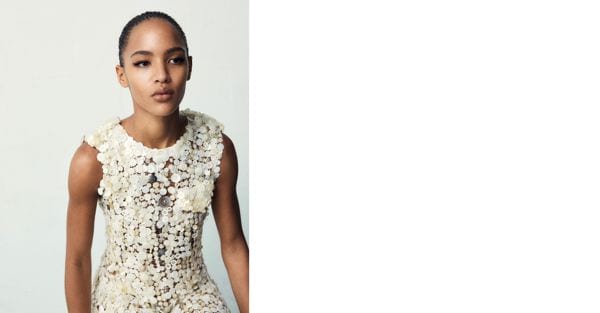
It all starts with the analysis of stock purchased in Sweden from second-hand clothing suppliers, carried out using artificial intelligence tools trained to scan fabric composition, colours and dimensions - the production of the garments is done by hand and machine. Its commitment to upcycling and repurposing places it within a tradition ranging from pioneers Paco Rabanne and Martin Margiela to newcomers such as Bode and Bettter. The cutlery used in the A/W 23-24 collection is in tune with the work of contemporary artist Ann Carrington, in whose imagination Duchamp, Magritte and Warhol occupy a prominent place.
Larsson is constantly questioning how objects can be recalibrated, both to achieve the best effect and to work on a commercial scale. "The development of models happens through trial and error, and I work with people with great intuition, so I can find ideas on the spot," he explains. For the fashion shows, he collaborates with fashion designer Lotta Volkova, who has previously worked with Demna at Vetements and Balenciaga, both brands that excel at turning the mundane into the extraordinary: "Lotta has a special way of bringing reality into her work by finding elements that look interesting.
Today, Hodakova has 24 wholesalers, including Ssense and Dover Street Market globally. "Among the up-and-comers, Hodakova offers a particularly interesting point of view and offers a very contemporary take on the history of clothing," says a spokesperson for the buying team at 10 Corso Como, among the brand's retailers. "The customer is smart, educated, and we see the brand on the level of Maison Margiela, Comme des Garçons and Junya Watanabe." At the launch, Larsson also created his own website, which features both special pieces made to order and an ongoing line, with layered stocking skirts (€320), Belt Zip bags made using multiple belts (€2,400) and tops with shoulder pads (€380). It is the amount of unsold items accessible that determines the number of pieces for each item.