
'Sport is based on merit and is a unique vehicle for equalisation'
Elisa Molinarolo, Olympic pole vault athlete

3' min read
3' min read
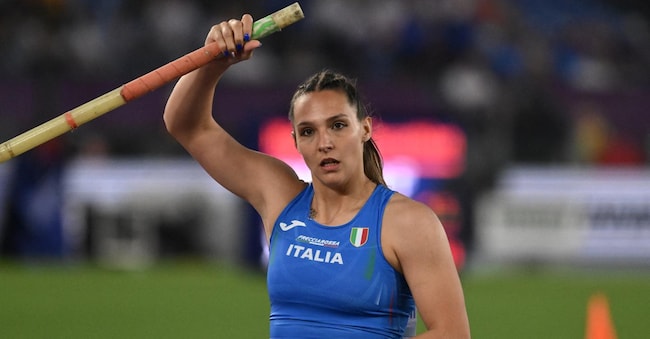
Elisa Molinarolo will this morning attempt to qualify for the final of the pole vault competition at the Paris Games. The Gold Flames athlete, who turned 30 last 29 January, currently 17th in the world ranking and 19th in the 2024 world top list, is at her second Olympic participation, after the Tokyo Games held in 2021. It was precisely the Japanese Summer Games that represented the classic sliding door for Molinarolo. 'At the time,' she told Sole 24 Ore, who caught up with her a few days ago, before her trip to France, 'I was an amateur athlete and worked to support myself in a marketing agency. I had never yet taken part in a world championships, but in the months leading up to the Japanese event I set several personal bests, an exploit that allowed me to snatch the last measure needed for Olympic qualification. I was 32nd in the world'. After Tokyo, Molinarolo joined the Gruppo Sportivo Fiamme Oro in 2022, continuing to raise her performance until reaching 4.68 metres in 2023, leading Italy into a world final in Budapest for the first time. "Without that result in Tokyo, maybe I would have stopped. Instead, thanks to joining the sports group of the Polizia di Stato, I became a professional athlete and this allowed me to train with continuity and fully prove my worth'. Elisa Molinarolo's passion for sport, on the other hand, is congenital, as she has practised artistic gymnastics from a young age, winning the junior national title in vaulting in 2009, and then moving on to pole vaulting, following in the footsteps of Russian champion Yelena Isinbayeva.
Today Molinarolo trains in Padua under the supervision of Marco Chiarello. But how has the sporting scene changed around you in recent years?
A lot goes into the presence of women. In artistic gymnastics there has always been a preponderant female component, but in recent times I have noticed that the male component has also grown a lot. In athletics then, gender equality is now a given. I only have to look around me in the gym. In the pole vault in Italy at a high level today there are two women and one man, and we have achieved through results, for example, that in the Italian championships our competition is no longer relegated to marginal times. Sport, based on merit, is a vehicle for equalisation without equal. Also from a technical point of view. Apart from Duplantis, who practically makes a sport of himself, jumping 6.25, the standard distance between men and women was between one metre and one metre 20 centimetres. I would say this is almost physiological, and for gold medals in the women's sphere, they jumped 4.90 metres.
What is the world of military sports groups and the environment of the State Police like in terms of gender equality?
I would say that the male percentage of colleagues is high, but I see around me more and more female colleagues who are also starting to perform functions not strictly related to the classic office. So we are also seeing important changes in this area.


