
Spotify turns 20: how Europe's only Big Tech revolutionised music
In April 2006, Daniel Ek founded the company that saved the industry. The platform's impact on record companies, artists and listeners

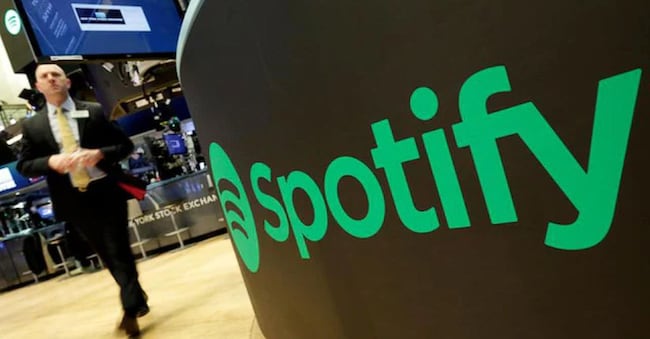
Sometimes revolutions start on the periphery of the empire. On 23 April 2006, for example, in Stockholm, two Swedish nerds, Daniel Ek and Martin Lorentzon, founded one of the countless start-ups for the legal enjoyment of online music that were gaining headlines in the technology pages of newspapers at the time. Legal online music enjoyment, at the time, seems almost a contradiction in terms: there was Napster, the peer-to-peer philosophy and Mp3 file-sharing that made a century of record production available to anyone with a PC and a connection. Free of charge, in the face of copyright and discography, now in free fall in turnover: in 2014 it will hit an all-time low in revenues, at USD 14 billion.
Even Steve Jobs tried to patch things up in 2001, with iTunes and the invention of the iPod, but the legal download model, where you spend 0.99 cents to download a song, a 'virtual good' in the form of a file, does not seem to be catching on. The two Swedish nerds, however, are going a step further than Apple: transforming music from a commodity into a service, opening a 'portal' (in the form of an app) in everyone's smartphone through which you can potentially access the enjoyment of all the world's repertoires. In the first instance for free behind advertisements, then - for the most demanding users - through subscription. It is the invention of 'liquid music', just like the society where we are all customers theorised by Zygmunt Bauman. It is the dawn of Spotify, the world's leading music streaming platform with 751 million active users of which 290 million are Premium. The only real European Big Tech, capable of introducing a new business segment - streaming - to the market and of outdoing giants such as Apple, Amazon and Alphabet in this particular field of comparison.
When it became operational in 2008, the former start-up made an irresistible rise, partly due to investments in its capital by the majors Universal Music, Sony Music and Warner Music. Ten years later it went public on Wall Street, through a direct listing that valued it at $26.5 billion, more than the entire industry market was worth at the time. Bubble? The story of the next eight years says no: in 2024 finally arrives the first profitable balance sheet, while 2025 Spotify closed it with 17.1 billion euros in turnover (+10% on the previous year) and a net profit of 2.2 billion. The company, even compared to the post-listing euphoria, has done its homework: in 2023 it has initiated a 1,500-employee cutback plan to the current 7,000 workers. It has recalibrated its strategy on the original podcasts, moving beyond the season of windfall investments and focusing on truly profitable projects.
The Spotify revolution, however, you see most of all by analysing the impact it has had on the global record industry. From being the industry on the brink that it was 20 years ago, in 2025 - with $31.7 billion in revenues - the record industry threaded its 11th consecutive year of growth. Streaming has now been the most important segment of the market for nine years: in 2025 it moved $22 billion, half of which came from Spotify. Thanks to Ek and Lorentzon's creature, music has gained the appeal of a tech sector in the eyes of investors. The latest in the series is the $9.4bn offer from Pershing Square for Universal Music. In short: speaking in cold numbers, compared to a music market that is expected to be worth something like USD 200 billion in 2035 (at least according to Goldman Sachs), Spotify already boasts a capitalisation of USD 110 billion. All this with the impact of artificial intelligence still to be assessed, in the year in which Ek left the role of CEO to devote himself to his First Matter fund with which, among other things, he invested in Helsing, a German start-up that produces military drones. Enraging a few artists who demanded the removal of their music from the platform.
There is no doubt that Spotify has saved the record industry, but for music listeners and producers is it better or worse than in the era of the physical record? Listeners today, for the price of EUR 11.99, have access to a kind of Music Babel Library: practically all published titles are accessible. There is so much, even too much: the side effect of this hyper-availability is that one risks becoming a superficial listener. For those who make music, with the streaming model the wall of access to distribution has fatally fell: anyone can publish and, persevering, try to build a career. But once you are published, it is by no means certain that you will be able to live off your music. To make it big, you may have to abide by the rules of the algorithm. Aware of the fact that a musician today makes his money mainly from live activity. And to say that the Beatles became the Beatles when they decided to quit gigging and concentrate on composing. In the age of Spotify, who could afford that?


