Dublin Spring Carnet in the St Patrick's Festival
The countdown to the St Patrick's Day Festival, which will begin on 14 March and will have as its theme for this classic celebration of Irish belonging, creativity and pride the Roots, is about to end. So the vibrant Docklands harbour area, from which migrant ships sailed to the Americas, with its many warehouses of goods converted into offices, new accommodation facilities and digital company headquarters, and above all the success of the EPIC Museum of Irish Immigration not far from the cross-sectional hotbed of events that is CHQ Dublin, can only be the starting point for diving into the contemporary world of the Irish capital. To walk on the sciantosa silhouette of the Samuel Beckett Bridge is, in fact, to feel all its vibrations. After the parade on Tuesday 17, which will feature 12 large floats set up by as many independent companies with more than 3,000 participants, you can go and rediscover the everyday hospitality and kindness of Dublin. Here's where and how.
From Kehoes to Chapter One for the alcohol and food scene
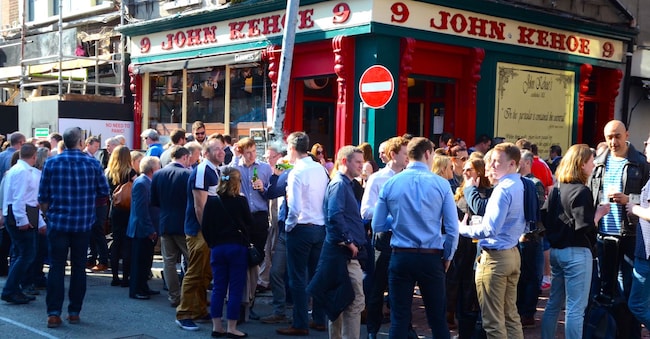
They all took off their jackets and rolled up their shirt sleeves, indifferent to the weather conditions of the day. But don't think that only males join Kehoes for a pint of Guinness at the end of the working day. In this Victorian-style Heritage Bar, in fact, women also participate in the sundowner ritual, as has been the case since 1803 when the first licence was granted. Younger, though not by much, is the covered market with its Victorian exterior on George Street, that Arcade where one can buy fresh and colourful arrangements in the flourishes of vintage furniture and mirrors, leather gloves and jumpers made of pure Irish sheep's wool, find vintage clothes in the independent ateliers, and many collectables. Between the iron columns of the central gallery, open like the rest of the market since 1881, you can also enjoy a variety of gastronomic experiences. If you fancy a seafood lunch, King Sitric Seafood Bar in Howth Harbour is the most renowned restaurant for lobster and other seafood delicacies caught in the Atlantic Ocean. The Embassy Grill, on the other hand, serves traditional fried cod served with the inevitable chips. For Michelin-starred cuisine, the best choice is Chapter One in the elegant setting created by Michael Viljanen, who has been awarded two Michelin stars and also focuses on the artwork on the walls and among the tables.
At Trinity College between cricket, refectory, Old Library like Bram Stoker
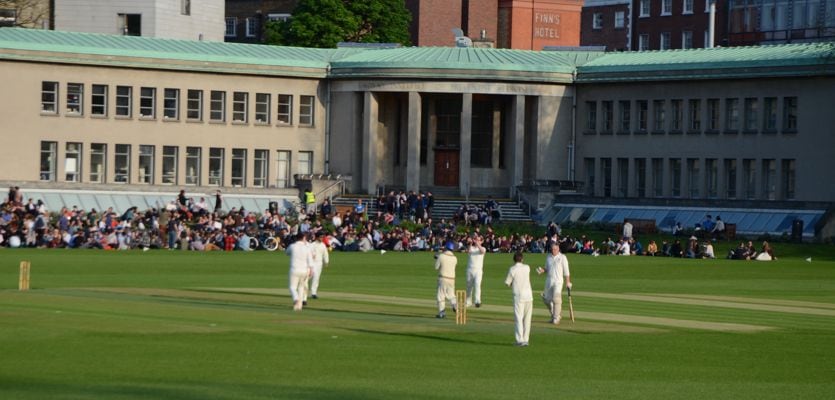
Another scene, this time a sporting one, absolutely to be experienced on sunny days, sitting on the green lawn at the edge of the playing field imitating the students, is to watch the cricket matches that are regularly played in the Trinity College courtyard. First, however, to understand how ancient and prestigious the cultural and social history of this city and national educational institution is, one should always take part in the student-led Trinity College Trail that leads in the footsteps, through cobbled walkways, of none other than Oscar Wilde, Bram Stoker and Samuel Beckett, even inside the Dining Hall and the museum building. An essential stop is the ancient Library. In fact, it houses over two hundred thousand volumes in its Long Room with its oak shelves and in particular the famous Book of Kells, an illuminated manuscript containing the four New Testament gospels in Latin embellished in its 680 pages with illustrations of wild and domesticated animals, mythological creatures, and celestial symbolism (you can also book a private close-up viewing). To see the Rose Garden in all its splendour, however, will have to wait a couple of months yet.
Also vintage shopping in Drury, Grafton and Henry Street
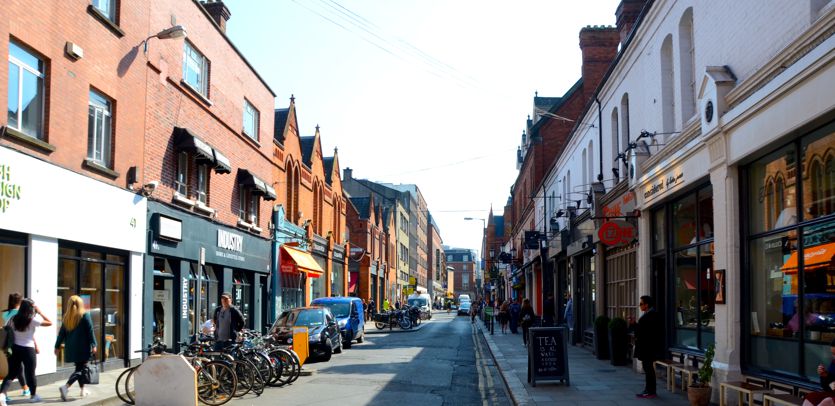
Drury Street is the street for shopping. After drinking a cup of coffee or matcha latte at Kaph accompanied by chocolate pastries at Cocoa Atelier, you're ready to indulge in a shopping spree, perhaps of clothes that have had previous lives, displayed in the window of Om Diva, which also offers the creations of young Irish designers, while at Industry & Co Home you can find very trendy home furnishings, as well as Irish Design Shop showcasing all the local creativity. Not far away is Grafton Street where, in the rooms of Brown Thomas, there is a wealth of homeware, just a few steps away from the historic Bewley's Cafe where you can have tea with scones while observing the embrace between the light and the stained glass windows designed by artist Harry Clarke, as well as the many sculptures present. Crossing the pretty Ha'Penny Bridge, the oldest pedestrian bridge over the River Liffey dating back to 1816 (until 1919 you had to pay half a penny to cross it, a toll from which it derives its name), you reach Henry Street to discover Arnotts, a shopping eldorado of all kinds, with the Ilac Shopping Centre and the Jervis Shopping Centre as company. Instead, Penneys is popular for dictating the elegance of Dubliners for generations. And after so much effort, you'll treat yourself to dinner at Winding Stair to also enjoy the view of the river so beloved of the unforgettable U2: Bono Vox might just be your neighbour at the table!
Amazing botanical gardens at Glasnevin and Kilmacurragh
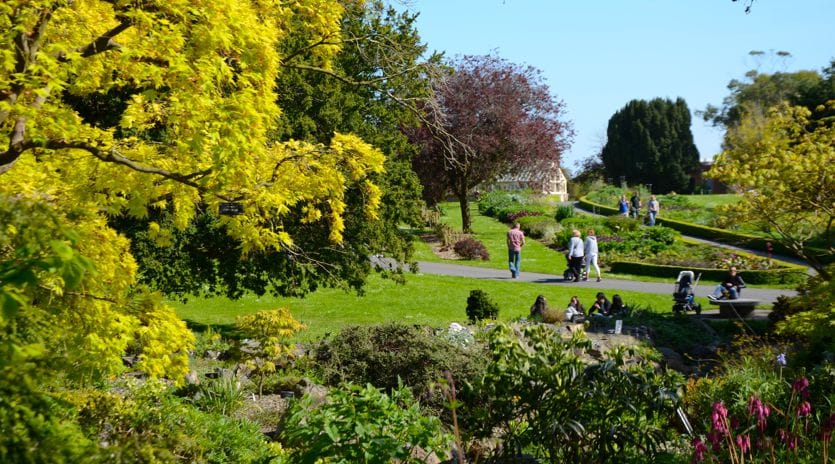
At the National Botanic Gardens in Glasnevin, one is overwhelmed by the Dubliners' passion for their trees. Here, in fact, even though it is only three kilometres from the city centre, it feels like being in a naturalistic oasis thanks to the presence of no less than fifteen thousand species from all five continents. The iconic Turner Curvilinear Range greenhouse and the Great Palm House, examples of conservation architecture in which one strolls enraptured among tropical orchids (many artists set up their easels to paint them, in particular Susan Sex, whose prints are also on sale in the book shop), bonsai trees, bamboos, cacti and succulents. The glass building for palm trees, in particular, was built in 1883 in Glasgow and then transported to Glasnevin. The Alpine House also attracts fans of typical mountain and alpine plants, but it is worth taking part in the gardener-guided tours in order not to miss any of the botanical totems such as Turner's Oak or the Evodia Tetradium daniellii native to Korea. At the Garden Tea Room it is a great pleasure to have lunch surrounded by foliage, and then possibly continue the garden tour to the Kilmacurragh National Botanic Gardens, which are located within an estate converted into parkland during the 19th century by Thomas Acton with David Moore and his son Sir Frederick, whose 19th-century botanical exuberance was expressed mainly in the planting of conifers and rhododendrons.