
Stable attendance figures in 2025 and growth in spending on ancillary services
The summer months are the most important, but the sector manages to extend the season right through to Christmas

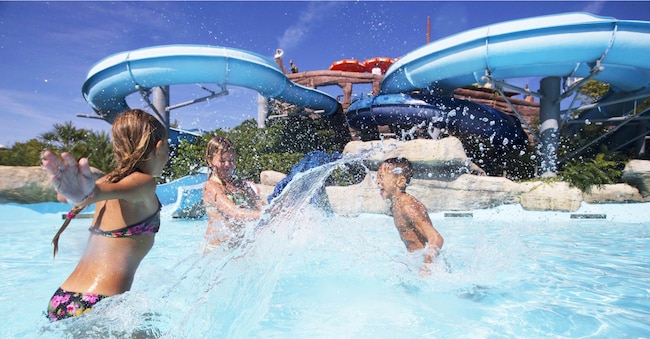
2025 was a good year for amusement parks in Italia: just over 20.6 million admission tickets were sold, generating revenue of around 306 million euros. Compared with 2024, a record year for the sector, there was a slight decline (-2.2%) in visitor numbers, whilst spending remained broadly stable. This was partly due to the rainy weather from northern to southern Italia, which affected visitor numbers during the early part of summer 2025. However, the year was characterised by an increase in average spending per visitor (+2%) and average takings per opening day (+1.4%). This is Assoparchi’s analysis of the official data from the SIAE Annual Report.
“The figure showing the increase in average per-capita spending confirms a strategic direction that is now also evident in the Italian market,” explains Luciano Pareschi, president of AssoParchi. The sector is moving towards a more advanced model – one already well-established in major international parks – in which growth is measured not only in terms of volume, but also in terms of the ability to enhance the value of the visitor experience. Food & beverage, merchandising, priority passes and other ancillary services are becoming key drivers for enhancing the visitor experience, diversifying revenue streams and meeting a demand that is increasingly focused on personalisation. Compared with other countries, however, ticket prices in Italia remain significantly lower: a choice that helps to preserve the parks’ accessibility and keep them open to a wide audience.”
There are around 300 such facilities operating across Italy, and SIAE figures highlight a polarised market, with a few large theme parks capable of attracting millions of visitors each year and qualifying in every respect as genuine tourist attractions: among the examples cited by SIAE are Gardaland, Mirabilandia, Leolandia and Aquafan in Riccione in the north, and MagicLand and Zoomarine in Lazio. The picture is more fragmented in the south, with the exception of a few major attractions on the national scene such as Etnaland in Sicily. Thus, Italia’s 50 most-visited parks in 2025 recorded a 0.7 per cent increase in visitor numbers compared with 2024, partly driven by the effects of the three-year investment plan for 2025–2027, worth 500 million euros, which by 2025 had already resulted in new themed areas, attractions, immersive technologies and green solutions, helping to fuel public interest in the leading parks.
The strategy to reduce seasonal fluctuations continues, with summer remaining the peak season, particularly as all water parks are open, and August being the most important month in terms of visitor numbers and revenue. Also worth noting is the performance in June, which recorded a promising 26.8 per cent increase in admissions and a 32.1 per cent rise in spending compared with 2024. The autumn months, now crucial for many theme parks, also performed very well: October, with Halloween, remains the period with the highest average per-capita spending of the year and continues its upward trend, recording a 9.5 per cent increase in admissions and a 28.5 per cent rise in spending. December also performed well; with its Christmas theming, it recorded a 12.1 per cent increase in visitor numbers and a 31.1 per cent rise in spending.
The sector generates €8 billion in related economic activity and directly employs 25,000 workers, including both permanent and seasonal staff, a figure that rises to 60,000 when the entire supply chain is taken into account. These figures confirm the strategic role of the parks as drivers of development, employment, seasonal stabilisation and attractiveness for the regions in which they operate.

