Milan Cortina

Standing ovation by the IOC for the Italian Winter Games

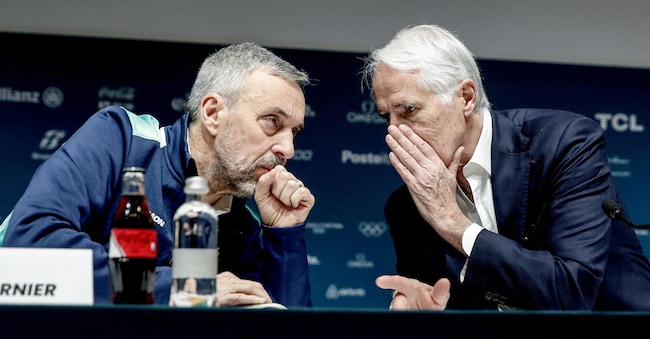
The president of the Milano Cortina Foundation, Giovanni Malagò, and CEO Andrea Varnier drew up an economic balance sheet of the five-ring event

by Marco Bellinazzo

(da sx) Andrea Varnier e Giovanni Malagò durante l’incontro su 'Le Olimpiadi di Milano Cortina 2026' presso il main media center al MiCo a Milano, 22 febbraio 2026. ANSA/MOURAD BALTI TOUATI

4' min read

Translated by AI
Versione italiana

4' min read

Translated by AI
Versione italiana

Milan-Cortina 2026 gives Italia a clear picture: the winter edition worked, from an organisational and commercial point of view, more than expected. But it leaves open - as always in five-ring events - the big question about the structural and economic legacy for the territories involved.

If the record number of blue medals fuelled a never-before-seen popular participation, the organisational machine of the Foundation led by CEO Andrea Varnier and chaired by Giovanni Malagò grinded out numbers that, by the standards of the Winter Games, are hard to compare.

Loading...

Tickets and fan village

"We reached 1.3 million tickets sold, about 80 per cent of the total capacity, a number higher than our expectations," Varnier pointed out at the closing press conference, explaining how demand exploded especially in the last week, with 68,000 tickets sold yesterday alone.

The average ticket sell-out and stand occupancy rate stood at 88%, with peaks of 100% in the two ski mountaineering sessions, the Olympic debut which sold out. Speed skating and short track also performed well (95%), and just below - at 93% - figure skating and hockey.

The origin of the audience is also interesting: only 37% are from Italia, while 63% come from the rest of the world. Germany (15%) and the United States (14%) are the most present foreign markets, confirming that the Games have attracted an international audience well above initial estimates.

To the presences in the stadiums must then be added those in the fan villages set up in the Olympic cities, which exceeded half a million visits, and the 300 thousand people who attended the evening shows at the Arch of Peace. Numbers that tell of a broad and transversal popular adhesion, also supported by the boom in television audience: "Two thirds of the Italians who followed us are between 15 and 24 years old," added Malagò. "An impressive figure, also driven by the results of the Azzurri".

Standing ovation of the IOC

The other frame of this closure comes from the session of the International Olympic Committee, which met on the morning of 22 February in Milan. "They all stood up, it doesn't seem trivial to me," said an emotional Malagò, speaking of a standing ovation never before recorded.

A gesture that goes beyond the symbolic celebration: it represents a certificate of trust from the IOC towards an organisational model - the one in Italia - that has withstood the impact of the complexities of these years, including pandemics, inflation and infrastructural slowdowns. "They have been complicated years, we have never hidden behind alibis," Malagò said. "But I think this has been a formidable spot for our country."

Provisional Economic Budget

In economic terms, the perimeter of the Foundation - which, according to the dictates of the IOC, manages domestic sponsorships, ticketing and merchandising - achieved its objectives.

The number of domestic partners increased to 56, of which eight were premium partners, allowing them to cut 550 million in revenue, after a start-up held back by Covid, commodity price inflation and conflicts such as the war in Ukraine.

As far as ticketing is concerned, the figure of 1.3 million tickets already sold is expected to rise to 1.5 million with the Paralympics, for a revenue of more than 200 million euro. Sales of official products are also excellent: mascots sold out in one week, over 100,000 pieces.

The Foundation's 'lifetime' budget has been revised to 1.7 billion from the original 1.4 billion. The IOC will contribute 570 million Euros, the share of TV rights and global sponsorships given back to the organisation. To these must be added the indirect contributions - services valued in the accounts - which will bring the total Cio amount over the $925 million foreseen in the hosting contract.

Finally, some 200 million will come from the purchase of goods and services by the Foundation through the extraordinary commissioner of the Paralympics, Giuseppe Fasiol, to whom the government provided a public endowment of 448 million in 2024.

On the legacy infrastructure front, at the end of January, only 40 out of 98 projects had been completed by Simico. Therein lies the most complicated aspect of the Olympic operation. It will therefore be crucial for the works to be completed, even with the extended timeline, in order for them to have a positive impact on the territory. An impact that for now the research centres measure at more than EUR 5.3 billion as a legacy of the Games.

Rome 2040 hypothesis?

The success of the Games reopens hitherto unthinkable scenarios. 'Rome's candidature for 2040 can certainly be reopened,' admits Malagò. It is too early to talk about it, but the president lists two decisive factors: the capital's Olympic history and the presence of the Olympic Stadium, an indispensable requirement for a summer candidacy. A dossier that will only return to the table after Brisbane 2032 and in the light of the new geopolitical balances. But the momentum of Milan-Cortina, for the first time, seems to have put Italia back on track.

Copyright reserved ©

Brand connect

Loading...

Newsletter

Notizie e approfondimenti sugli avvenimenti politici, economici e finanziari.

Iscriviti

Tutto mercato WEB