Stanley Kubrick: his personal archive is up for auction
From the twins’ costumes in *The Shining* to the mystical ‘Star Child’ in *2001: A Space Odyssey*, the fascination with collectable cinema continues

Key points
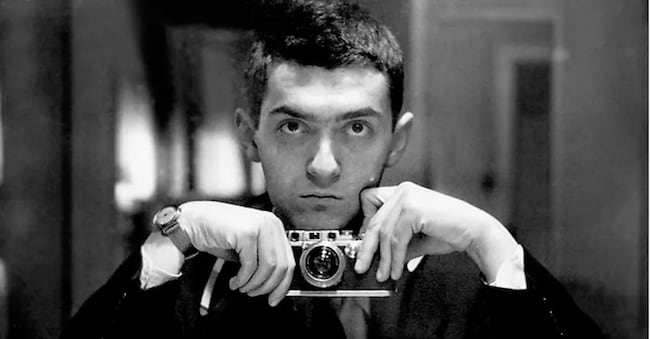
Whether or not one loves Cinema with a capital C, certain scenes – even indirectly – are etched into our collective imagination. Take, for example, the unsettling twin girls on their tricycle in *The Shining* (1980), a cult film by Stanley Kubrick (1928–1999), which will be the focus of a dedicated auction organised by Bonhams, ‘The Stanley Kubrick Collection’, specifically to sell off his personal archive as a director, including the Grady twins’ costumes.
The date to note is 3 February 2027; under the hammer at New Bond Street in London will be props, scripts, equipment and personal items sourced directly from the Stanley Kubrick Film Archives. The live auction will be accompanied by an online session, which will close on 4 February.
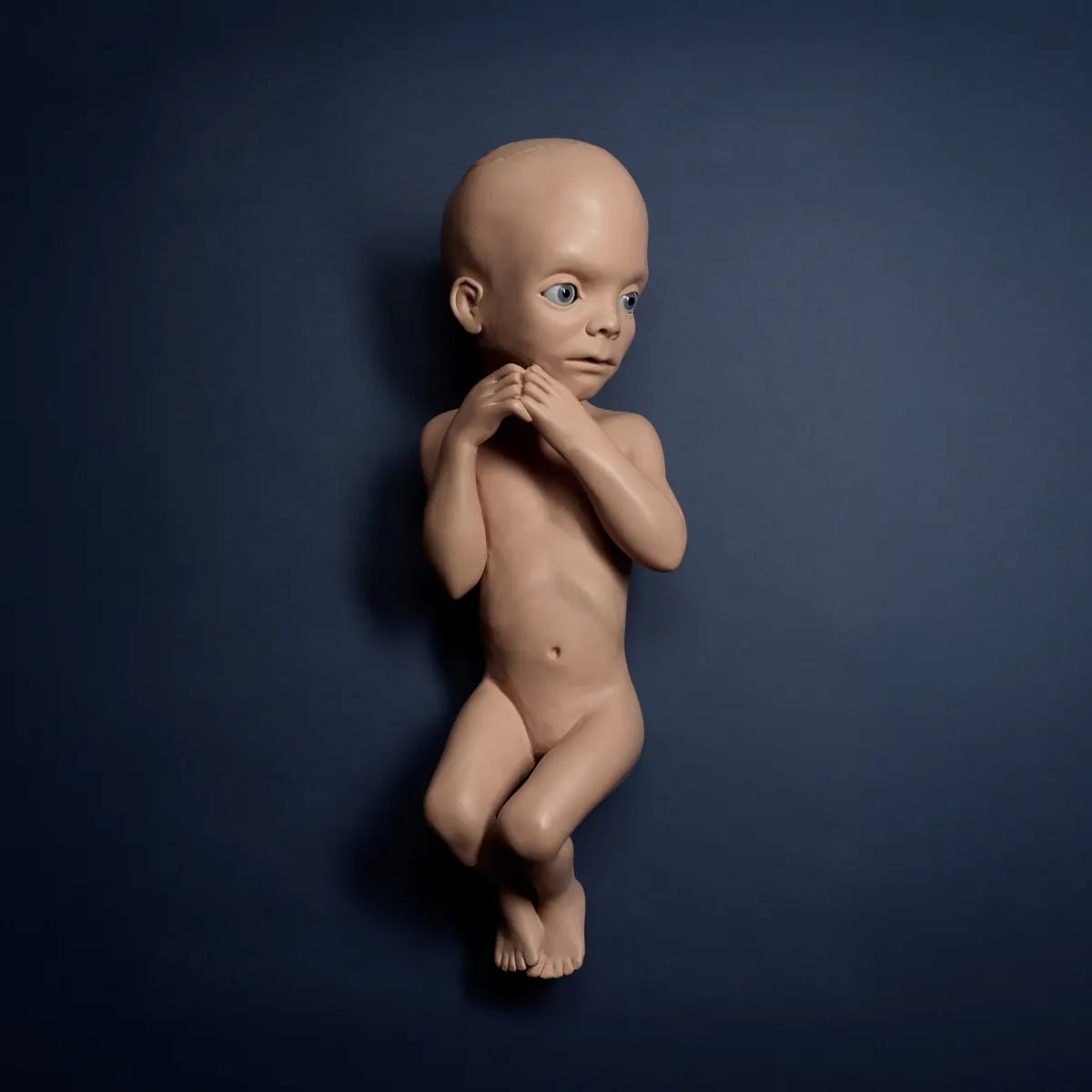
Straight from the set of 2001: A Space Odyssey
The star lot is the ‘Star Child’, the original prop from *2001: A Space Odyssey* (1968), estimated at 600,000–800,000 pounds. Alongside this mystical artefact are fragments from the film’s genesis: a copy (with the director’s annotations) of the treatment *Journey Beyond the Stars*, co-authored with Arthur C. Clarke , author of the novel *2001: A Space Odyssey* (1917–2008) and which formed the basis of the screenplay (30,000–50,000); an MGM production clapperboard (10–15,000) and the Questar astronomical telescope through which Kubrick and Clarke himself used to scan the skies (5–7,000).
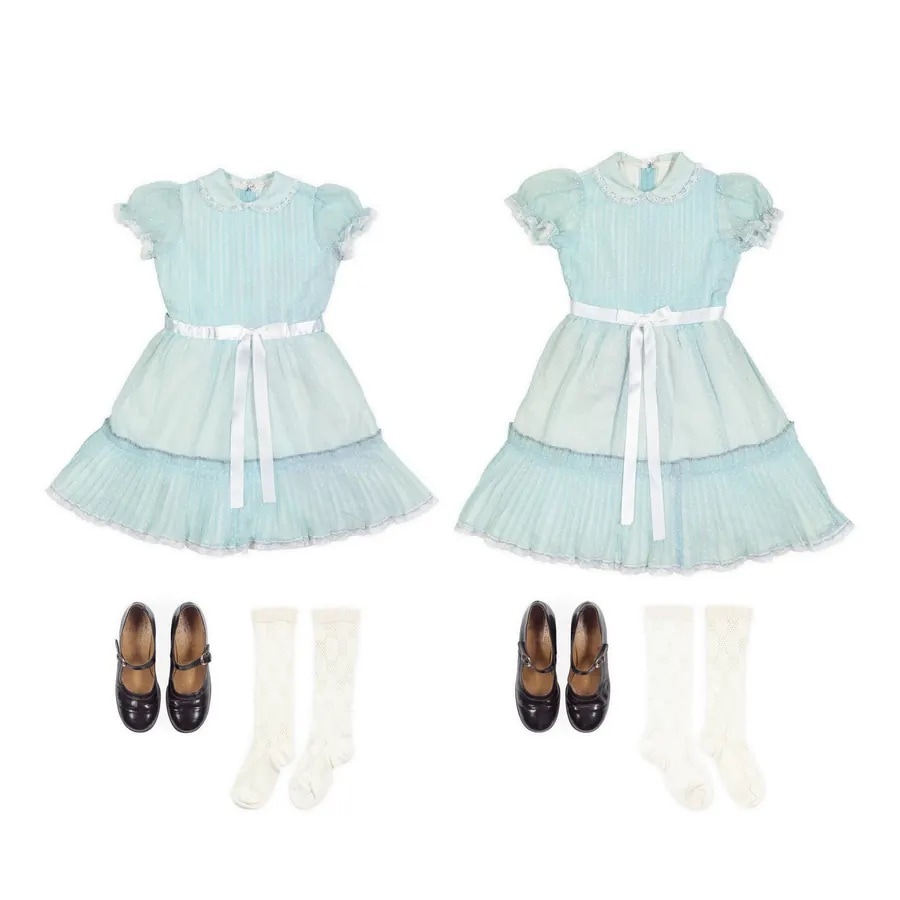
“The early bird catches the worm”
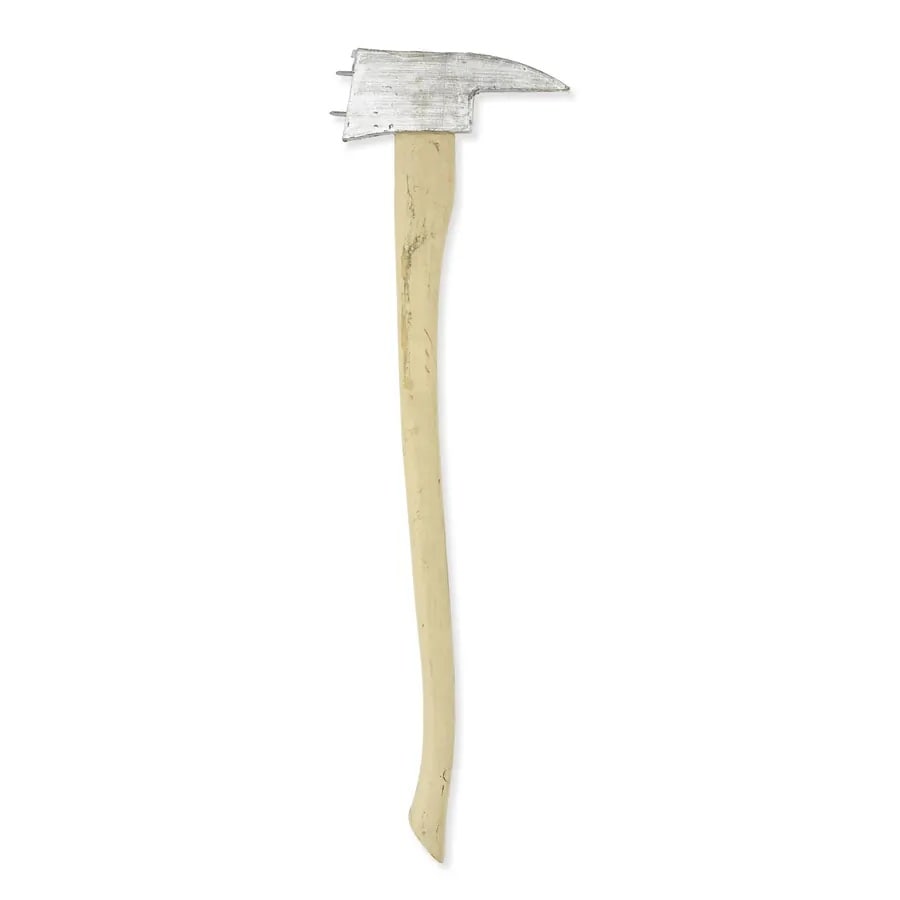
The catchphrase, a distinctive feature of the Italian version of *The Shining* (1980), is the phrase written – over and over again – by Jack Torrance. From that terrifying film, the Grady twins’ costumes are coming up for auction (40–60,000 pounds), as well as the special-effects axe wielded in the murder scene involving Dick Hallorann (30–50,000). The large oak refectory table (10–15,000), in early 18th-century style, built for the set around 1980, comes directly from Kubrick’s home (the filmmaker used it in his office). Rounding off the collection are a clapperboard (10–15,000) and the Taylor-Hobson Cooke Speed Panchro viewfinder, marked ‘SK’ on a white label and used on the set of *The Shining* (10–15,000).
Surprisingly, a touch of Italia in the Kubrick auction catalogue
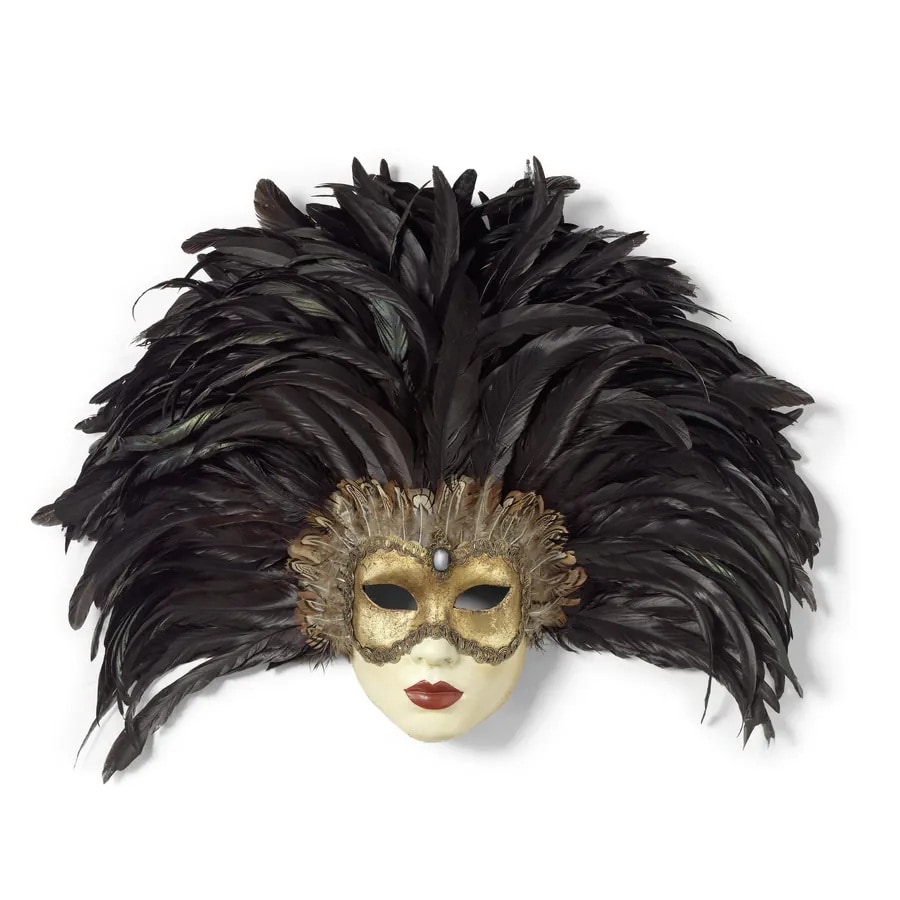
The catalogue features the David di Donatello award (presented to Kubrick in 1969 for *2001*, £8,000–12,000), the 1988 award for Best Foreign Producer for *Full Metal Jacket* (3–5,000) and the Golden Lion for Lifetime Achievement received at the Venice Film Festival in 1997 (6–8,000). Also from Venice is the feathered mask worn by the mysterious woman in *Eyes Wide Shut* (1999), on offer for 3–5,000 pounds, as well as the cloak of the secret society and the clapperboard used for lighting rehearsals.

From the script of *Lolita* to the first take of *Barry Lyndon*
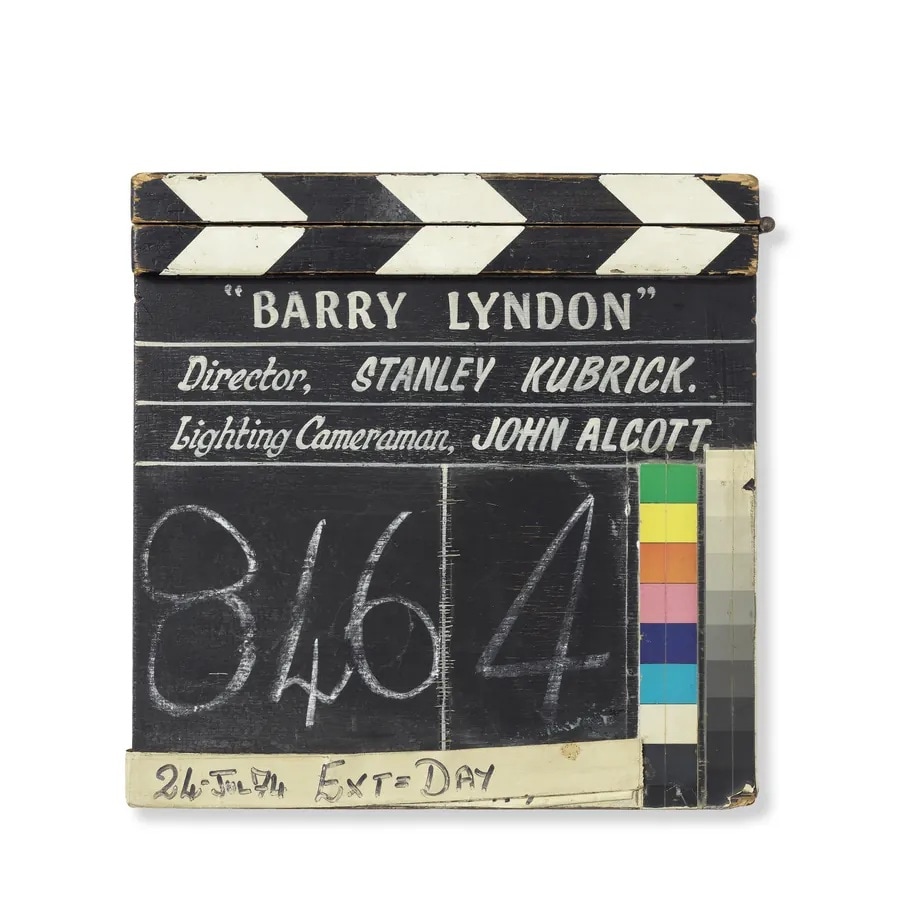
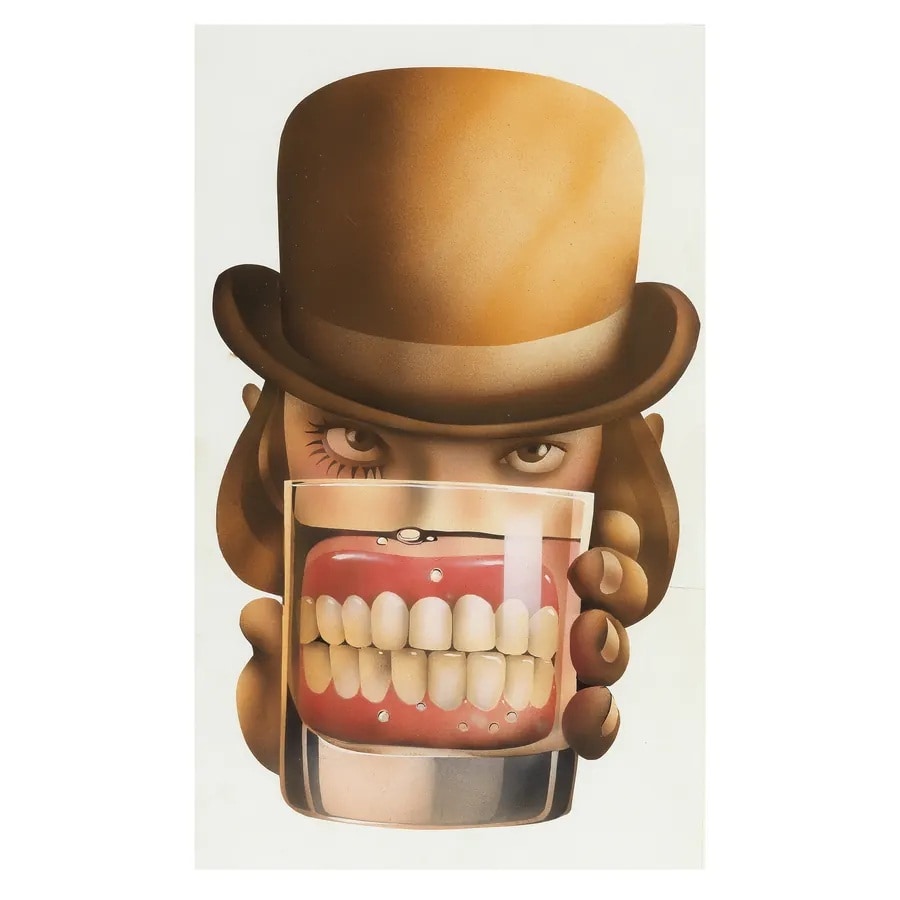
In February next year, someone will have the chance to get their hands on the script for *Lolita* (1962), densely annotated by Kubrick (estimated value: £40,000–£60,000), or his personal copy of *Spartacus* (1960), estimated at £20,000–£40,000. Also on offer from the same epic are the original storyboard sketches (2,000–3,000). The original promotional artwork for *A Clockwork Orange* (1971), by the illustrator Philip Castle (1942–2026), is estimated at 5,000–7,000 pounds. The ‘Born to Kill’ helmet from *Full Metal Jacket* (1987) is offered with an estimate of 10–15,000 pounds. There is also a director’s chair (8,000–12,000) and a clapperboard from *Barry Lyndon* (5,000–7,000). And a chess set (£2,000–4,000): as a young man, Kubrick used to earn a living playing chess in Washington Square (New York), where he later met the producer James B. Harris.