Space Economics

What is Elon Musk's Starlink, the broadband satellite constellation involving Italy

The government wants to use Musk's satellites to connect remote areas. Five years on, SpaceX's satellite constellation has 3 million users

by Leopoldo Benacchio

Articolo aggiornato il 17 ottobre 2024

5' min read

5' min read

There is a lot of talk about Starlink, after the government opened up to satellite experimentation with Elon Musk in order to save the Pnrr's ultra-wideband project, which is severely delayed: news given by Il Sole 24 Ore in this interview with Alessio Butti, undersecretary to the Prime Minister's Office with responsibility for innovation.

The Italian project is also at the centre of the Sogei investigation, as explained in this article. But what is Starlink?

Loading...

Six thousand orbiting satellites

.

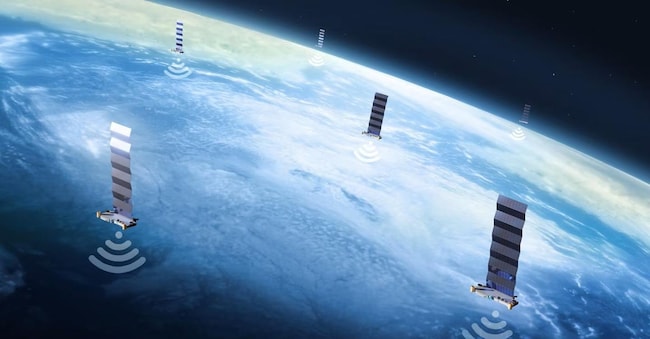
The company turned five years old in June, and according to data updated to that month, SpaceX's constellation of satellites for the transmission of Internet from space around the world, as the company's website states, has in fact reached three million users scattered in 100 countries, 40 thousand of which are in Italy, a fine figure achieved also thanks to a low-cost offer. Users are currently served by 6 thousand satellites in orbit, but it is also difficult to keep an exact count since new ones are launched every week. Remarkable numbers.

Elon Musk can, above all, be very happy because Starlink, according to analysts, will have revenues of $6.6 billion in 2024 from which, after taxes, depreciation and capital expenditures, $600 million of liquidity will remain.

The company, in short, is on its way to becoming self-sufficient, the sort of ATM that Musk wanted to forage for the Mars projects, his true ultimate goal.

It was not an easy undertaking on paper to set up a low-orbit constellation for data transmission, the idea was certainly not new, but failures had been repeated in a chain. Teledisc, which had the backing of Bill Gates failed before it managed to send into orbit a single one of the 900 satellites it had planned for its constellation, while Oneweb, which had come close to bankruptcy three years ago, was later resurrected by the British government and the Indian Bharti group and is now part of the Eutelsat system.

Very low latency times

.

Certainly the low orbit, 400 to 1,500 kilometres above the ground, allows very low latency times compared to satellites that are in geosynchronous orbit, which have also always been used for data transmission. With Starlink, to get a response to one of our commands we go in the tens of milliseconds, hardly noticeable, except when working on sites that are constantly experiencing line interruptions. Of course, the low-orbit technology changes the game, since the user in fact always sees different satellites, because at that height, which is not so different from that of the International Space Station, Iss, each satellite goes around our world in 90 minutes or a little more. It is another world compared to the geosynchronous one that I always see motionless in the sky, but too far away. No matter, the system works and the shift of users towards Starlink proves Elon Musk right, once again. With the next series of satellites, which will be able to transfer user requests and data between them, the service should still improve.

Six thousand satellites in orbit, in addition to the thousands that already exist for quite different purposes and from various nations, may not bother those who look up at the stars in the sky and see some of them pass by, inexorably given how many there are, try as they might, but they are certainly a problem for those who use the sky as an advanced physics laboratory and who use super-improved telescopes costing a few billion.

Light Pollution

The stripes in astronomical images due to Starlink are now a constant, in the most demanding professional images as well as in the footage of amateurs with amateur equipment, however capable of excellent performance today. To tell the truth, Starlink has deservedly worked hard with the International Astronomical Union, Iau, to mitigate the reflection of sunlight on the metal of satellites as much as possible. However, the problem remains as the number of satellites continues to rise, with thousands more planned. Then there are other similar constellations on the horizon, Amazon's Kuiper in the front row, which currently has 3,263 in orbit.

Key factor: launch vectors

.

The real ace up SpaceX's sleeve, however, is the two-way relationship between the satellites and the launch vehicles, the Falcon 9, which are now the frontrunners in this field with 96 launches in 2023, 63 of which were used for Starlink, and more than a hundred planned for this 2024.

The reusability of these launchers, there are some that have served as many as 21 launches, has made the Starlink project economically viable and vice versa this has stimulated the development of these remarkable reusable launchers. This is undoubtedly the best low-cost project seen in space so far, and Falcon 9 is currently also launching European satellites as our Ariane 6 and Vega-C launchers are still in development, hopefully for a few more months. There is some concern about this de facto monopoly in the USA too, however.

Elon Musk's gamble has been won and its success has convinced the so-called Geo operators, i.e. those operating from an altitude of over 30,000 kilometres in geostationary orbit, to equip themselves with similar low- or medium-orbit constellations. The reason is simple: if you have to send a video transmission to earth, the latency time, which for Geo satellites is about ten times longer, matters little, but for Internet-related uses it proves deadly. Being able to differentiate between different orbit levels, more or less distant from the ground, and thus having faster responses to keyboard commands, for instance, can make the Internet connection provided more easily usable when frequent interaction is required. Put simply, if I have to wait a tenth of a second for each micro-command, I will most likely not be able to use the software in the end. Eutelsat, as we said, bought Oneweb, but Intelsat and Telestat are also getting organised.

Military implications

.

Of course, these are not just lights, even important problems are there for all to see, from the crowding of the orbits, which some are beginning to think will create some sort of impassable wall, to the use of Starlink in theatres of war. In Ukraine it was used by the Ukrainians who, it seems, also by the Russians who, however, normally interfere with this network, which is so useful to the Ukrainian army. The fact that it is an industry that decides who can use and who cannot use a communication facility that has proved vital on the battlefield raises considerable concern: private individuals seem to be replacing states in this too, and that is no small thing. And indeed, SpaceX is building Starshield, a twin constellation of Starlink with increased and differentiated capabilities useful for military use.

Copyright reserved ©
Loading...

Brand connect

Loading...

Newsletter

Notizie e approfondimenti sugli avvenimenti politici, economici e finanziari.

Iscriviti