
Starmer: 'Russia a threat, we ready to fight: defence spending at 3% of GDP'
British Prime Minister Keir Starmer presented the Labour government's defence strategy

3' min read
3' min read
A 'battle-ready' Britain, equipped with modern weapons and new nuclear-powered submarines and spending 3% of GDP on defence: this was the promise made by British Prime Minister Keir Starmer, who presented the Labour government's defence strategy.
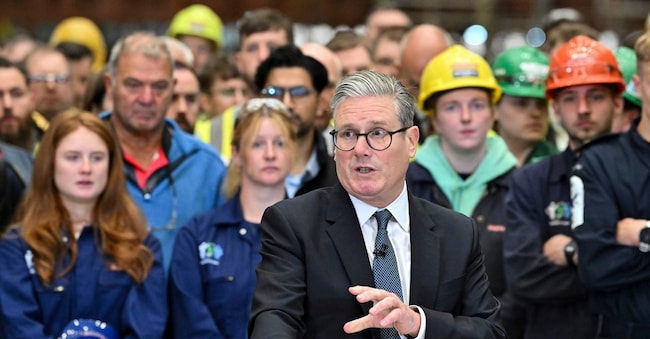
"We want a stronger and safer Britain," the PM said in Glasgow as he visited the shipyards of BAE Systems, Britain's largest company in the industry: Britain must be ready to fight a war with modern means and be able to counter the threat of hostile countries like Russia. The commitment made by Starmer means tens of billions of pounds of additional spending on twelve new generation nuclear-powered submarines and new factories capable of producing weapons, munitions and drones.
The PM stated that defence spending 'has priority over everything else' but did not explain where the funds needed to boost it would come from. The government has already announced cuts in public spending and especially in social benefits, creating discontent in the Labour Party, and further reductions could lead to an internal revolt. Moreover, Starmer, while announcing his intention to increase defence spending to 3% of GDP in the next parliamentary term, would not set a date and instead stated that 'it will depend on economic conditions'. The government had already pledged to increase defence spending from 2.3% to 2.5% of GDP by 2027.
The new strategy was developed by a team of experts led by George Robertson, former Defence Minister and former NATO Secretary General, who was with Starmer in Scotland yesterday. The 130-page document explicitly states that the strategy's goals can only be achieved if defence spending rises to 3 per cent of GDP: 'This decision ensures the sustainability of our recommendations for a ten-year programme'. Starmer's caution thus seems at odds with the ambitions of the strategy.
The UK remains one of Europe's great military powers along with France and played a crucial role in supporting Ukraine after the Russian invasion. Years of defence budget cuts, however, have severely reduced military capabilities: the army has less than 71,000 soldiers, the lowest level for 300 years, and Defence Minister John Healey has admitted that no increases are planned before the 2029 elections.

