
Start 4.0: 15 million invested in innovation thanks to the NRRP
Funding has risen to around 28 million thanks to private co-investment. The Genoa centre of excellence has unveiled an immersive training room

Key points
Fifteen million euros. This is the total amount of funding made available through the NRRP and invested by the Start 4.0 National Centre of Excellence in Genoa. This figure rises to 28 million when private co-investment is included, which effectively doubles the total resources made available through the Recovery and Resilience Plan’s multiplier mechanism. Around 220 projects by as many Italian companies have benefited from this; all within the space of a couple of years. These figures were provided by Paola Girdinio and Roberta De Donatis, president and executive director of Start 4.0 respectively, as well as Federico Barbieri, project manager at the Genoa-based Centre of Excellence.
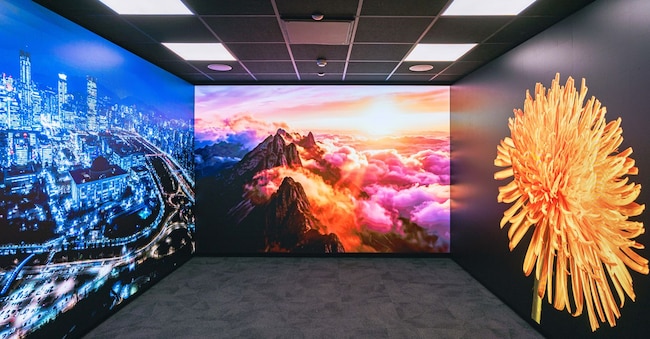
The opportunity to take stock of the projects undertaken came yesterday with the presentation of Maia (Mixed-reality academy for immersive awareness), namely Start 4.0’s immersive chamber, which has been set up at Ansaldo Energia’s headquarters and will be available there to companies and organisations wishing to use it. The facility, valued at around 300,000 euros, is one of the programmes that has benefited from co-funding under the National Recovery and Resilience Plan (PNRR).
The immersive room
“Maia,” Girdinio emphasises, “stems from a simple conviction: in high-risk contexts, it is not enough to explain; you have to bring it to life. A procedure you read is forgotten; a situation you’ve been through stays with you. With this infrastructure, we’re providing Ligurian businesses – and SMEs in particular – with technology that they would find difficult to afford on their own.”
The chamber enables several people to experience the same situation virtually, as if they were actually there, at the same time, and to interact, coordinate and make decisions together. One operator can act via a headset whilst the other participants observe and intervene in the same scenario within the chamber; physical equipment can be incorporated into the simulation, and each person’s actions alter the experience of the others. This makes it possible to replicate not only individual tasks, but also team dynamics, procedures and emergency situations where coordination between people is an integral part of the training.
Experiences to help you practise tackling difficult tasks
There are many different types of training scenarios that can be created for staff. They enable staff, for example, to practise managing an emergency at an energy infrastructure site, with alarms going off and decisions to be made in a matter of seconds; or to coordinate manoeuvres on a construction site amongst suspended loads; or even to move around a port area whilst wearing the correct protective equipment. And these (and other) activities can be carried out in an environment where mistakes can be analysed, rather than simply endured.


