
From Naples Afragola to King’s Cross: stations are becoming intermodal hubs
From simple transit hubs to centres capable of integrating high-speed rail, underground networks, buses, airports and urban services. Railway infrastructure is undergoing a transformation worldwide, taking centre stage in sustainable mobility

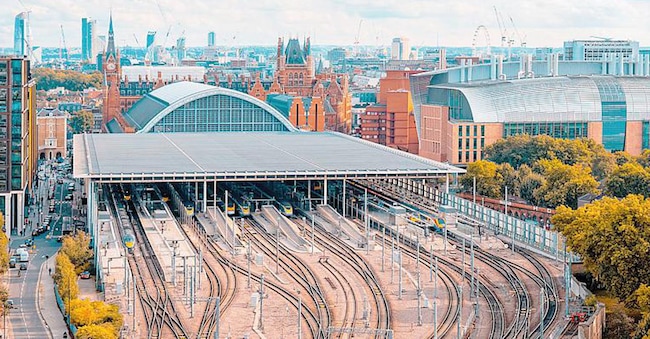
For decades, they were regarded as mere starting or finishing points. Today, major railway stations are taking on a completely different role: that of strategic hubs capable of connecting cities, regions and different transport systems. This is the finding of an analysis published by webuildvalue, the Webuild Group’s online magazine.
The evolution of sustainable mobility, the growth of urban areas and the need to reduce emissions are bringing rail transport back to the forefront of global infrastructure strategies. And alongside the railways, stations are also changing, increasingly designed as intermodal hubs where high-speed trains, regional lines, underground services, buses, airports and urban transport coexist within a single, integrated ecosystem.
According to the International Energy Agency, rail transport currently accounts for around 8 per cent of global passenger travel, yet produces just 2 per cent of the transport sector’s emissions, confirming its status as one of the most sustainable modes of mass transport. In major European metropolitan areas, millions of people use commuter trains, underground railways and high-capacity lines every day to travel into and out of cities, thereby reducing road traffic and urban congestion.
In Europe, according to data from the European Commission, over 80 per cent of the population lives in urban or peri-urban areas, a figure that makes the development of integrated public transport networks increasingly crucial. Against this backdrop, railway stations are becoming true urban gateways, capable of reshaping entire neighbourhoods and generating new economic flows.
In Italia
In Italia, one of the most significant examples of this transformation is the Naples-Afragola high-speed railway station. Designed by the architect Zaha Hadid and built by the Webuild group, the station is situated along the Naples–Rome high-speed line and was conceived from the outset not only as a stop for Frecciarossa trains, but as a major piece of urban infrastructure designed to connect different parts of the Campania metropolitan area. The station’s transformation is set to accelerate further thanks to the future metro link to Naples and the new Naples–Bari high-speed line. The construction project for Line 10, the new metro line, will in fact enable the integration of high-speed rail and urban public transport, transforming Napoli Afragola station into one of the most important intermodal hubs in Southern Italy.


