From 1 October

Steel: requirement for certification of the country where it was cast and smelted

The importer must hold the document certifying the origin. The new scheme provides for three scenarios for the provision of complete data

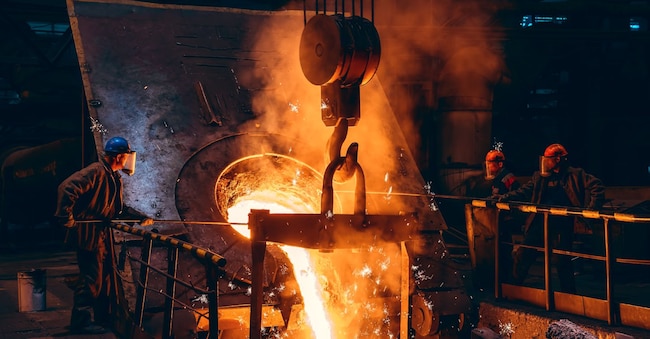
DedMityay - stock.adobe.com

2' min read

Translated by AI
Versione italiana

2' min read

Translated by AI
Versione italiana

From 1 October it becomes compulsory for the import of steel products (including iron and crude steel) to provide certification specifying the country of smelting and casting (melt and pour) of the product.

This is the inevitable consequence (except, in part, during a transitional period from 1 October 2026 to 30 September 2027, when the requirement is relaxed) arising from the combined application of Regulation (EU) 2026/1384 and Regulation (EU) 2026/1963.

Loading...

What does the requirement entail?

In particular, from 1 October, upon importation into the EU, the importer must provide a manufacturer’s certificate (the Mill Test Certificate or MTC) stating the country of smelting and casting and the casting number of the steel products (listed in Annex I to Regulation 2026/1384) being imported. This is a document – widely used by other countries as well – which, according to the findings of the public consultation conducted by the Commission in June 2026, constitutes the most reliable means of verifying this information.

The new scheme distinguishes between three scenarios, depending on whether a certificate is available and whether the information it contains is complete:

1) Mtc available and complete: if the Mtc states both the country of smelting and casting and the casting number, no further documentation will be required. The Mtc is sufficient to substantiate the information requested.

2) MTC available but incomplete: if the MTC is available but does not contain information on the country of smelting and casting or the casting number, the customs authorities may accept the following documents as supplementary to the certificate, provided they contain the missing information: invoices, delivery notes, quality certificates and clauses from purchase orders or executed contracts, long-term supplier declarations, cost accounting and production documents, customs documents from the exporting country, commercial correspondence or product descriptions. These alternative documents supplement, but do not replace, the MTC.

3) Mtc not available: where the Mtc cannot be provided, the customs authorities may consider the same documents referred to in point 2 above as independent evidence in place of the Mtc, provided they contain information on the country of smelting and casting and the casting number. The option to use this documentation in place of the MTC is provided for on a transitional basis only, for the period between 1 October 2026 and 30 September 2027.

Where the country of smelting and casting is substantiated by the documents referred to in points 2 and 3 above, either in addition to or in place of the MTC, the customs authorities will carry out checks on the information and supporting evidence submitted, which may result in longer customs clearance times.

Where the declaration from the country of smelting and casting is not accompanied by adequate verifiable evidence, the customs authorities shall refuse the import.

What’s changing at an operational level

From an operational perspective, importers should not rely solely on the documentation provided by the supplier at the time of delivery of the goods, as this may not be complete and could consequently cause delays in the customs clearance of the products. Instead, it is advisable to include in purchase contracts concluded with non-EU suppliers specific clauses governing the transmission and content of information on melt and pour and theany risk arising from the submission of incomplete or false information and documents.

Copyright reserved ©

Brand connect

Loading...

Newsletter

Notizie e approfondimenti sugli avvenimenti politici, economici e finanziari.

Iscriviti