
Stefano Ricci, the evolution is towards a solid and discreet luxury
The Florentine brand, which presented its S/S 26 collection inspired by India in Milan, expands both in manufacturing and markets: 'Our high quality does not make us fear duties'

3' min read
3' min read
Stefano Ricci's stylistic transition is complete. The ostentatious and logo-laden luxury that had characterised the Florentine men's fashion brand in years past has gradually given way to a discreet and relaxed elegance, made up of precious fabrics and yarns, such as hemp from the Philippines or the world's finest cotton that grows on the banks of the Nile, and of accurate workmanship that enhances the 100% made in Italy production.
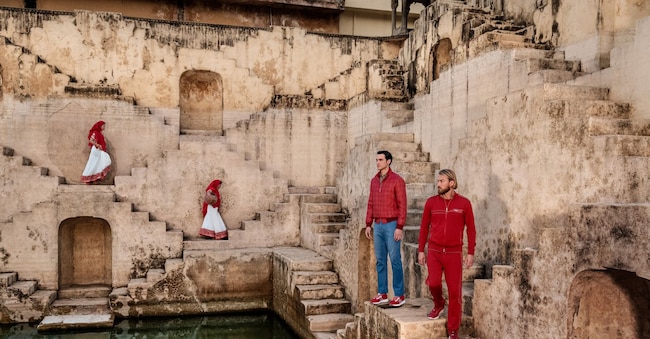
So it is that the collection for spring-summer 2026 - which was presented at the Piccolo Teatro Strehler in Milan and whose promotional campaign signed by Steve McCurry is set in Rajasthan and Uttar Pradesh, in the land of kings and maharajas, amidst imperial palaces and unspoilt nature - appears as the goal of a planned and coherent path, which has gone hand in hand with the company and distribution reorganisation.
"We thank our father who pushed us to raise the bar higher and higher," said Niccolò and Filippo Ricci, sons of owner Stefano who now lead the brand, presenting the new collection.
In recent months, the company has strengthened in-house production, purchasing a number of suppliers in the supply chain and moving the 45-strong tailoring department to its headquarters in Fiesole (Florence); it has opened a new 4,400 square metre logistics facility near Florence airport; and it has continued its retail expansion, a channel that now accounts for about 60% of its turnover and has 80 boutiques worldwide. The most recent openings were Ho Chi Minh City in Vietnam and Houston in the USA; those planned are Washington DC (in September) and Almaty in Kazakhstan (by the end of the year), in addition to the restyling of some shops in China (for a total of 400 square metres) and the new location of the Porto Cervo shop (tripled space). At the beginning of 2026, a new shop will open in Rome, in Via Bocca di Leone. Investments therefore do not stop despite the fact that the market situation remains 'extremely complex', as CEO Niccolò Ricci states.
The thrust on retail is explained by the trend in sales in this channel, which are marking +4% since the beginning of the year, even if forecasts for 2025 remain cautious: the Florentine company, which closed 2024 with a turnover of 233 million euro, 90% of which was foreign, expects a drop of about 3% this year. American duties are not scary, given the product quality and positioning. And market diversification, invoked by all as a response to international geopolitical tensions affecting various countries, is also an acquired goal in Stefano Ricci's case.

