Automotive

Stellantis: production in Italy is on the rise, but Mirafiori is slowing down and Cassino is in decline

Fim-Cisl report on the third quarter: production up by 28.3 per cent. “Forecasts for 2026 stand at 450,000 vehicles,” says Secretary Uliano

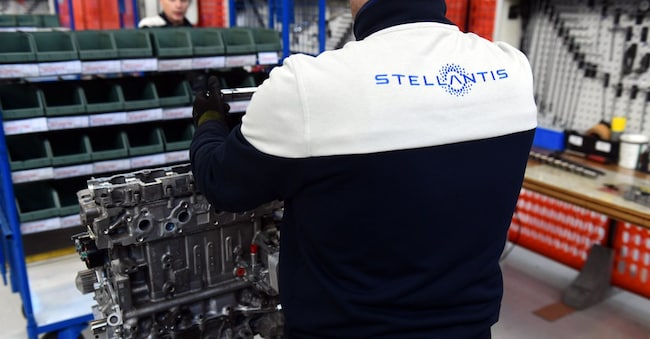
STABILIMENTO STELLANTIS SUSTAINERA CIRCULAR ECONOMY OPERAIO OPERAI  INDUSTRIA   AUTOMOBILISTICA  CATENA DI MONTAGGIO MOTORE  ASSEMBLAGGIO AUTOMOBILI AUTOMOBILE PRODUZIONE IMAGOECONOMICA

3' min read

Translated by AI
Versione italiana

3' min read

Translated by AI
Versione italiana

Stellantis’ production volumes continue to recover from the sharp decline seen in 2025, but the pace of recovery has slowed compared with the first half of the year, as evidenced by the furlough scheme at Mirafiori and the worrying situation at Cassino.

Production in the third quarter of 2026 stood at 340,745 vehicles (+28.3 per cent on 2025), with car production up by 36.7 per cent. “Volumes continue to grow, but forecasts for 2026 are around 450,000 vehicles,” points out Fim-Cisl General Secretary Ferdinando Uliano. The next meeting with the company is scheduled for 15 October, with a focus on the difficult situation in Cassino and the future of Mirafiori.

Loading...

Specifically, 340,745 units – comprising passenger cars and commercial vehicles – were produced, compared with 265,490 units in the same period of 2025. Passenger car production rose by +36.7 per cent, reaching 206,945 units, whilst commercial vehicle production rebounded from the slight decline seen in the first half of the year, recording growth of 17.3 per cent compared with 2025, totalling 133,800 units.

The only car assembly plant to show a further decline compared with 2025 is Cassino. “The situation at the plant in Lazio is becoming increasingly dire, with a 37.1 per cent decline,” point out the metalworkers’ union CISL.

In the car sector, new production of the Jeep Compass at Melfi, together with the continued strong performance of the Fiat Panda, contributed to growth in production, making up for the losses recorded in 2025, although production volumes have not yet returned to those of previous years, nor even to those of 2024.

As for the Fiat 500 hybrid produced at Mirafiori, alongside the fully electric model, volume growth is set to be significant compared with 2025 but falls short of the volumes initially projected, to the extent that the return of the short-time working scheme at Carrozzerie is expected in the second half of the month, following an eight-month hiatus since the end of the support measures.

The Pomigliano d’Arco plant saw a rise in production volumes in the third quarter compared with the first nine months of 2025, although it continues to rely on solidarity contracts, whilst Cassino saw its production fall by more than a third compared with a 2025 that was already a very poor year.

The commercial vehicle plant in Atessa (Abruzzo) is the plant with the highest production volumes (133,800 units, accounting for 39.3 per cent of Italian production) and has recorded a 17.3 per cent increase on last year, bringing an end to the use of temporary lay-off schemes. Finally, Melfi is regaining production volumes thanks to new models, although the site in Basilicata remains far from the volumes recorded in the past. The aim is to reach full capacity during 2027, when all new production lines will be fully operational; these will be complemented by the new Alfa Romeo model announced by Stellantis in recent months.

2026, therefore, marks a turnaround compared with the two-year period 2024–2025, but according to FIM forecasts, the target of half a million vehicles produced in Italia will not be met, whilst the last year in which more than one million vehicles – including cars and commercial vehicles – were manufactured in Italia was 2017, and the conditions do not appear to be in place to reach that threshold in the coming years.

Throughout 2026, the company is expected to benefit from a full year’s production of the 500 Hybrid, the new Jeep Compass and the DS8. In the final quarter, production of the new DS7 and Lancia Gamma will also begin. Car production over the course of the year is expected to exceed 250,000, a figure that sets Italia back by decades and which is, in any case, less positive than forecast, particularly due to the decline observed in the final phase of Fiat 500 production, caused by production stoppages resulting from a shortage of materials and lower order volumes, which led to a request for two weeks of temporary lay-offs in October.

Loading...

The use of social safety nets over the nine-month period fell by more than 30 per cent as a result of new production launches, but also due to a decline in employment, amounting to around 1,000 people in 2026 alone. The Melfi plant alone has lost more than 2,000 employees over the years.

Production of the Fiat Panda accounts for exactly half of Italia’s total car production, whilst commercial vehicles make up over 40 per cent of the country’s total vehicle production.

Copyright reserved ©
Loading...

Brand connect

Loading...

Newsletter

Notizie e approfondimenti sugli avvenimenti politici, economici e finanziari.

Iscriviti