
Stellantis, the spider web of brands that has spawned dead branches
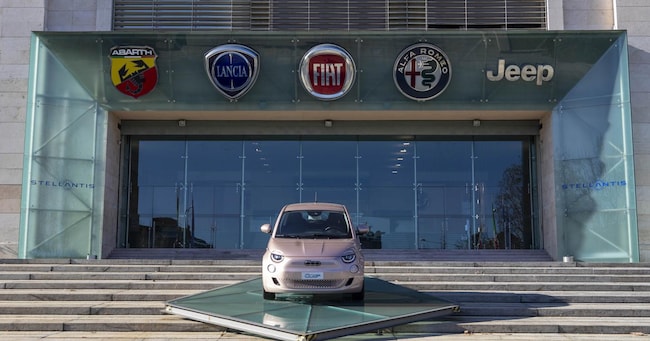
Several overlaps between brands weigh on the accounts. Tavares has never wanted to thin out the portfolio. The Maserati and Abarth cases (14 registrations for the electric 500 in the first three months of '24)

4' min read
4' min read
There are many intricate knots that the future CEO of Stellantis will have to untangle, some of which are on the table of the Chief Operating Officer, Jean-Philippe Imparato, who will be present at Mimit for the Stellantis table with the government and trade unions.
One is the overlap between brands and the possible sale of brands that are turning into deadwood, weighing on the accounts.
The Maserati node
.Brands that the former number one Carlos Tavares has repeatedly said he does not want to sell. First of all Maserati, where it seems to have gone back to 2016 when there was even talk of a closure of the historic Modena plant. In 2020, everything seemed to have been resolved, thanks to the 2.5 billion euro invested by Fca for the restyling of the Modena plant (costing 800,000 euro), the Grugliasco plant at full capacity, the Innovation Lab with over 1,100 people at work and a pharaonic product plan starting with the MC20 christened the new Era of the Trident. According to Maserati's top management, within five years (announcement in December 2020 therefore post Covid's first wave), 20 new products would be launched, 13 of which would be brand new models. In reality, the Grugliasco plant has been closed, the Innovation Lab dismantled, the Modena plant has recently recorded a -75% drop in production, new models have been limited to five instead of 13 (MC20, MC20 Cielo, Grecale, Granturismo and GranCabrio) and the Folgore full electric project is a real flop.
What future for Abarth?
From almost 23,500 cars sold in Europe in 2018 to 7,900 in 2023. Abarth's decline is evident, with the electric 500 Abarth now a meme on four wheels due to ridiculous numbers such as the 14 registrations achieved in the first three months of '24 out of a total of 117 as of 1 November. And it is precisely Abarth's future, numerically irrelevant but symbolic, that will depend on the use of platforms dedicated to 'small' cars. To date, the Smart Car platform (an inexpensive derivation of the French CMP and born thanks also to the Indian engineers of Tata Consulting who put their hand to the object originally developed with Dongfeng) has become the starting point for the Stellantis compact cars, while awaiting the resolution of the Stla Small knot, ready to make its debut in 2026 on the Peugeot 208 produced in Spain and then become the basis for many other future models now built on CMP2, such as the 'Polish' Alfa Romeo Junior, Jeep Avenger and Fiat 600. On Stla Small will be based the future generation of Fiat 500 (all new, not the current electric one from Mirafiori that is being modified) in order to make it a mild hybrid and give the factory breath again.
The Small is the last of Stellantis' four unified 'born electric' and multi-energy platforms. The others are Medium (which made its debut in Sochaux on the Peugeot 3008 and will also be used in Melfi on the DS No. 8, Lancia Gamma and the future Jeep Compass) Large (launched in the USA but ready to arrive in Cassino to give life to the second generation of the Alfa Romeo Stelvio and Giulia) and Frame for US pick-ups and SUVs. In fact, things are no better on the other side of the ocean, with plummeting profitability and a general discontent in the North American market that contributed significantly to Carlos Tavares' exit from the scene. Declining sales due to excessive prices and high inventory problems have sent the Detroit brand, set to turn 100 years old in 2025, into distress. As with Chrysler, Dodge has also shown severe pain and criticism in the North American market, with significant stocks of the Dodge Hornet, the American version of the Alfa Romeo Tonale. And it is not surprising to see the return of Tim Kuniskis, who had left the leadership of Dodge and Ram last May because he was at odds with the strategy chosen by Tavares.


