Market and Industry

Stellantis kicks off pact with Leapmotor: Chinese T03 and C10 cars arrive in 9 European countries

The commercial phase of the pact between the Euro-American and Chinese groups kicks off

5' min read

5' min read

Stellantis has 'closed the binding agreement with Leapmotor, which was signed in October, only seven months after it was announced. I think this is important, everything was done very efficiently and effectively. Now we are entering the operational phase of the agreement and planning, we will start exporting Leapmotor vehicles outside the Chinese market'. Stellantis CEO Carlos Tavares said this during a joint press conference with Zhu Jiangming, founder and CEO of Leapmotor. In October 2023, Stellantis became a strategic shareholder of Leapmotor with a EUR 1.5 billion investment, acquiring a 20 per cent stake in the Chinese group. The agreement also included the establishment of Leapmotor International, a 51-49 joint venture led by Stellantis, with exclusive rights to export, sell and manufacture Leapmotor products outside the Chinese region.

Many analysts expected the agreement between Stellantis and Leapmotor to evolve into an exchange of technology. Perhaps with the T03 platform being used for new small cars, such as the possible future 500 Electric, which at the moment uses a specific and distinctively different platform from the CMP and SmartCar (an economic derivative of CMP) architectures used for Stellantis' A-segment cars. Furthermore, it could be assumed that the extended range technology (electric car with a thermal engine that recharges the battery) could be integrated into the models of the Stellantis brands to fill a gap in the range and increase competitive pressure on manufacturers such as Nissan, which offers the e-Power, or Toyota, which is a leader in hybrids and is well positioned in the fleet world where the residual value parameter is crucial.

Loading...

Two integration hypotheses, however, are not on paper. 'At the moment, the agreement with Leapmotor does not involve sharing technology,' says Carlos Tavares, 'but the sale of Leapmotor models outside China. In practice, Stellantis acts as a mere distributor and what Tavares has in fact 'sold' to the Chinese is the gigantic European network of local distributors, dealers and parts logistics partners. In fact, on these activities, the Chinese brands, without a network and parts warehouses worthy of the name, risk finding themselves in trouble. And here Stellantis has instead opened the door to an invasion of Chinese products, and at the direct request of Il Sole 24 Ore, no badge engineering operation is even envisaged, i.e. towing Leapmnotors cars under the Stellantis brand (like Opel, Fiat and Citroën). It is not an immediate possibility at the moment, says Tavares, responding to Il Sole 24 Ore, but it remains a hypothesis. However, Tavares explains, introducing a new Leapmotors brand, on the one hand has inevitable marketing costs, but there are great advantages on the side of economies of scale in distribution.

"We want it to be a success, the goal is to sell and produce Leapmotor vehicles outside of China, that is the purpose of this joint venture, bringing smart and affordable electric vehicles to the market quickly," said Tavares, explaining that the agreement will bring a number of benefits, both to Stellantis and Leapmotor. "The first is the acceleration with which we bring Ev to the market, the second is that we provide excellent technologies, the best available, cost-effective. The third point will be the fact that Stellantis will have the opportunity to have more Evs available to bring to market, making progress in the execution of the Dare Forward 2030 strategic plan," Tavares said.
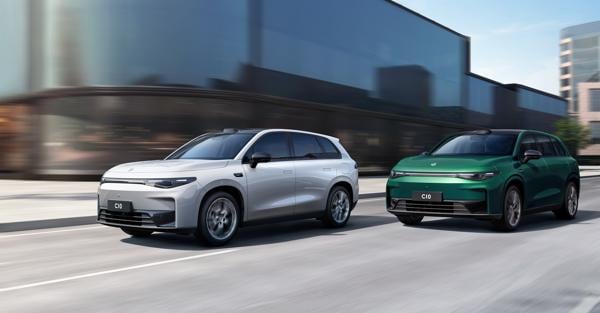
"We are in the process of homologating the models and will open sales in September," Tavares added, explaining that the nine countries to which Leapmotor models will initially be exported are Italy, Belgium, France, Germany, Greece, the Netherlands, Romania, Spain and Portugal. Tavares explained that this will be the first phase of the execution of the agreement with LeapMotor, with whom 'there is a solid product plan to launch models by 2027'.

Tavares explained that the issue of prices is a hot topic, because 'affordability is the main problem', but thanks to the partnership with Leapmotor 'we can speed up bringing affordable Ev models to the market'.

Leapmotor models in Europe, what are they

Specifically, the cars to be imported by Stellantis in the Old Continent and built by Leapmotor will be the C10 (electric and plug-in hybrid) and the T03, full electric.

The C10 is the first vehicle to be based on the proprietary Leap3.0 technology architecture. The platform also offers cell-to-chassis (CTC) technology and as many as 30 sensors, including five millimetre-wave radars, 11 cameras, 12 ultrasonic radars, and a 128-line lidar, all managed by an Nvida chip. It is a D-segment vehicle designed primarily for families powered by an electric motor with a peak power of 170 kW and a maximum torque of 320 Nm. Its autonomy according to the Wltp cycle is 420 km, but there is also a range extender variant with an additional 1.5-litre engine. In this case, the total autonomy rises to 1,190 km, of which 210 km in electric mode. Its dimensions are 4,739 mm in length, 1,900 mm in width and 1,680 mm in height, with a wheelbase of 2,825 mm.

The Leapmotor T03 is a small car (3,620 mm long, 1,605 mm high and only 1,652 mm wide, while the wheelbase is 2,400 mm) that falls within the A-segment and is designed for city commuters. Equipped with five doors, it offers interior space comparable to that of a B-segment model. The electric motor is powered by a 41.3 kWh lithium-ion battery, which is built into the platform floor. Its autonomy, according to the Wltp cycle, is 265 km, while the Adas systems include adaptive cruise control and lane-keeping, among others.

Stellantis: Tavares, Leapmotor production in Europe? We will evaluate better business case

"For many years our focus has been 'quality first', and we will continue in this way, choosing the best way to ensure product quality and customer satisfaction. We will weigh up costs and benefits, while remaining focused on quality, and we will act pragmatically, evaluating case by case, in agreement with our partner Leapmotor." This was said by Stellantis CEO Carlos Tavares during a joint press conference with Zhu Jiangming, founder and CEO of Leapmotor, in response to those who asked whether the Leapmotor vehicles that will be sold in Europe will be exported from China or produced locally. Tavares explained that country-by-country evaluations will be made to see which is the best and most suitable business case: 'Before deciding whether to assemble Leapmotor vehicles in Europe, we must first prove that production in a European market is the best choice. If, having made the appropriate analyses and evaluations, we realise that it makes more business sense to assemble locally, we will evaluate which is the best factory to use, in an efficient way,' said Tavares, emphasising that 'we want our customers to have the highest quality products at the best price. The ultimate goal is to promote the spread of zero-emission mobility'.

Leapmotor, oa unplanned technology transfer

Many analysts expected the agreement between Stellantis and Leapmotor to evolve into an exchange of technology. Perhaps with the T03 platform being used for new small cars, such as the possible future 500 Electric, which at the moment uses a specific and distinctively different platform from the CMP and SmartCar (an economic derivative of CMP) architectures used for Stellantis' A-segment cars. In addition, it could be assumed that extended range technology (electric car with a heat engine recharging the battery) could be integrated into Stellantis brand models. Two hypotheses that are not on paper. 'At the moment' the agreement with Leapmotor 'does not involve technology sharing, but the sale of Leapmotor models outside China'. So says Stellantis CEO Carlos Tavares, answering journalists' questions after the announcement of the establishment of Leapmotor International, a joint venture in 51/49 shares led by Stellantis, and the arrival of Leapmotor models in Europe in September.

Copyright reserved ©
Loading...

Brand connect

Loading...

Newsletter

Notizie e approfondimenti sugli avvenimenti politici, economici e finanziari.

Iscriviti