
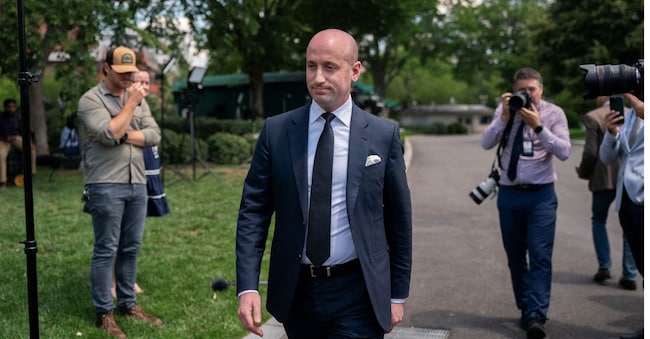
Stephen Miller, who is Trump's ally against the American dream
The deputy White House chief of staff is the architect of Donald Trump's intransigent migration policy

2' min read
2' min read
The image of National Guard soldiers on the streets of Los Angeles, deployed against demonstrators protesting against President Donald Trump's immigration policies, marks one of the most dramatic moments of the former tycoon's second term. Leading this offensive is not only the president, but also Stephen Miller, 39, his deputy chief of staff and architect of what has come to be known as the 'Miller Doctrine': a radical vision of executive power aimed at reshaping American identity through an unprecedented clampdown on immigration.
California, historically one of the country's progressive bastions, is now the scene of an unprecedented tug-of-war between the federal government and local government. Democratic Governor Gavin Newsom has called the sending of the army 'immoral' and 'unconstitutional', evoking an institutional conflict that threatens to mark a watershed in American politics.
But behind the images of soldiers in the streets lies a precise strategy: Miller, with Trump's full support, is pursuing an agenda of mass deportations and migration restrictions reminiscent of the darkest chapters in American history. The intentions are clear: drastically reduce the presence of migrants in the country and strengthen the borders, even at the cost of overriding internal opposition and constitutional protections.
Already an advisor to Trump during his first term, Miller at the time had to deal with resistance from Congress and contrary court rulings. Today, with a White House even more cohesive on the nationalist and populist front, those resistances seem to have evaporated. It is no coincidence that, in the face of new adverse judicial decisions, Miller has even evoked the possibility of suspending habeas corpus, the constitutional principle that guarantees citizens the right to challenge their own detention. A hypothesis that until now belonged to the repertoire of the most extreme scenarios, never concretely put on the table in recent American democratic history.
Popular support for this line is surprisingly high: a recent CBS poll reveals that 54% of Americans approve of Trump's deportation plans. Compounded by the growing economic malaise, the fear fuelled by waves of immigration, and the former president's securitarian rhetoric, public opinion is willing to tolerate restrictions and legal forcing in the name of supposed national security.


