The head of the Dda of Palermo

'State still weak in technological challenge to Cosa Nostra'

Interview and Maurizio De Lucia. The head of Palermo's anti-mafia district directorate: "Young people fascinated by bosses and drug money. A piece of Palermo society talks to the Mafia bosses".

by Nino Amadore

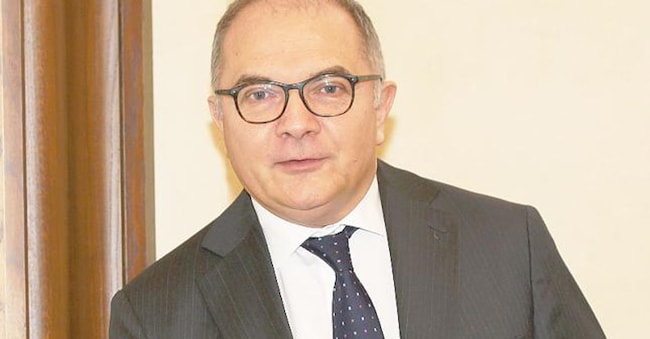
Procuratore antimafia. Maurizio De Lucia, capo della direzione distrettuale antimafia di Palermo

6' min read

6' min read

"There are major mafia ferments throughout the Palermo district, which also includes Trapani and Agrigento. But there is one fact: almost half of the people arrested in the last operation are under 40 years of age. They are subjects who have not experienced the season of the massacres and have suffered the strong fascination of Cosa Nostra'. This chat with Maurizio De Lucia, head of Palermo's anti-mafia prosecutor's office, starts from here, from a generational analysis. He entered the judiciary in 1990 and has been dealing with the mafia for almost thirty years: he was there as deputy prosecutor when Bernardo Provenzano was captured on 11 April 2006, he was there (but as head of the prosecution) when Matteo Messina Denaro was captured on 16 January 2023.

Who are these young people, these new recruits of Cosa Nostra? .

Loading...

Some come from historic mafia families, others have come in mainly because certain Cosa Nostra activities are particularly profitable, especially drug trafficking. Cosa Nostra has returned to major drug trafficking because it is the fastest means of enrichment.

How do you explain this adherence of the younger generation.

Many of these under-40s are fascinated by the prestige of feeling like men of Cosa Nostra and also by the economic benefits of trafficking that allows them to earn a lot of money. On the one hand, this generation looks to the older ones, because they are the ones who preserve the Cosa Nostra tradition. On the other hand, the younger ones are digital children, they may have problems expressing themselves in good Italian, but they are good at using technology. There are different levels of communication. One is that of the social networks that we monitor, but they know this and so the next step is the use of encrypted platforms.

But is it only a system for communication or is there more?

This is a very advanced system: communications are encrypted, i.e. they cannot be penetrated by the police. They can talk securely about important business: from drug trafficking to weapons, to the management of contracts. And this shows that the organisation has two profiles: on the one hand, it is rebuilding its potential, and on the other hand, it is able to communicate in a timely manner with the other major mafia organisations of the world. To negotiate the purchase of drug consignments with the Colombian or Mexican cartels, it has to be done in real time, and today they are able to do business in real time. This is a speeding up of the business of organised crime in general, but it is also a speeding up of the business of Cosa Nostra.

Is there much difficulty in identifying them?

Yes. On our part, on the part of the state, yes: there is a problem of technological capacity. Today, we have the cooperation of the police and judiciary of other states who have managed to breach some platforms, but of course the platforms renew themselves. And in particular the Belgians, the Dutch and the French have entered some platforms, they have acquired everything and we use a lot of material that they have given us. They pierced two or three platforms. This allows us to reconstruct a past, even a rather close past, but still a past. In the meantime, they the mafiosi are already on other platforms and have other communication tools and on this we Italy are lagging behind because our investments are not yet so adequate as to allow us to have, above all, personnel: the question is of hardware, but even more so of trained policemen, of our own hackers capable of entering these platforms.

But did you only encounter this in Palermo or also in Trapani?

So Palermo and Agrigento yes, the Agrigento-Palermo communication channels are biunivocal and take place with these systems, in particular with the encrypted telephones that are then always in contact with pieces of the 'ndrangheta. Through the encrypted telephones we know that the Calabrians bring the drugs in agreement with the Sicilians: the drugs a little in Messina, a lot in Catania and from there they make the rounds from Agrigento to Palermo or vice versa Messina-Palermo-Agrigento.

That is a new course.

Yes, but they continually renew them. Nowadays, passing narcotics from Messina is complicated, so they look for other solutions.

In the 1980s, drug proceeds went into investments. Now this is happening?

They need to rebuild the reserves. The extortions serve to maintain the families of the mafiosi in prison: if the welfare of Cosa Nostra disappears, Cosa Nostra disappears. The bulk of the money from drug trafficking is needed at this time to be reinvested again, especially in other illegal trafficking and, therefore, in narcotics, because the size of this traffic must grow. They need this money because they have to become seriously rich again in order to be able to make investments in the military field.

So the innovation of tradition looking back to the 1970s, right?

Yes, but right now we are mainly looking at becoming criminally strong again: they are not yet at the levels they have been and in order to get back to investing in legitimate markets, the amount of money you need is important.

And are they also strengthening the network, for example, to prevent new turncoats, new collaborators?

Right now, they don't have a problem with new collaborators because there is no collaborator who can reveal the whole: before, the structure was apex, so if you had an important collaborator, he could reveal everything about the structure; now it is modulating itself on a horizontal model. There is no single apex and therefore all information flows digitally, so everyone has a part of the knowledge, no one knows the whole. We have this knowledge thanks to wiretapping. Today, the phenomena of cooperation with justice are very small because they are no longer convincing.

Is there an attempt to resume contacts, to rebuild relations with the bourgeoisie?

There is a piece of the old mafia that uses the new mafia, but it is not that they are two unrelated things, that is, there is no 'high mafia is low mafia', there is mafia and mafia is characterised because there are influential subjects inside and outside the organisation who talk to companies, to politicians. They are subjects who have their own history and here, then, one must reason why parts of Palermo society continue to dialogue with these. They are also authoritative within the organisation because they are followed and listened to by young people who see in them points of reference: they are people accredited in the salons who have always done business with pieces of Palermo society.

Everything changes until everything stays the same, one might say.

In some ways yes, especially the elders interpret it that way. Yes, but because our thing does not give up its history, otherwise it is no longer our thing, but it looks at all the opportunities it has now, especially to solve the big problem that is survival at the moment.

So they do not shoot.

They don't shoot for two reasons: they can't shoot because military strength is not what it used to be and because it doesn't suit them. If you shoot, attention goes up, certainly a lot.

Businesses in Palermo have become accustomed to paying protection money again.

The mafia is present wherever there is a chance to make a profit. Today there is a real possibility of repelling them by denouncing them and by police intervention, but evidently not everyone is of this opinion.

The statement on blunt weapons in public administration investigations is striking. 

That is another matter.

And yet that sometimes allows you to see and find things that perhaps seemingly have nothing to do with it.

Usually it is the other way around: we detect facts of corruption from mafia investigations because those investigative tools are more effective than those of public administration investigations and that is still the case. It is very rare for a public administration investigation to result in anything concrete. This is because clearly the evidentiary framework we are looking for is always very solid and the tools we have do not always allow us to get there.

But having blunt weapons...

But this is not a problem of the magistrates but a choice of those who should give us these instruments and do not give them to us.

Copyright reserved ©
Loading...

Brand connect

Loading...

Newsletter

Notizie e approfondimenti sugli avvenimenti politici, economici e finanziari.

Iscriviti