
Stm, EU green light for 2 billion in aid from Italy to Catania
The Commission approved support in the construction and operation of an integrated chip production plant
4' min read
Key points
4' min read
The European Commission has approved, under EU state aid rules, a EUR 2 billion Italian measure to support STMicroelectronics ("ST") in the construction and operation of an chip integrated silicon carbide power device manufacturing plant in Catania, Sicily. The measure will strengthen Europe's security of supply, resilience and digital sovereignty in semiconductor technologies, in line with the objectives set out in the European Chips Act communication. The measure will also contribute to the achievement of the digital and green transitions.
The Italian Plan
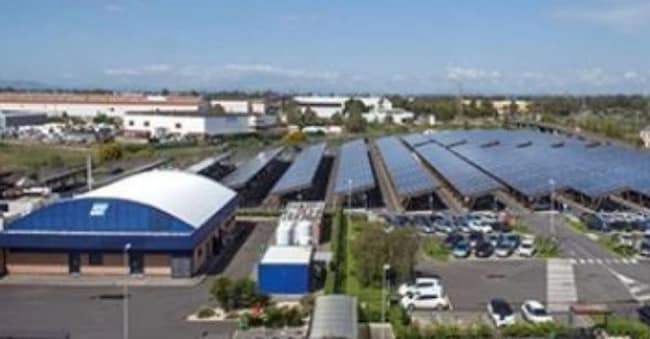
.Italy has notified the Commission of its plan to support the Catania Campus of ST project to build and operate an integrated chip production plant for SiC power devices. SiC is a composite material used to produce wafers that serve as the basis for specific microchips used in high-performance power devices, such as in electric vehicles, fast-charging stations, renewable energy and other industrial applications. The integrated plant will cover all production stages from raw material to finished devices, i.e. power transistors and power modules.
The Direct Subsidy
.The aid will take the form of a direct grant of around EUR 2 billion to ST to support its investment worth a total of EUR 5 billion. The project will enable the development of a large-scale production plant for high-performance SiC chips, based on 200-mm-diameter wafers that will be processed into modules and other devices used, for example, by the automotive industry, in Europe and worldwide. The plant is expected to operate at full capacity in 2032.
St
Commitment by StUnder the measure, ST agreed to: ensure that the project will have a clear positive impact with spillover effects on the EU semiconductor supply chain beyond ST and Italy; contribute to the development of the next generation of 200 mm SiC technology, as well as a technology roadmap for SiC modules in the EU implement priority orders in the event of supply shortages in line with the European Chips Act and ensure that the project will not be subject to the extra-territorial application of public service obligations imposed by a third country; and develop and deploy training and skills courses to increase the pool of skilled and qualified workforce. The project is based on technologies that have been and will be developed as part of the Important Projects of Common European Interest ("Ipcei") for microelectronics research and innovation approved by the Commission in December 2018 and June 2023. On 4 March 2024, ST applied for recognition of the Catania Campus as an integrated manufacturing facility under the European Chips Act. This process is independent of the state aid assessment.
The first plant in Europe
.The new STMicroelectronics mass production plant in Catania for innovative technologies and chips is the first of its kind in Europe, as there is currently no comparable mass production plant. This was written by the European Commission, which today gave the go-ahead for 2 billion in state aid from Italy for the plant. In particular, the Catania Campus will be the first integrated SiC production plant in Europe covering all production stages, from powder material to finished devices, including the production of SiC modules, the Commission writes. The Catania Campus will also utilise a production process based on 200 mm diameter wafers for SiC and will gain significant efficiency gains from the close integration of production within the Campus.


