
StMicroelectronics, centre in Pisa to attract talent
For the semiconductor multinational a new research site in the Tuscan city. Determining synergy with the University of Pisa
3' min read
3' min read
The Italo-French semiconductor giant StMicroelectronics (StMicroelectronics) - $17.29 billion turnover 2023 with 51,000 employees worldwide - is opening its thirteenth research and development centre in Italy and has chosen Pisa, the city of the Leaning Tower, for two reasons: for the pool of electronic engineering graduates that the University of Pisa is able to ensure, and for the logistical need to preside over central Italy, an area that is still 'uncovered'.
The facility, inaugurated a few weeks ago in the presence of the CEO of StMicroelectronis Italia, Lucio Colombo, and the Rector of the University of Pisa, Riccardo Zucchi, designs and industrialises integrated circuits for consumer electronics, and also hosts research activities.
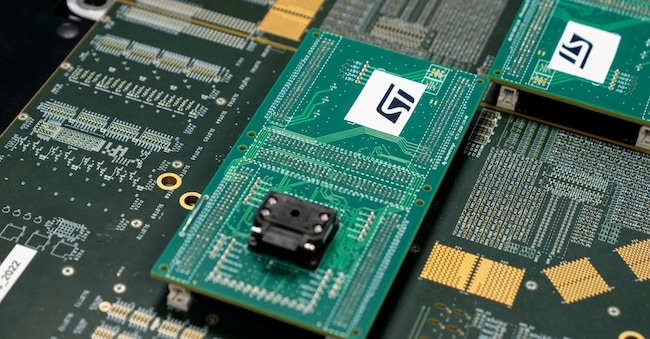
The ribbon-cutting ceremony comes after the start-up phase: the centre has actually been in operation for 20 months, but a testing laboratory was added last May, which gave it an extra gear, allowing the performance of the products to be measured. In Pisa, in particular, innovative solutions are being designed to extend battery life while reducing consumption. These are circuits for wireless chargers for mobile phones and wearables, but also power management circuits for the screens of portable devices (the wireless charging and power management areas).
In the Pisa centre, all design phases are covered: from the device specification to the elaboration of the architecture, both analogue and digital, to the realisation of the circuits and performance measurement. Today, 40 people work there, almost all of them electronic engineering graduates, as the facility is focused on the hardware design of chips. St's investment, therefore, was mainly in human resources and computers. 'We have had easier access to many recent graduates from the University of Pisa,' explain the electronic components group, which employs 12,500 people in Italy. Having the University close by was crucial to reach a critical mass and cultivate new talent. It was more difficult to find candidates with senior profiles, which are highly sought after on the market, but even in this case we were successful'.
A hand was lent by university professors, who helped the multinational set up on Pisan soil: the centre started out with six senior 'pioneers', who joined St. John's project to quickly build a headquarters in Tuscany. For four months, the facility was housed in a room of the Department of Information Engineering of the University of Pisa, while waiting to find a location (later found in Montacchiello). In order to recruit the necessary figures, the lecturers also helped St. St. to organise a recruiting event in which more than 80 students were interviewed and a dozen recent graduates were hired.

