
Stock markets: the ‘Blue Wave’ tsunami hits Asia – Tokyo, Seoul and Taipei plummet
Asian markets with the greatest exposure to artificial intelligence opened sharply lower. India bucked the trend
from our correspondent Marco Masciaga
 Aggiungi Il Sole 24 Ore
ai preferiti su Google
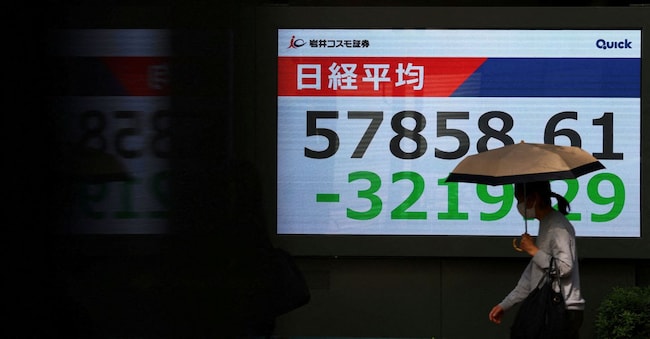
NEW DELHI – Asian markets with the greatest exposure to the technology sector opened trading with very sharp falls. Fears of tighter regulatory controls and a slowdown in investment in infrastructure for artificial intelligence triggered the sharpest fall in US stock markets since the crash of April 2025, caused by President Donald Trump’s ‘Liberation Day’, and the fallout has spread to the Asia-Pacific markets.
In South Korea, the Kospi fell by more than 8 per cent, triggering the circuit breaker. When trading resumed, the index was still down 7 per cent. Japan’s Nikkei plunged by 6 per cent, whilst the Taiwan Stock Exchange recorded a fall of more than 8 per cent. Indian stock markets, on the other hand, were up. Delhi appears to have missed the artificial intelligence bandwagon and, after lagging behind for months, the Bombay Stock Exchange (BSE) and the National Stock Exchange (NSE) are both in positive territory today.
The shares hardest hit by the sell-off are those that have been smashing one record after another for months. In South Korea Samsung Electronics fell by almost 10 per cent, whilst SK Hynix dropped by 11.7 per cent. In Japan Kioxia plummeted by 14 per cent, whilst in Taipei TSMC lost 8.5 per cent. Japan’s SoftBank, one of the world’s largest investors in the artificial intelligence sector, fell by 11 per cent, and the cost of insuring against a potential default by the company rose to its highest level in four years.
As is almost always the case, the contagion has come from the United States. On Wall Street, the index that measures expected market volatility has shot up. The Nasdaq has fallen by 5.5 per cent and S&P 500 companies have seen $3 trillion in market capitalisation evaporate. Investors fear that the Democrats, who dominated this week’s mid-term elections, may put the brakes on the artificial intelligence boom. Political concerns are weighing on a sector that has grown enormously in recent months, but which is also plagued by doubts over the returns on the massive investments earmarked for technological development.
Friday’s slump capped off a highly volatile week for the markets: initially, investors had bet that the Democrats’ victory in the mid-term elections, securing a majority in Congress, would hasten an end to the war in Iran. However, this prospect was quickly overshadowed by fears of a regulatory crackdown on the data centre sector.


