
Stoppani: 'The recovery of the restaurant industry continues'
The President on duties: 'Stormy moment. The presence of American tourists in Italy could be reduced'.

4' min read
4' min read
2024 was a "special" year for the Italian catering system, which includes bars, restaurants, pizzerias, pubs, banqueting and canteens, and compared to 2019 we see an increase (+11.3%) in the value of consumption but also a drop in volumes (-6%). The value of consumption exceeds EUR 96 billion with +1.6% in real terms over the previous year, a trend also influenced by the slowdown in economic growth. Added value is also growing, reaching 59.3 billion, thus continuing the positive trend that has progressively led first to recover and then exceed the pre-pandemic level: compared to 2023, there has been growth in real terms of 1.4%. A spotty scenario that ends with a positive balance between companies that have improved their economic result and those that have worsened it remains positive (+26.2%) but is much lower than the balance a year earlier (+34.5%). These are the key figures of the Fipe-Confcommercio Catering 2025 Report, which highlights how employment has reached 1.5 million people, 1.1 million of whom are employees. Compared to 2023 there has been an increase of about five percentage points while employees have grown by 6.7% just over 70 thousand. This is what emerges from the 2025 Catering Report by Fipe-Confcommercio, which nevertheless shows how employment growth does not go hand in hand with the increase in productivity, which drops by half a percentage point while the difficulty in finding qualified personnel persists. The shadows also include the drop in the number of businesses by 1.2% on the previous year to 328 thousand, with a greater contraction in bars -3.3%.
The balance between new openings and closures is negative with the loss of just over 18,000 companies, with over a third of closures in Northern Italy. Thus the catering sector in Italy at the end of 2024 counted 327,850 companies with the Ateco code 'catering services'. Compared to the previous year there was a slight decrease, more marked in the Marche and Veneto. The 'Bar' sector is the one that sees a generalised drop in the number of active enterprises, which fell to 127,667 compared to 132,004 in 2023. Restaurants and mobile catering activities number 195,670, while companies specialising in banqueting, prepared meals and catering amount to 3,849, a growing number. Overall, each company employs an average of 6.7 people, but the difficulty in finding trained staff capable of providing customers with a quality service remains.
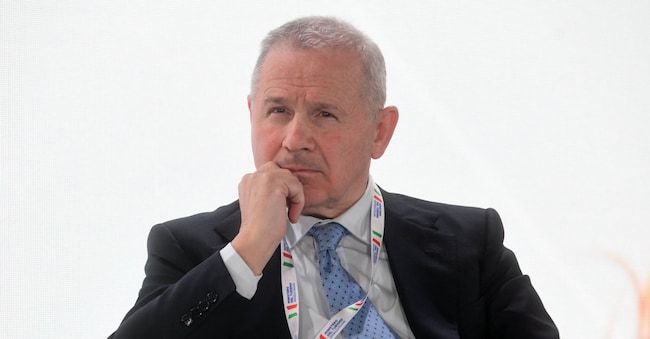
"Catering remains a strategic sector for the country's system and the 2025 report returns an extremely composite picture of the catering sector, which is grappling with a long recovery to pre-pandemic levels that, however, does not seem to have ended yet," says Lino Enrico Stoppani, president of Fipe-Confcommercio, pointing out that the report comes at a "stormy time". The duties imposed by US President Donald Trump could in fact cause a 'probable depreciation of the dollar that will inevitably lead to an increase in prices for American tourists who want to come to Italy and who could reduce their presence in our territories'.
The highlight of this edition, continues the Fipe president, is work: in June 2024 there was the renewal of the National Collective Labour Contract which 'represented an important step'. Of course, the demographic crisis 'has a great impact and must be tackled with serious policies on the family and immigration, to obtain from immigrants the expected contribution to the Italian labour shortage'. Lastly, 'work remains a social issue on which to act in three directions: ensuring contractual security, implementing organisational flexibility also by intervening on business models and working hours, and on training issues for both employees and companies'.
"The 2025 Report paints an extremely composite picture of the catering sector, grappling with a long recovery to pre-pandemic levels that, however, does not seem to have been completed yet," Stoppani comments. "The persistent difficulties in finding qualified personnel, despite the overall growth in employment, must shine a spotlight on the sector's prospects in terms of maintaining the high standards of supply and service that have always distinguished it. The levers must be directed at strengthening contractual security and economic stability; and with regard to the renewal of the National Collective Labour Agreement was an important step, improving organisational flexibility, also by intervening on the business models of companies, and investing on the fronts of professional training, starting with schools'.

