
Stories of the fixer who understands people, finance and the Chinese spirit
Alberto Forchielli. At the renowned San Domenico restaurant in Imola, a wide-ranging chat covering Italian industry, privatisations, investment and the future of relations with China: stories from the fixer who understands people, finance and the Chinese spirit

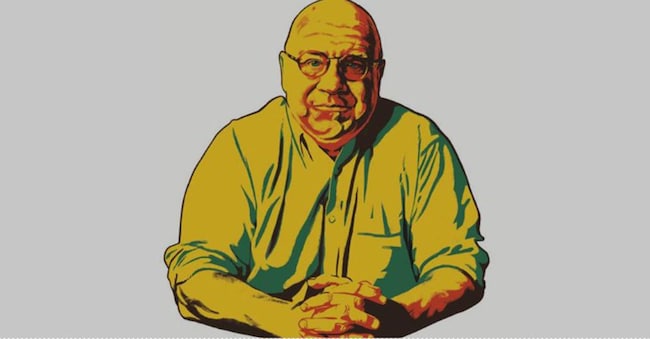
‘I was in Singapore from 1994 to 1998. I was in Asia on behalf of Finmeccanica. A problem arose in Pakistan. One of our engineers had been implicated in a nasty affair involving suspicious financial dealings between Pakistani and Japanese companies. As our manager, he had not paid any bribes. Finmeccanica bore no direct responsibility, but it fell to us to deal with the problem. The authorities in Islamabad had issued an arrest warrant and an order for his detention. I worked with the Italian embassy and our intelligence services. The Pakistani police stormed into the hotel to take him away. He escaped by hiding in a laundry bag. We managed to hide him in a secret location in Islamabad. That in itself was a miracle: Islamabad is one of the most heavily monitored cities in the world. We did not know, however, what to do. An Italian soldier had been killed in an attack in Afghanistan. The Minister of Defence was Beniamino Andreatta. The Prime Minister was Romano Prodi. Andreatta was an economist. But he had fallen in love with the military world and field operations. He suggested to me that we secretly divert the flight. After the stopover in Kabul, where we needed to recover the body of the soldier who had fallen in action, the aeroplane would head for Islamabad and land for just a few minutes on the runway at its airport. Those few minutes were enough. Our engineer boarded the plane. We hid him inside a coffin. The plane took off again. He returned home. Finmeccanica was not implicated in the scandal. Prodi knew nothing of it. I only confessed this to Romano a year ago.”
Alberto Forchielli is a fixer. Someone who sorts things out and puts them right. But, unlike many others who operate in the same capacity within the human comedy of business and politics, he has one distinguishing feature: he is not unscrupulous; he does not risk – until proven otherwise – ending up as a guest of the state; and he cannot stand the weaknesses that lead so many to take advantage – even materially – of the crumbs that fall from the lavishly laid tables at which they sit. He has an almost moralistic streak that is not usually found in those who fulfil this Balzac-esque role, which is essential for good and evil to form the amalgam of reality. Speaking of tables, we are seated at San Domenico in Imola, one of the first Italian restaurants to be awarded (and to retain for years) a Michelin star – which has long since become two.
Today, Max Mascia is in charge of the kitchen. We’re in the private dining room that the owners reserve solely for friends, with a glass wall looking straight into the kitchen. “Alberto, having this space is a masterstroke,” I say to him. In provincial Italy, such privileges are granted not so much to individuals as to members of certain particularly respected families: “You know, I’d never really thought about it before? You’re probably right. My father, Paolo, was a university professor of civil law in Bologna. My mother, Maria Grazia, was a noblewoman, the daughter of Giacomo Dal Monte Casoni, a working-class Catholic anti-fascist who was a member of the National Liberation Committee for Northern Italia during the Second World War and, from 1945, president of the Cassa di Risparmio di Imola for twenty years. My grandfather Giacomo, as well as running his own civil law practice, fostered a harmonious relationship with the Communist Party as a Christian Democrat and, as a banker, acted as a pioneer of venture capital. Without his forward-thinking and optimistic decisions, no one in Imola would ever have granted credit to Sacmi, Cefla and the Cooperativa Ceramica – all of which went on to become major manufacturing powers. It was the Italia of Giovannino Guareschi, where Don Camillo and Peppone would fight tooth and nail, yet talk things through and were more than just friends.”
Alberto tells his story whilst the waiter pours a glass of Jacques Selosse champagne. Served at the table are small scallop nuggets with an oyster reduction made with Dry Martini, small fillets of salt cod with datterini tomatoes in a pizzaiola sauce, mini Romagna-style piadinas and fried tortellini. He was educated at the University of Bologna and Harvard Business School, was part of the elite Mac Group network founded by the very same professors from Boston, and spent years in Chile and Peru working for the World Bank. He experienced the first wave of Italian privatisations (as Secretary-General for Privatisations at Prodi’s IRI) and helped rebuild the Balkans following the war in Serbia, in Croatia and in Bosnia and Herzegovina with funding from the Central Investment Bank, where, alongside Massimo Ponzellini, he formed an effective and unconventional Italian partnership in contrast to the dreary formalism of the Luxembourg-based Euro-bureaucracy.
Forchielli acted as a link between part of the West and China, without being absorbed by the latter. Alberto recalls: ‘My first trip to China was in 1994. In 2004, I took over the Atala bicycle business in Padua. I started sourcing mechanical components from China. That was when I became acquainted with high-quality Chinese medium-sized mechanical engineering firms, which had strong links to Taiwan.”


