Today in the Cdm

Ponte sullo Stretto, the Infrastructure Decree reforms governance: Commissioner eliminated and Court of Auditors strengthened

The draft decree with the new rules for the Calabria-Sicily link after discussions with the Quirinal. Bathing establishments and motorways also included in the text

by Flavia Landolfi

Aggiornato alle 16

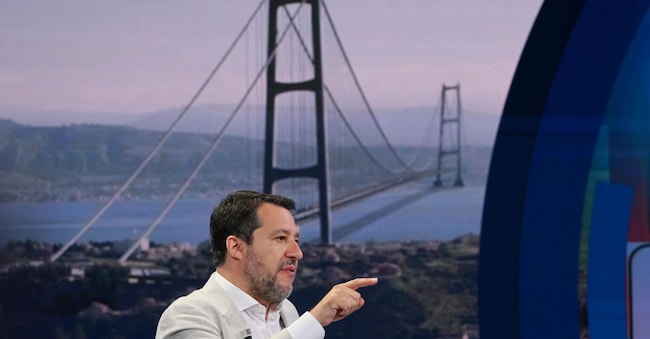
Il leader della Lega e ministro dei Trasporti, Matteo Salvini, ospite della trasmissione televisiva Rai: Porta a porta, condotta da Bruno Vespa, Roma, 29 maggio 2024.  ANSA/ALESSANDRO DI MEO (ponte sullo stretto messina)

3' min read

Translated by AI
Versione italiana

3' min read

Translated by AI
Versione italiana

On the Ponte sullo Stretto, the government is changing step and rewriting the key article of the Infrastructure Decree. After days of discussion with the Hill, the text arrived at the Council of Ministers with less extraordinary governance and with the Mit led by Matteo Salvini once again at the centre of the game.

As anticipated by Il Sole 24 Ore, in the talks over the last few days with the Quirinale, observations had emerged on parts of the original structure of Article 1, the one with the delicate task of putting the work back on track and above all bringing it to fruition.

Loading...

For the Hill, these were passages considered revisable, especially where the text accentuated the extraordinary dimension of the work's governance: ad hoc rules on a single infrastructure, a Commissioner in the person of Stretto di Messina's managing director, Pietro Ciucci, and therefore outside the ministry, the role of the Court of Auditors resized and the issue of the damage to the state budget lightened.

Profiles that would have been considered worthy of further investigation and that prompted the ministry of Porta Pia to a more extensive rewrite than expected.

The confrontation between Minister Salvini and President Mattarella

The result is a text that has now been approved by the Council of Ministers with a different appearance: the figure of the super-commissioner has disappeared, the direction is firmly back in the hands of the Ministry of Infrastructure and the overall architecture has been put back on a more ordinary track.

The tipping point came after the confrontation between Minister Salvini and President Mattarella.

'I also wanted to discuss the text of the decree with the president,' the deputy prime minister explained yesterday, emphasising that 'there was never any rule limiting the powers of the Court of Auditors'.

The same line on the commissioner chapter: 'We at the ministry take charge of all the procedures to comply with the requests of the Court of Auditors, to go to Brussels to talk to the Commission, and to finally start the construction sites'.

Thus the text that arrived on the table at Palazzo Chigi was rewritten in its most exposed passages, with the aim of paving the way for approval without new institutional friction.

Article 1, which in the drafts circulated on Tuesday contained only the title but left the space blank, now entrusts directly to the Ministry of Porta Pia the fulfilments required after the findings of the accounting judiciary: updating the business plan, acquiring new technical opinions, managing the European environmental procedure, and preparing the new CIPESS resolution.

The formulations that explicitly delimited the perimeter of the Court of Auditors' control or the references to the accounting liability shield no longer appear in the new set-up, while the figure of the commissioner for complementary railway works, identified in Rfi's CEO Aldo Isi, remains.

The Roadmap

But in the meantime, for the work the rigmarole of procedures to arrive at a new resolution is long, and the draft decree outlines a real roadmap. It is a matter of securing the "acquisition of the economic-financial plan also for the purpose of incorporating the expenditure variations for the realisation of the work", but also of receiving the green light from Art and the Public Works Council, whose initial exclusion had made the accounting magistrates turn up their noses. Not only that.

The procedures also include new steps through the mesh of the Habitats Directive, with an assessment of the impacts on human health as well, and a new Iropi resolution, the passkey of "imperative reasons of public interest", the only ones that can circumvent European environmental rules.

The tipping point? The new Cipess resolution that will have 'a substitutive nature with respect to all other authorisations, approvals and opinions, however named, preparatory or subsequent to the resolution itself'.

Not only the bridge, however. A note from the Ministry of Economic Development recalls that the decree provides for the extension of the two extraordinary commissioners already in charge of work on the A24-A25 motorway, which connects Rome to L'Aquila.

Among the novelties that should find their way into the text is the transfer to Rfi's managing director of commissioner powers over a hundred railway construction sites, including the Salerno-Reggio.

Then comes, as anticipated today, the rule on bathers with the provision of a standard notice for tenders and the extension to the entire season of the possibility for establishments to use underage lifeguards.

Copyright reserved ©
Loading...

Brand connect

Loading...

Newsletter

Notizie e approfondimenti sugli avvenimenti politici, economici e finanziari.

Iscriviti