Venice Film Festival

'Stranger Eyes', a thriller about contemporary voyeurism from Singapore

In competition at the Venice Film Festival the new film by director Yeo Siew Hua, already winner of the Golden Leopard at the Locarno Festival
by Andrea Chimento

3' min read

3' min read

There is ample space for cinema from the Far East in these last days of the Venice Film Festival. From the Chinese director Wang Bing with "Youth: Homecoming" to the Japanese Takeshi Kitano with "Broken Rage", there is also room for a much lesser-known cinematography such as that of Singapore with "Stranger Eyes".

Presented in competition, the film bears the signature of Yeo Siew Hua, a director who made his name with his previous feature, 2018's 'A Land Imagined', with which he won the Golden Leopard at the Locarno Film Festival.

Loading...

At the centre of the narrative is a young couple who, after the mysterious disappearance of their daughter, start receiving strange videos and realise that someone has filmed their daily life, even their most intimate moments. The police put the house under surveillance to try to catch the alleged kidnapper, but the family begins to crumble as secrets are revealed under the watchful gaze of eyes that observe them from all sides.

'In a small island state like Singapore, where there is no way out of the surveillance network, watching and being watched becomes a daily ritual': the words of director Yeo Siew Hua give us an insight into the profound meaning of a highly political feature film, which thinks broadly about the meaning of images in contemporary society and, in particular, in that of his home country.

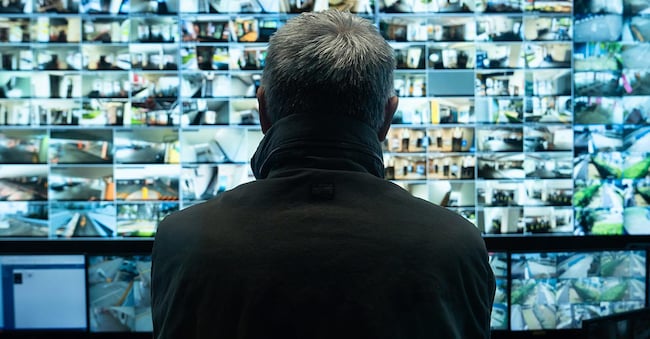
Control images, surveillance videos, but also amateur video cameras, webcams, mobile phones and family films: the forms of recording are piled one on top of the other within this feature film that opens, not surprisingly, with a video that is seen and reviewed, analysed and studied.
The reflection, however, is not only on who is being watched and spied on, but also on who is watching, be it a voyeur or a watcher, a simple tourist or an ill-intentioned person.

Many references for a rich film

.

Seeing 'Stranger Eyes' one cannot help but be reminded of several feature films from the past, from Alfred Hitchcock's 'Rear Window' to Michael Haneke's 'Nothing to Hide', and the feeling that many of the dynamics smack of the familiar is quite strong.

Despite the fact that the narrative basis lacks originality, however, the viewing remains engaging, mixing thriller and melodrama with undoubted dramatic force, especially in a truly exciting middle section.

Differing in tone and stylistic manner from all the other films in this year's Venice competition, 'Stranger Eyes' is a product that could also work discretely in terms of distribution in our theatres.

Youth: Homecoming

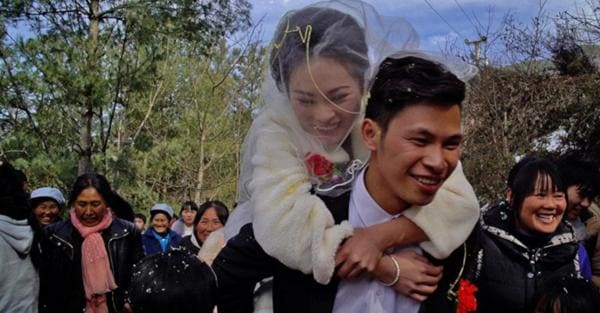
He needs no great introduction, on the other hand, a great auteur like Wang Bing with the aforementioned documentary 'Youth: Homecoming', the third chapter of a trilogy that began with 'Youth: Spring', seen at the Cannes Film Festival in 2023, and continued with 'Youth: Hard Times', presented this year at the Locarno Festival.

At the centre of this gigantic project is a group of young workers from Zhili, a district specialising in the textile industry, told through these three films.

In this last chapter, with the holidays approaching, the textile workshops are almost deserted. The few remaining employees are desperately waiting for their salaries to pay their way home. From the banks of the Yangtze River to the mountains of Yunnan, everyone is celebrating in their hometowns and celebrating prosperity rituals with family.

A worthy conclusion to a project of the highest order, 'Youth: Homecoming' is a film that reflects on the hopes (the opportunity to marry on the few free days available) and sufferings (there is practically never time to rest during the working days) of young people who have to work hard to support themselves. "Chinese society has reduced their daily life to work", says Wang Bing, an author who has always managed to portray very hard aspects of his native country with great strength: one only has to think of great works such as "Three Sisters", "Madness and Love" and "Mrs. Fang" to understand the importance of this director, and the "Youth" trilogy is yet another piece in a mosaic of works that are simply fundamental to contemporary cinema.

Presented in competition, 'Youth: Homecoming' would undoubtedly deserve to be included in the final palmarès.

Copyright reserved ©
Loading...

Brand connect

Loading...

Newsletter

Notizie e approfondimenti sugli avvenimenti politici, economici e finanziari.

Iscriviti