
Student accommodation: the number of beds is increasing, but the gap with the leading European countries remains
For the 650,000 university students – including those living away from home, international students and Erasmus students – the coverage rate currently stands at 12 per cent, with 80,000 accommodation units available across the public and private sectors. Thanks to the impetus provided by the NRRP, a further 30,000 units are set to be added by 2027.

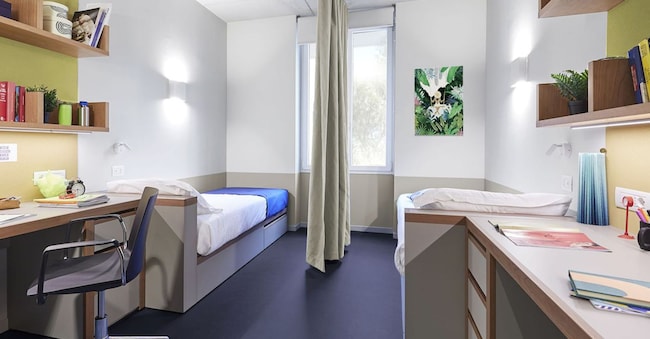
The results of the protracted process surrounding the funds from the Recovery and Resilience Plan (PNRR) are now in the final stages: whilst the Ministry of Universities and Research (MUR) is finalising its report on the first half of the 60,000 hospital beds expected by 2026, Cassa Depositi e Prestiti has begun publishing the projects eligible for funding for the remaining 30,000 beds to be provided by 15 May 2027. Whilst it remains to be seen whether the dual target will be met, operators are beginning to make their first forecasts regarding the outcomes of an operational framework that did not previously exist in Italia.
According to figures compiled by the property consultancy Cushman & Wakefield for *Il Sole 24 Ore*, there are currently around 80,000 beds available in Italia, comprising both private and state-subsidised accommodation. Given an estimated total of around 650,000 potential users – comprising students living away from home, Erasmus students and international students (data from the Ministry of University and Research (MUR) puts the figure lower, as it only counts those moving from one region to another and excludes commuters), the potential coverage rate for housing needs stands at 12 per cent. This represents progress compared with a previous situation of virtually no supply, although ‘it is a structural lag behind the main European benchmarks’, notes Rocco Leone, Head of Living Capital Markets at C&W Italy.
However, in order to make a fair comparison with other countries, operators relate the supply of accommodation to the total university population, which in Italia stands at around 1.65 million students (over 2 million if online students are also taken into account). Although this approach has its statistical limitations, ‘if we calculate the current 80,000 beds against this figure, the coverage rate drops dramatically to 4 per cent, compared with a European average of 15 per cent’, explains Leone. The prospects for growth are significant but still not sufficient to bridge the gap. C&W Italy’s forecast for 2030 – the target date for the market to be fully operational and consolidated – is for a total of 110,000 beds, across public, private and religious halls of residence. Provided there is also “a continued flow of private investment and faster decision-making processes”, continues Leone. Assuming that all projects are completed and that student numbers continue to grow by 3 per cent (in line with last year), reaching around 1.91 million enrolled students, Italia would still fall short of European standards, with a coverage rate of 5.7 per cent (again, as a proportion of the total student population).
Current offer
At present, a student who does not wish to turn to the private market has two options (three if religious boarding schools are included, although these are in the minority): accommodation managed by local authorities under the ‘right to education’ scheme, and private accommodation. The former are affordable – costing around 200–300 euros a month – and access is regulated by regional calls for applications, which establish a ranking list usually based on income and merit. The latter, on the other hand, vary considerably in price depending on the type: student accommodation benefiting from PNRR funding must guarantee rents at least 15 per cent below average market rates, in addition to the mandatory 30 per cent allocated through the ‘right to education’ bodies. According to C&W Italy, in Milan the average monthly rent is around 750 euros. Alongside subsidised accommodation, there is the private market and high-end accommodation. In this case, prices vary considerably, peaking at €1,600 per month in Milan. The target market is international rather than Italian: high-spending students who require a range of additional services, from swimming pools and sports facilities to terraces, covered bicycle storage and communal living areas. “This market segment does not compete with the subsidised accommodation on offer. At present, these premium properties are recording high occupancy rates, driven by limited supply. As the available stock increases, it is reasonable to expect prices to gradually normalise,” concludes Leone.

