
Exploring Japan through art
Historian Lockyer uses artefacts from the British Museum as a starting point to explain the country’s history from prehistory to the present day, in a process of continuous interaction with the world

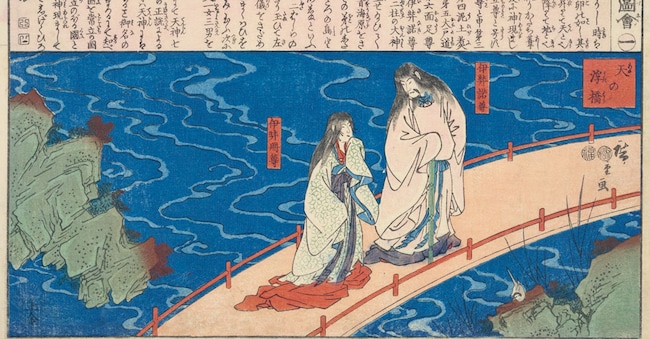
Like a wave that submerges, reveals and saves. Women and men shape history with their ideas and with the objects they create. Thus, Angus Lockyer, a historian of Japan who taught at SOAS, University of London, has selected artefacts from the British Museum’s Japanese collections to trace the history of Japan, from prehistory to manga, in a continuous interplay between the islands of the archipelago and the wider world. Thanks to its 500 objects dating from the 4th to the 16th centuries, over 13,000 from the early modern period and nearly 10,000 documenting the transformations that took place after the mid-19th century, the British Museum paints a picture of a millennia-old civilisation, and the book exceeds all expectations (make a note of it for your Christmas list): the parade of art objects is endless, the editorial care refined, the scientific research precise and very Anglo-Saxon. It confines itself to the facts without indulging in adjectives; thus, in this purity, even merely leafing through the pages brings the enchantment to life – something that might well have surprised Fosco Maraini himself: ‘Japanese refinement is the most persuasive in the world because the means through which it expresses itself are the purest, most humble and most natural’ (Japanese Hours, 1956).
For Lockyer, these objects bear witness to patient skill and technical expertise dating back over 12,000 years – a period to which some of the world’s oldest examples of pottery are attributed (cord-marked pottery, Jōmon): this is the Japan of the earliest times, and the first documented evidence of the existence of a Japanese state dates back to the 6th century, with a clear influence from Confucian ideas about the state and Buddhist concepts of the afterlife. Between 500 and 1185 AD, the state as we know it developed, particularly around Nara and Kyoto: Chinese characters were transformed into the Japanese script; the arrival of Buddhism is evidenced by exquisite statues; scrolls recount the founding myths; and a courtly aesthetic, by now fully developed and defined, takes shape in dreamlike screens. Court life meant leisure, music and dance, but also accounts of war, with folding screens commemorating victories and defeats. In medieval Japan (1185–1600), Kyoto retained its political and religious authority, social standing and cultural prestige for a further five hundred years, with military prowess (bu) balanced by culture (bun) and supported by patronage. It was an era in which the production of weapons and armour rose to the status of an art form, and in which the samurai emerged as a result of the state’s failings.
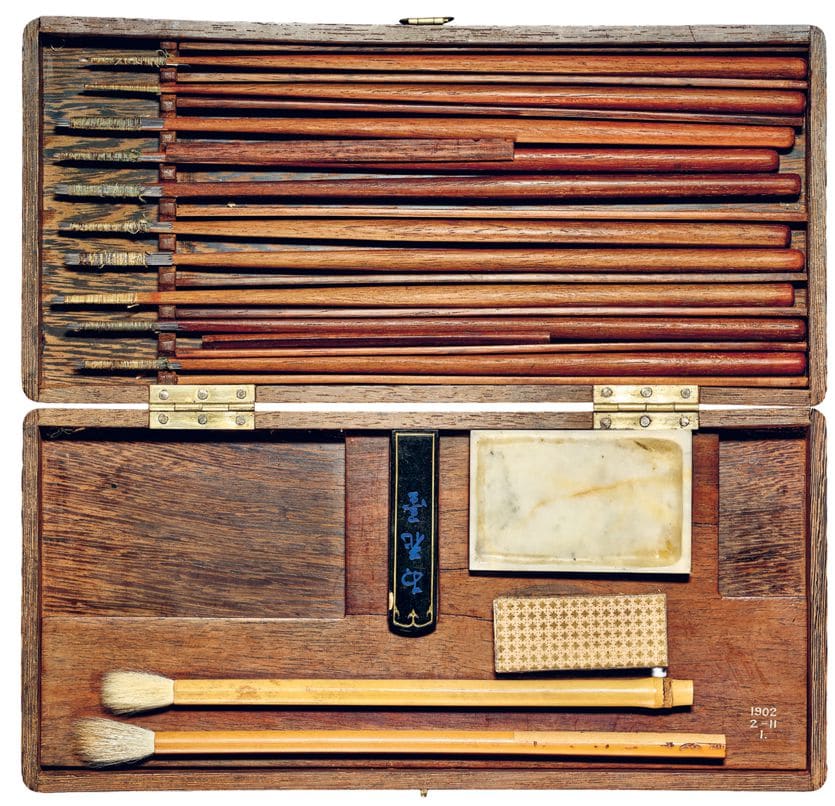
The early modern period (1600–1868) finally brought peace, ushering in 250 years of profound change, as evidenced by porcelain objects – some of which were made to order to suit European tastes – and by the erotic encounters elegantly depicted in paintings and prints. In Edo, the seat of the court; in Ōsaka, the commercial capital; and in Kyōto, the city of culture, people frequented the kabuki theatre and woodblock prints were in high demand: books offered risqué stories about contemporary society, but also used classical poetry as a syllabary to teach women to read and write. Gold, lacquer and mother-of-pearl adorned a wide variety of objects, from dressing tables to precious ceramics, saddles and stirrups. In 1868, with the arrival of the Emperor, Edo became Tōkyō (‘Eastern Capital’) and a new imperial era began: the Meiji era (‘enlightened rule’). These new developments – foreigners and fashions, brick buildings and railway tracks – caught the attention of artists and publishers. The first exports to the West of decorated ceramics, metal objects and other items sparked the wave of European imitations known as Japonism. And Westerners in Japan found services ranging from tattoo artists (the box you see on this page is magnificent) to sex. In some ways, they changed the soul of the country because modern objects were gradually adopted into daily life and work, giving rise to the need to ‘invent tradition’: thus, Arita pottery, Kyoto silk fabrics, Kanazawa gold leaf and Tsubame cutlery – genuine local identities – prune away the past, almost as if to pretend that nothing has changed and that traditions have been preserved.
In the 1920s, Japan and its empire were brimming with novelties: shipyards, underground railways, cafés, erotic magazines, dining chairs, baseball gloves, bobbed haircuts and emollient creams. Modernist abstraction, surrealism and documentary photojournalism were the order of the day. But the Japanese invasion of China in 1937 and the attack on the Euro-American colonies in 1941 led to the depletion of human and material resources in the name of total war. Humanity has now lost its reason. And Japan only re-entered the world stage with the 1964 Tokyo Olympics, the electronics industry and a cultural renaissance that brought about the re-emergence of rituals, music and dance, right through to manga and anime. Page after page, centuries and wonders unfold, alongside the wisdom of craftsmen and artists, leading one perhaps to agree with Fosco Maraini on the meaning of beauty: ‘It is like an island, a moment, a whispered word, an instant; it is pure quality, an intoxication for which nostalgia will remain eternal.’
Angus Lockyer, Japan: From Prehistory to Manga – A History of a Civilisation, Einaudi, 260 pages, €35


