
Succession, Game of Thrones and business families
familyandtrends is unfamiliar with television series and television in general, but had to take a look at HBO's Succession because it is often called upon in meetings with business families.

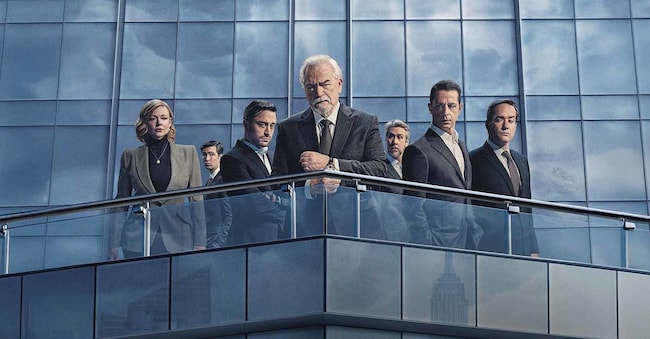
familyandtrends is unfamiliar with television series and television in general, but had to take a look at HBO's Succession because it was often called upon in meetings with business families.
Succession does not have many lessons for family businesses, not even in the things not to do: the shark jump, the moment when a series reaches a point of decay after which it loses quality, comes in the second episode. The patriarch Logan, after naming one of his sons as successor, backs out, tries to change governance and has a stroke. In the absence of the founder and head of the company and without a crisis plan in place, decision-making is left to a board of directors who await instructions from someone instead of having a role. The four brothers, whose power to give instructions is unclear, are unable to come to an agreement. Kendall, the indicated and then deposed successor, is proposed with little conviction as interim CEO (Chief Executive Officer) after having had to make concessions without logic to two brothers: Roman becomes COO (Chief Operating Officer, it is not clear why he is not interim in this case); Tom, the boyfriend of Kendall's sister Shiv, takes over the leadership of the Parks & Cruises business unit.
At this point, even though we are in the second episode of the first season, the series, at least as far as an expert on family businesses is concerned, is over: there is no system for making good decisions, called governance, there is no continuity plan for times of crisis, and there are four brothers who, when faced with crisis, do not decide. These are more than enough elements to declare the entrepreneurial family inadequate to be a good owner of its company; the series then goes on wearily until the end, which is already evident from the second episode: the founder dies while trying to sell the company, the sons end up selling, Shiv's fiancé becomes CEO by choice of a new owner to manage a presumable integration. All this with a poor translation into Italian: the company is called 'company' and the board's nomination committee, 'committee'.
There is, however, one interesting thing in Succession: the events described take place over a period of three to five years, which in such contexts is a huge period that changes people, makes them emerge or disappear. In Succession, the characters remain surprisingly the same as themselves, as if narrative necessity had to hold them still in a day that repeats itself over and over again and in which they, always the same as themselves, wait agonisingly for the inevitable end decided at the second episode.
If one wants to see a series that might give some food for thought with respect to family businesses, familyandtrends suggests Throne of Swords, where one family, that of the Starks of the North, sees six children grow up with difficult paths that either make them better or lead them to fail, paths in which they become great by leveraging their aptitudes put to work in the facts of life. Rickon, the only one who does not take this path, remaining wild and undeveloped, dies; three become kings or queens of the North (Robb, Sansa, Jon), one king of the Six/Seven Kingdoms (Bran) and one (Arya) after saving the free world from the Horseman of the Dead conquers her autonomy and satisfies her spirit of adventure by going to explore the East, where the cards end.


