
Sudan, over a thousand dead in 'devastating' Darfur landslide
The disaster aggravates the toll in a country already scarred by more than two years of conflict between the army and paramilitaries

2' min read
2' min read
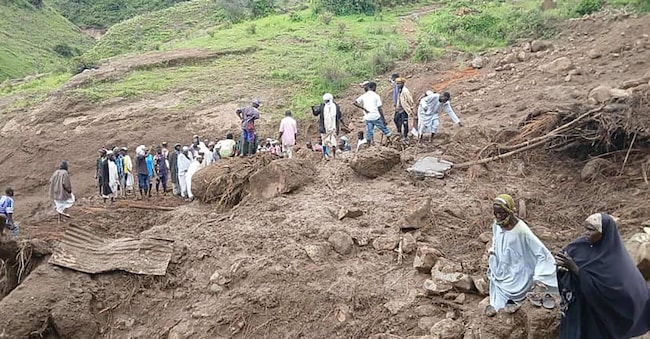
A landslide of 'enormous and devastating proportions' has claimed more than a thousand victims in Darfur, the south-western region of Sudan already battered by more than two and a half years of conflict between the regular army and paramilitaries. This was announced by the rebels of the Sudan Liberation Army-Movement (Elps) in a statement, pointing out that 'initial information indicates the death of all residents, estimated at over a thousand individuals, with one survivor'. The disaster struck the village of Tarasin, in the Marra Mountains, less than 200 kilometres from the capital Al-Fashir. The militia speaks of portions of territory being 'completely' destroyed, appealing to the United Nations and the international community to intervene to protect the population.
More than two years of conflict between generals
Sudan, the third largest African country, has been plagued for more than two and a half years by conflict between the regular army of the Sudanese Armed Forces or Sad and the paramilitary Rapid Support Forces or Rsf, led respectively by General al-Burhan and his counterpart Mohammed Dagalo a.k.a. 'Hemetti', little Mohammed. The war, triggered in April 2023 by a power struggle between the two officers, has degenerated into what the United Nations has long called the world's worst humanitarian crisis.
The overall tally of displaced persons is close to 14 million, in a tally that includes both those displaced ex novo by the crisis and those previously displaced by Khartoum's various political and military upheavals. The death count fluctuates between estimates of several tens of thousands and that, released by the United States, of over 150,000 people killed already within the first two years of hostilities. No official reconstructions are known, in a clash tainted by accusations of human rights violations and crimes against civilians variously blamed on the regulars and the Rsf, heirs of the same Janjiaweed militias involved in the genocide of the early 2000s in Darfur itself.
Today Sudan finds itself de facto split between a south-west under the control of paramilitaries and a centre-east controlled by the army, including the capital Khartoum. Attempts at negotiations to date have always ended in failure, a diplomatic flop accompanied by allegations of external infiltration on both sides. Egypt's al-Sisi is said to be close to the regulars, while the United Arab Emirates is said to be supporting the RSF. The interim government in Khartoum has explicitly accused Abu Dhabi of 'complicity' in the new genocide blamed on paramilitaries against the black population of Darfur, launching a case at the International Court of Justice. Abu Dhabi has always denied it.


