Property

The property manager is only liable for the communal areas on the blocks’ balconies

The recent collapse in Livorno has once again drawn attention to the various responsibilities involved in maintenance management

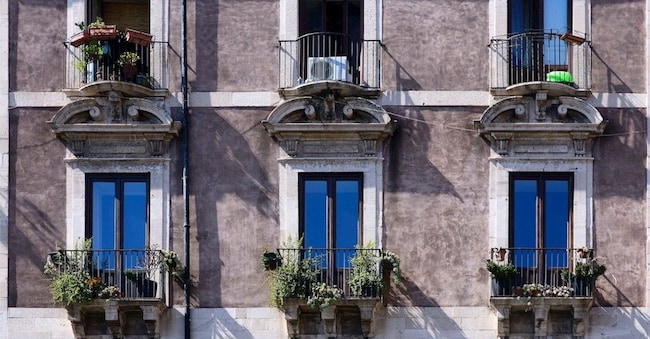
Europe, Italy, Sicily, Catania, facade of residential building in old town, architectural detail --- 16/12/2019 - ILSOLE24ORE - LUNEDI - 5 (balcone) 13711

4' min read

Translated by AI
Versione italiana

4' min read

Translated by AI
Versione italiana

How far should and can a block of flats manager go in fulfilling the duties of oversight, monitoring and maintenance that fall within the remit of their role? The answer to this question has once again become a pressing issue following the death last week in Livorno of a 56-year-old woman caused by the collapse of the balcony on the third floor of the flat where she lived with her husband and children. The collapse occurred just as the woman was standing on the balcony.

It is now up to the judiciary to establish the sequence of events and gather the documentation relating to the management of the building in order to assess any liability: at present, the block manager has been placed on the list of persons under investigation. However, setting aside this particular and dramatic incident, it is worth recalling what the duties of a block of flats manager are regarding the maintenance of communal areas and what those of an owner are regarding private areas.

Loading...

Communal areas and private areas

The first key point starts right here, with the distinction between common areas and private areas. As explained by Edoardo Riccio, legal coordinator of the ANACI National Research Centre, the projecting balcony is the private property of the flat owner, over which the block manager has no authority to impose a maintenance contract for the balcony itself, nor does the owners’ meeting have the power to intervene. ‘The situation is different where there are decorative elements, for example beneath the balcony, which are communal and therefore require action by the owners’ meeting, which must be initiated by the administrator, though not necessarily with a positive outcome,’ adds Riccio.

Francesco Burrelli, national president of Anaci, focuses on the importance of document retention and, at the same time, of ensuring safety through the assistance of qualified technicians in the comprehensive assessment of the building. ‘The property manager is responsible for the entire building envelope, but can only take action on the communal areas. As a property manager, I take action as soon as I become aware of a hazardous situation, such as a precarious capital that needs to be demolished. Then – adds Burrelli – in order to proceed with the restoration, the approval of the owners’ meeting is required. Often, even with a series of enforcement orders from the local council, it is not possible to reach a resolution on extraordinary works, and this leads to delay after delay that can drag on for years.”

Safety measures

Given that the block manager is therefore not permitted to intervene in matters relating to private property, their role is to ensure the safety of the residents in the communal areas. ‘The administrator’s role therefore involves warning residents, for example by cordoning off the area beneath the balcony, in order to ensure safe passage,’ explains Riccio. “If the lack of concern on the part of the flat owner, who fails to secure their balcony, persists over time, the property manager has the right to take legal action against them.”

This point is also confirmed by Daniele Piva , a criminal lawyer and associate professor of Criminal Law at Roma Tre University. ‘As regards routine maintenance, the block manager may find themselves unable to take action if there are not sufficient funds or if the residents cannot reach an agreement on the work to be carried out,’ comments Piva. “However, in the case of extraordinary maintenance, due to imminent dangers, the administrator is obliged to take action to fulfil their duty of care and supervision. This might involve, for example, alerting the Fire Brigade to secure the balconies; putting up warning signs to indicate the danger; and preventing residents from accessing unsafe communal areas.”

Safety is, after all, the top priority for block of flats administrators, Burrelli emphasises, starting precisely with the involvement of the fire service and the use of barriers to cordon off areas subject to risks and hazards. “Raising awareness amongst all those involved – from property managers to homeowners, and from local council offices to prefects – is the next step towards preventing accidents that may affect residents to a greater or lesser extent.”

The legal perspective

Under the Civil Code, the block of flats administrator assumes a duty of care to ensure the proper maintenance of the common areas and to take action in the event of danger. ‘They have a duty to monitor, maintain and take preventative action to avoid accidents in the common areas of a block of flats. Indeed, the manager is liable both criminally and civilly for their actions,’ points out Mr Piva. “Their fault, if any, could be a breach of the duty of care and supervision, which becomes serious in the event of a underestimation of risk or, in previous management periods, failed to implement preventative measures relating to foreseeable accidents which subsequently occurred, again in the communal areas.”

Criminal liability, if proven, could therefore constitute manslaughter, punishable by imprisonment for up to five years (Article 589 of the Criminal Code), whilst civil liability would fall within the scope of compensation for damages (both financial and non-financial) caused to third parties. This is why block of flats administrators usually take out insurance policies that can cover any civil compensation claims.

Clarifications from the Court of Cassation

As demonstrated by the judgments of the Court of Cassation 14576/2004 and 7042/2020, projecting balconies, which constitute an extension of the property unit, are the exclusive property of the individual flat owner and, therefore, it is the responsibility of the respective owner to cover maintenance costs and ensure safety measures. The owner of the balcony is required to carry out maintenance and take action to restore its safety in the event of obvious signs of deterioration. If, on the other hand, the deterioration concerns front panels, balustrades or other elements serving an ornamental function, these, again according to the Civil Cassation Court (Section II, Order No. 27413 of 29 October 2018), may be considered common parts; therefore, it is the property manager who is required to take action to ensure safety, with the cost borne by the block of flats , in accordance with the general criteria.

Copyright reserved ©

Brand connect

Loading...

Newsletter

Notizie e approfondimenti sugli avvenimenti politici, economici e finanziari.

Iscriviti