
Water reuse, in summer all treated water from the Nosedo purification plant goes to agriculture
In an Italian context where direct re-use stops at 4%, the virtuous case of one of the plants serving Milan

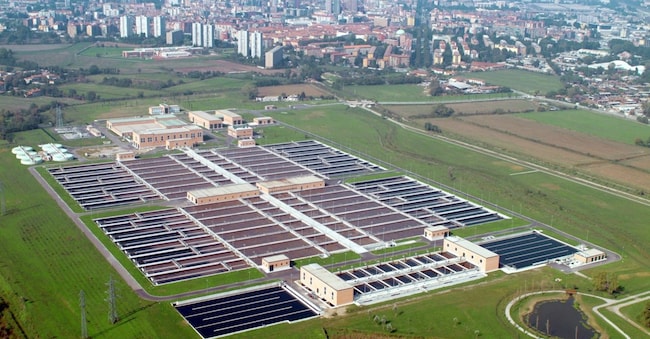
A fine settembre, al termine della stagione irrigua che inizia a maggio, il depuratore di Nosedo - uno dei tre gestiti da MM, la controllata del comune di Milano che serve la città - avrà dato pressoché la totalità dell’acqua trattata nel periodo al Consorzio Vettabbia, che comprende circa 90 aziende agricole del locale Parco Sud. Si tratta di circa 50 milioni di metri cubi, dei 140 depurati ogni anno, forniti a titolo gratuito. La quota di riutilizzo rimane negli anni molto alta, oltre l’85%, ed è strettamente legata ai fenomeni metereologici e all’andamento della piovosità, infatti più l’estate è siccitosa e più aumenta la domanda. Nosedo rimane in ogni caso un esempio virtuoso in un contesto italiano in cui secondo le ultime rilevazioni solo il 4% della risorsa idrica trattata va direttamente all’agricoltura. Il resto viene disperso in acque superficiali e fiumi, che a loro volta contribuiscono all’irrigazione dei campi.
In the Agricultural Park
There are several reasons that explain Nosedo's high capacity to put the resource back into circulation, also driven by regulatory acts such as Ministerial Decree 185/2003 on the reuse of water, which is currently being revised, and EU Regulation 2020/741. The first is the geographical location of the purifier: in the South Milan Agricultural Park, the natural home of companies dedicated to agriculture that guarantee a constant demand for water on the one hand, and on the other the presence of a very capillary network infrastructure, i.e. pipes and canals for the transport of the treated resource that leaves the plant.
Of the approximately 3,500 hectares irrigated with purified water, 55% is cultivated with maize, 35% with rice, and 10% with cereals and fodder. This quality is the result of investments in advanced purification technologies that essentially include two additional treatments, compared to the standard: further filtration of the water through sand and then disinfection, i.e. the removal of any remaining pathogens, which at Nosedo is done with peracetic acid, which leaves no by-products and creates no residue that can damage crops.
The storage areas
Francesco Mascolo, managing director of MM - as well as vice-president of Ape, Aqua Publica Europea (the association of European public utilities) - emphasises the choice made upstream: 'MM has invested in maintaining and improving the technologies for refining purified water to guarantee the level of quality needed by local farms.
The CEO also looks to the future: "In order to spread the practice of reuse by agriculture and industry as an alternative to groundwater withdrawal or direct withdrawal from surface water basins, it would be important for European and national institutions to incentivise investments in the structures and plants necessary for refining. Not only that: support would also be needed for investments to create storage areas, useful for distributing water throughout the year or, again, to create increasingly effective plants for removing emerging pollutants and guaranteeing a level of quality and healthiness that would overcome the scepticism that hinders this good practice. In this sense, Ape has provided its contribution of ideas in the formulation of proposals that are not only technical but also financial and fiscal in the context of the debate on the Water Resilience Strategy recently launched by the European Commission.


