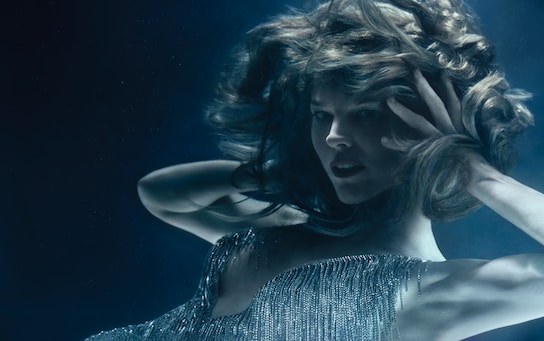
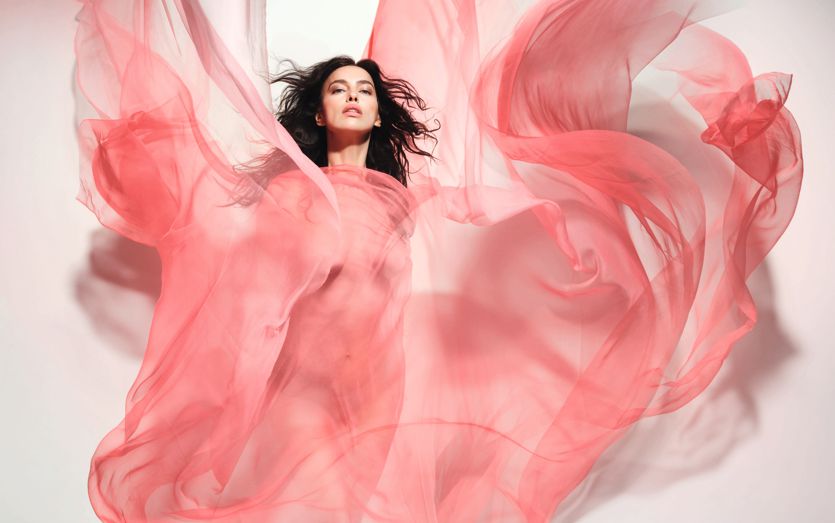
Undoubtedly. Symbiosis is the future, dare I say it. Without adequate strategies of coexistence with the environment, a species is doomed to succumb, to extinction. Our technology is increasingly testing nature's ability to regenerate itself. Achieving harmony and possibly even fusion between us and the rest is the most important test we face in this age. Sundsbø's women embody an evolutionary leap, they are creatures who do not simply coexist with the elements. They want to live in symbiosis with them, to become elements themselves. All this is less fanciful than it might seem. It is not just a romantic vision of nature à la Caspar David Friedrich. It is science. Think of the recent book in which Carlo Rovelli, a physicist, reasons about the equality of all things, showing us that 'electrons and minds, stones and laws, judgements and galaxies are not essentially different in nature from one another'.
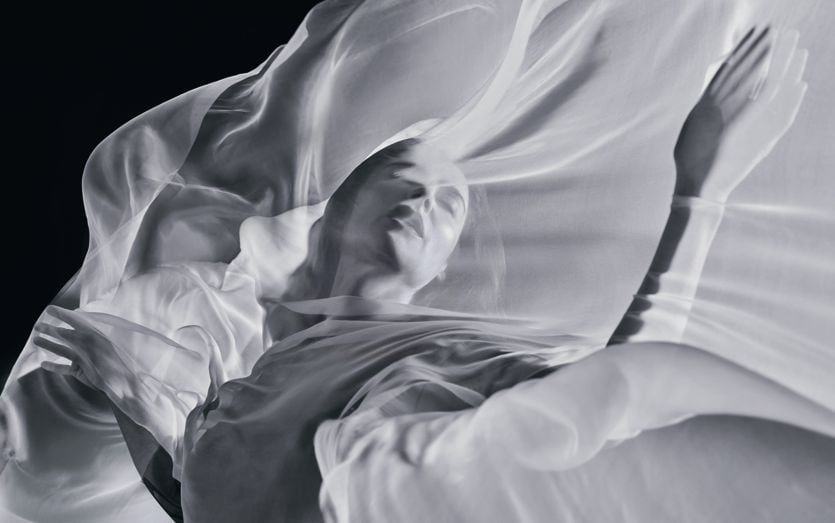
Luisa Ranieri. Sølve Sundsbø
Is there a past edition of the Pirelli Calendar that particularly impressed you?
I am very fond of Peter Lindbergh, of his limpid black and white, so I would say one of his three calendars, perhaps the first one, the 1996 one. But in the end I would choose the first one, the calendar of Robert Freeman, the photographer of the Beatles and Swinging London to whom I instinctively link the Calendar myth. I would also choose one image in particular from that edition, the one in which half the shot is occupied by the blue expanse of the sea and in the foreground there is a beach with long late afternoon shadows stretching across the sand. The woman, in a very normal two-piece swimming costume, is in the centre of the frame but small, almost in the distance. She looks more like a memory than a person in the flesh, as every photograph is after all, in its simple, lacerating immediacy.
What is the significance of the Calendar in this era?
Its physicality. And I am not referring to the women's bodies it represents, but to the paper it is made of. In the years when it was born, that the Calendar was an object was a given. Over time, this physicality has increasingly become an added value. At a time when even art tends to dematerialise, become virtual, intangible and odourless, the Calendar has remained paper, an object whose shape and size have their own meaning. It is not for nothing that photographers not only create the images but also participate in the creation of the physical object, which is always different every year. I think its secret lies precisely in this physical quality. Perhaps in the past it was only dictated by the desire to make a refined object, one that would stand out from the many calendars hanging on blackened workshop walls. Today it stands out because it continues to believe that the tactile element of an image should be preserved. It sounds like a no-brainer, yet it is a central defining issue of our time. Think about how many people keep private photos, the memories of their lives, in the digital memory of a phone, unlike in the old days when those same images were collected in family albums. Think how precious and indispensable those albums were. They were in every home and were looked after with respect and devotion, something akin to the ancestral altars in Japanese homes. The physical experience of an image is a fundamental part of an individual's spiritual formation. That images have become so immaterial is not good for anyone; on the contrary, I would say that it entails profound risks such as an increasingly difficult acceptance of one's own body or underestimating the consequences that a physical gesture can have on others or even on ourselves.