
Super solar storm gives the northern lights: here's how to see them
The particularly intense magnetic storm is causing a series of consequences and also offering the spectacle of the aurora visible even in Italy

3' min read
3' min read
Big show in the sky tonight: northern lights for everyone, from the North Pole to the far end of Puglia and from Italy to China. With a clear sky, a dark enough observation point, and a little bit of luck it will be repeated again tonight and it is worth a try to see them, it is rarer and more enthralling than the best TV serial.
The sky is tinged, especially towards the horizon, with a greenish or pinkish-red colour that sometimes even looks like a fairly dim glow moving across it. A boon for those who want to admire a spectacle, or photograph it, that is usually reserved for the peoples of the far north of Europe.
Solar activity at its highest
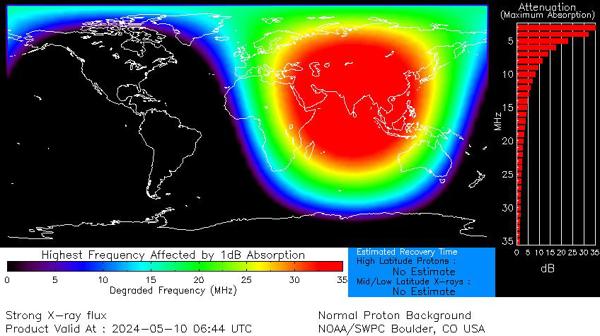
.The cause of this magnificent spectacle is to be found in the geomagnetic storm that was announced, and this is a rare occurrence, by the US National Oceanic and Atmospheric Administration (Noaa), which issued a solar storm warning. The fact is that solar activity, on the surface of our star, of course, is at the maximum of its approximately 11-year cycle, and from the 'sunspot' zone, which has been visible for a few days now, an ejection of matter and energy has started that has been classified as one of the greatest ever, of a G5 grade on the particular scale used for these phenomena. The maximum effects, on Earth, occurred in Russia, China and India.
Power grids and satellites
.In principle, such violent storms can also have a negative influence on the networks that distribute electricity, telecommunication satellites and even geopositioning satellites, such as the American GPS or the European Galileo. And indeed, the Noaa has reported that the solar storm is causing problems for electricity grids and has rendered satellite navigation signals unusable for hours.
Those who have been most exposed to particles and radiation are the astronauts in the International Space Station, who are, moreover, well protected; we on Earth have no problems from these phenomena as far as our health is concerned.


