
Superbonus, Fi working on changes: 'No retroactivity'
Forza Italia working to change the proposal of the Ministry of Economy also on the sugar tax

2' min read
2' min read
"We are working with our legislative offices to present changes" on both the superbonus and sugar tax issues. On the superbonus we will affect the issue of 'retroactivity, which, as Antonio Tajani explained, violates the principles of legal certainty'. As for 'the sugar tax, like the plastic tax, the entire majority had already expressed itself to have it postponed or even abolished'. This was explained by Forza Italia spokesman Raffaele Nevi, giving substance to the doubts that had already been expressed in the past few hours by Foreign Minister Antonio Tajani. On this point, Forza Italia has been in contact with the business and banking associations for days.
Thus, within the sub-amendments proposed to the Mef amendment, Forza Italia has essentially proposed to delete all the retroactive elements of the scheme hypothesised by the Ministry of the Economy. Both in the part concerning credit institutions' offsets and in the part concerning deductions spread over ten years. In essence, the Ministry's proposals should only apply to the future.
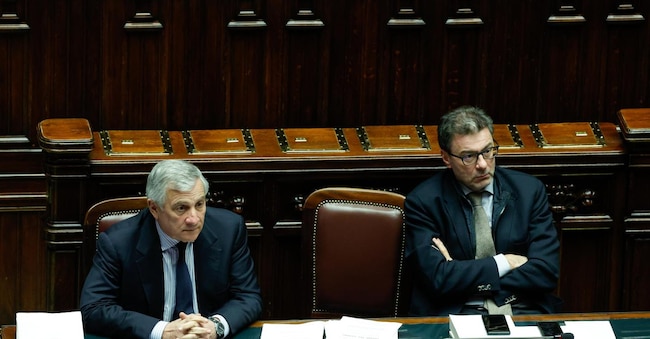
Meanwhile, after the frictions between Tajani and Giorgetti, League leader Matteo Salvini says he is convinced that the disagreements will be settled soon. "I am sure a solution will be found as in this year and a half of government it has always been found," he said, explaining that the dossier "is not on his desk".
Meanwhile, doubts emerge on the part of the government's amendment to the superbonus decree that specifies the proposal's coverage, articulating revenues and expenses expected from the various measures. It is not clear, in fact, where the coverage of the stop of the plastic tax until 2026 and the halving of the sugar tax is quantified. Just as perplexities arise over the possibility of recovering 700 million for 2025 and 1.7 billion in 2026 as the State's share of the revenue from the control activity of the municipalities. These are all doubts that, however, should be ironed out through drafting in the coming hours.
Controversy also surrounds the decision to take the regulation of waste tariffs away from Arera. A road that would lead to two concrete risks: 'Costs without control for citizens and impossibility to verify quantity and quality of waste'. This was stated by the president of the Authority, Stefano Besseghini. "Before dismantling the current rules, their effect needs to be assessed."


