
SuperChampions, more matches but revenues will not rise for all equally
If the average number of matches per club grows (even by 50 per cent in Champions), the average revenue per match could drop (by up to 28 per cent in Champions)
4' min read
4' min read
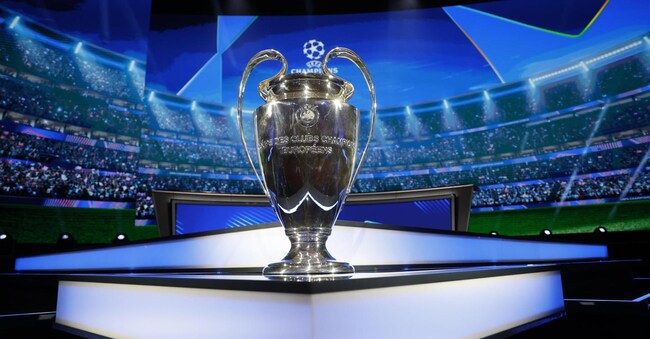
With the draw for the SuperChampions, the new three-year Uefa competition effectively begins. Events renewed precisely in the formula, with more matches, an algorithm deciding the calendar for each team and several changes to the distribution of prizes. Changes that in the end might not make all participating clubs happy. Because if the increase in matches is certain, the increase in revenue for everyone is not. On the contrary. But how do tournaments work and what rules have changed?
SuperChampions
The 36 participants (four more) will play eight matches, four at home and four away, against different teams, based on a draw that will take into account the level of the opponents placed in four brackets according to ranking. A single ranking will then be drawn. The first eight will advance to the knockout round of 16. The bottom eight will be eliminated (and will no longer advance to the Europa League as before). The remaining 24 will play a play-off with return matches. The European path will therefore depend a lot on fate and placement in the table. In order to crown the European champion club - on 31 May 2025 in Munich - 189 matches will have to be played, instead of the current 125, 51% more (the last two days of the single round will also be played in January).
The other two competitions
.The Europa League also undergoes this transformation, with 36 clubs and an increase in the total number of matches from 141 to 189 (or 34 per cent) leading up to the final stage in Bilbao on 21 May 2025. The conference league, on the other hand, has a smaller increase in the number of matches as in the group stage each club will face six different teams (three home, three away) and not eight. For the rest, the SuperChampions model will be followed. In order to reach the final on 28 May 2025 in Poland's Stadion Wrocław, 153 matches will have to be held as opposed to the current 141 (+8.5 per cent).
Uefa revenues
.The turnover of the three European cups for the three-year period 2024/27 with the new formats was 4.4 billion per season, compared to 3.5 billion in the previous three-year period (an increase of about 26%). Uefa will retain 231 million (it was 190 until now), while it will allocate 440 million to clubs not participating in any of the three competitions. In detail, 308 million (instead of 140, an increase of 120%) will go to non-qualified clubs and 132 million to clubs ousted in the preliminary rounds. Finally, 387 million will be absorbed by organisational expenses, which have increased by around 20% compared to the past. Net payments to the 108 clubs will thus rise from 2.7 billion to 3.3 billion (+21%). The distribution among the three cups will, as always, be to the advantage of the Champions League, which attracts more TV contracts and sponsors: the main competition will receive 2.4 billion (435 million more than in the past), the Europa League 565 million (100 million more) and the Conference 285 million (50 million more).
The distribution criteria
.How will these quotas be divided among the clubs? Nyon has also introduced novelties on this front. In the Champions League, participation in the round will be worth a total of 670 million (around 27.5%) distributed equally; market pool (national TV rights) and historical ranking will be merged and reduced from 45% to 35% of the total for a value of 850 million (instead of 900 million); on-pitch results will weigh 37.5% from next year for a value of 950 million (instead of 600 million).


