Top500 ranking

Supercomputers, Europe enters the exascale era with the German Jupiter Booster. Italy in the G4

With 18 supercomputers in the Top500, Italy remains the fourth most powerful country in the world in terms of installed computing power, after the United States, Japan and Germany. The first Italian supercomputer in the ranking is Eni's Hpc6, which is currently the sixth most powerful supercomputer in the world and second most powerful in Europe

by Antonio Larizza

Il supercomputer tedesco Jupiter Booster: primo europeo di classe exascale

3' min read

Translated by AI
Versione italiana

3' min read

Translated by AI
Versione italiana

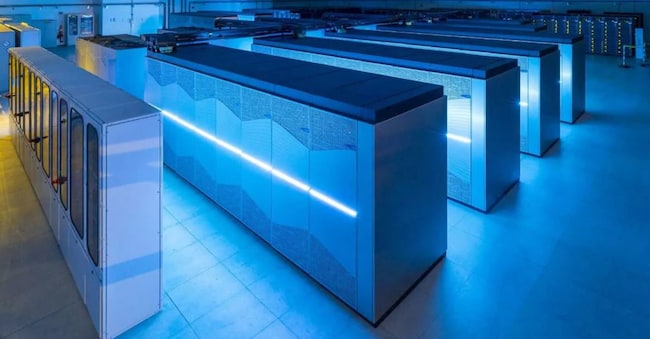
In the global race for supercomputing, in which the United States is still ahead, Europe has reached an important milestone. The German Jupiter Booster supercomputer is officially Europe's first exascale-class computing system. Installed at the EuroHPC/Jülich Supercomputing Centre in Germany, it reached a computing power of 1,012 exaflops per second after a period of fine-tuning, as certified by the 66th edition of the TOP500, the ranking of the world's most powerful supercomputers, just announced at the SC25 conference in St. Louis, Missouri.

Based on Eviden's BullSequana XH3000 architecture with direct liquid cooling and Nvidia Grace Hopper superchip, Jupiter Booster is the fourth exascale system in the world and the first outside the US.

Loading...

In fact, there are currently only four exascale-class supercomputers certified by the Top500 ranking, which also confirms the wide spread of pre-exascale machines worldwide.

What is Exascale Calculus

A supercomputer is said to be of exascale class if it is capable of performing at least one exaflop of floating-point operations per second. That is, a quintillion calculations per second. The advantages of exascale computing concern the ability to solve unsolvable problems. For example, exascale computing offers the power needed to establish the origins of chemical elements, developing new processors, controlling unstable substances and materials, validating thelaws of nature and solving particle physics.

Supercomputing: United States in the lead

The new edition of the rankings confirms the United States' leadership in high-performance computing. The El Capitan supercomputer installed at the Lawrence Livermore National Laboratory (LLNL) remains the undisputed leader, recording a new peak power of 1.8 exaflops of operations per second. The other two supercomputers making up the Top500 podium are also American: Frontier and Aurora.

The World's Top10 Supercomputers

After the three American supercomputers, in fourth place is, as mentioned, the German Jupiter Booster. This is followed by the American Eagle (5th), the Italian Hpc6 (6th), the Japanese Fugaku (7th), the Swiss Alps (8th), the Finnish Lumi (9th) and the Italian Leonardo (10th).

Supercomputer Leonardo, come sarà l’AI Factory di Bologna

Italy Remains in the G4 of Supercomputing

With 18 supercomputers in the Top500, Italy remains the fourth largest country in the world in terms of installed computing power, after United States, Japan and Germany.

The first Italian supercomputer in the ranking is the aforementioned Hpc6 by Eni, which, after being, at launch, the most powerful supercomputer in Europe, is currently the sixth most powerful supercomputer in the world and the second most powerful in the Old Continent, behind Jupiter Booster. It is followed by Leonardo of Cineca, Italy's second most powerful supercomputer by computing power and 10th in the world. Completing the national podium is Eni's Hpc5 system (53rd in the world).

Supercomputer: ecco Hpc6, il più potente d’Europa

In the Top10 of Italian supercomputers we find, in order, two other systems from Cineca (Pitagora and Pitagora Cpu), Leonardo's new supercomputer called Davinci2 - successor to the Davinci1 -, Hpc4 by Eni, the supercomputer powered by Fasftwb's NeXXt AI Factory, Cineca's Leonardo-Cpu and Hpcf-AD by Eni. Also worth mentioning are Cresco8 from Enea, Space Hpc from the Italian branch of the European Space Agency and the Terabit Hpc Bubble supercomputer from Infn.

Top500 ranking

Every six months since 1993, the Top500 ranking has updated the list of the world's most powerful supercomputers. The ranking is drawn up on the basis of a certified computing test, carried out at the request of companies or institutions that own supercomputers and wish to certify the power of their machines. The data shown in this article refer to the 66th edition, released on 17 November 2025, which updates the previous edition of July 2025.

VIAGGIO NELL’ITALIA DEL SUPERCALCOLO

Loading...
Copyright reserved ©
Loading...

Brand connect

Loading...

Newsletter

Notizie e approfondimenti sugli avvenimenti politici, economici e finanziari.

Iscriviti