Digital Economy

Supercomputing and AI: Europe is making progress, and Italia is playing a leading role

Europe is aiming to become self-sufficient in terms of infrastructure and computing capacity in the age of AI: Bologna is emerging as a continental hub with the new Sol quantum computer and the upgrade of the Leonardo supercomputer

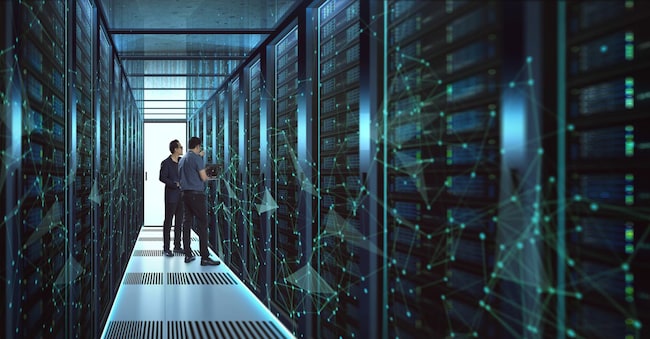
(Adobe Stock)

4' min read

Translated by AI
Versione italiana

4' min read

Translated by AI
Versione italiana

The computing power that drives generative artificial intelligence has become a strategic issue for governments and industries. As models grow in complexity and use cases multiply, Europe is aiming to bridge the gap with the United States and China by investing in supercomputing infrastructure and, increasingly, in integration with quantum computing. In this race, Italia is carving out a leading role for itself, with Bologna emerging as a continental hub in the name of European digital sovereignty.

A decisive step forward in this regard was the inauguration, in June, of two new systems at the Cineca centre in Bologna: Sol, the new European quantum computer, and Lisa, the upgraded version of the Leonardo supercomputer dedicated to artificial intelligence. Both are the result of collaboration between the EuroHPC Joint Undertaking, the Ministry of Universities and Research, and the National Cybersecurity Agency. “With Sol and Lisa, we are strengthening our sovereign supercomputing ecosystem and offering European users new tools to innovate through AI, HPC and quantum technologies,” said Anders Jensen, Executive Director of the EuroHPC JU.

Loading...

The integration of classical supercomputing and quantum computing represents the cutting edge of computational capability. Quantum computers utilise qubits, which, unlike traditional bits, can represent multiple states simultaneously thanks to the principle of quantum superposition. This enables computational power to increase exponentially and allows for the tackling of optimisation and simulation problems that would take an unfeasibly long time even for the most powerful supercomputers. Bologna is now home to two quantum systems: in addition to Sol, based on trapped-ion technology from the Austrian firm Aqt, the Siemens-Pasqal system is also operational – the first in Europe designed specifically for industrial applications.

The European context is one of playing catch-up. According to a McKinsey report published in December, Europe lags significantly behind the United States and China in terms of computing capacity dedicated to AI. American hyperscalers are investing tens of billions of dollars in GPUs and accelerators, whilst Chinese Big Tech firms benefit from massive and coordinated state support.

The European Union has responded with the European Chips Act, which aims to double Europe’s share of global semiconductor production from 10 per cent to 20 per cent by 2030, by mobilising over 43 billion euros in public and private investment.

But chips alone are not enough. We need computing infrastructure on a continental scale, and this is where EuroHPC comes in. The joint initiative has already rolled out a network of world-class supercomputers, and Europe has just entered the exascale era with the commissioning of Germany’s Jupiter, the first European system capable of exceeding the threshold of one billion billion operations per second.

Italia is not standing idly by: Leonardo, housed at Cineca, remains one of the most powerful supercomputers in the world, and with the Lisa upgrade it has gained specific capabilities for the training and inference of artificial intelligence models.

The race is also being played out on the private investment front. In May, a consortium comprising Leonardo, AI4Industry and Eni put Italia forward as a candidate to host a European AI Gigafactory – a computing facility dedicated exclusively to the training of large-scale artificial intelligence models. The proposal envisages the facility being built in Turin, where there is already a wealth of expertise in the aerospace and automotive sectors. “Italia has what it takes to become a leading European hub for artificial intelligence,” commented a spokesperson for the consortium. If the project goes ahead, it would add a crucial piece to the national strategy for digital sovereignty.

The issue of computational sovereignty is closely intertwined with that of security and strategic autonomy. Training AI models on national or European infrastructure means retaining control over the data used, the algorithms developed and the applications derived from them. This consideration applies equally to scientific research and to industrial and military applications. It is no coincidence that the National Cybersecurity Agency is an active partner in the EuroHPC projects hosted in Italia.

The challenges remain significant. Energy consumption in AI-dedicated data centres is growing at an exponential rate, raising questions about the environmental and economic sustainability of this race. The availability of specialist skills is another bottleneck: training engineers and researchers capable of making the most of this infrastructure requires time and investment in training.

And global competition waits for no one: whilst Europe is launching its first exascale systems, the United States and China are already planning the next generation.

And yet, the message emerging from Bologna is one of cautious optimism. Italia now has an ecosystem that combines traditional supercomputing, quantum computing and AI-dedicated infrastructure, all under European governance.

It is a starting point, not an end point, but it sets out a clear direction: to lay the foundations for technological autonomy that will enable Europe to compete in the new economy of artificial intelligence without being entirely dependent on powers outside the continent.

Copyright reserved ©
Loading...

Brand connect

Loading...

Newsletter

Notizie e approfondimenti sugli avvenimenti politici, economici e finanziari.

Iscriviti