Not just summer treats

Packaged ice cream: supermarkets are leading the sales recovery

Following a slowdown in sales volumes in 2025, the first six months of the year have seen positive signs in the retail sector, thanks to premium and healthier products, in an industry which, according to the Italian Food Union, is worth 3 billion

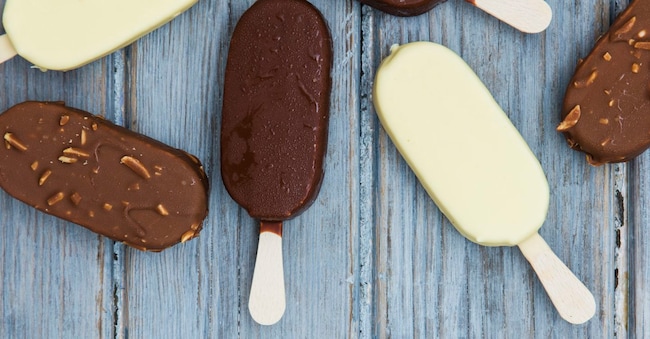
by Maria Teresa Manuelli

Nei primi mesi  del 2026  il mercato retail segna +9% a volume e +10,7% a valore rispetto allo stesso periodo del 2025

5' min read

Translated by AI
Versione italiana

5' min read

Translated by AI
Versione italiana

Packaged ice cream heads into summer 2026 with a market that closed last year stable in value terms but with volumes in decline. However, the first few months of the new year are already showing signs of a recovery in domestic consumption, which now accounts for almost half of the sector’s turnover (excluding artisanal ice creams), and which producers hope will also be reflected in out-of-home consumption this summer, which is set to be very hot.

According to figures from Unione Italiana Food, 2025 saw production of 261,000 tonnes of ice cream, with a value at source of around 3 billion euros and a per capita consumption of almost 3 kilos. Exports reached 116,000 tonnes, worth 468 million euros, with 64 per cent of the volume going to European countries, confirming Italia’s importance as the second-largest producer in Europe by value and the third-largest by volume.

Loading...

The driving force behind supermarket sales

As regards sales for domestic consumption, the picture painted by NielsenIQ for hypermarkets, supermarkets, independent retailers and discount stores at the end of 2025 is that of a sector which achieved a turnover of 1.5 billion euros, remaining broadly stable, with volumes at 206 million kg (-1.4%) and units at 465 million packs (-3%). The value was underpinned by the average price per kg, which rose to 7.31 euro (+1.5%). However, the category was held back by reduced promotional pressure: as Elena Pezzotti, an insight analyst at NielsenIQ, explains, ‘the reduction in promotional intensity stands out as one of the main factors driving the slowdown in the category, with a widespread impact across geographical areas, channels and segments’.

Multipack ice creams (62%) dragged down the entire category (-1.9% by volume and -4.7% by units), with ice lollies down 10.1% by volume. Bucking the trend, ice lollies and similar products grew by +6.6% by volume, whilst ice cream bars grew by +5.4%. The most dynamic segment is that of dessert ice creams: +20.7% by value and +1.9% by volume, with Bon Bon sales practically doubling (+99.8% by value, +64.9% by volume): “Dynamic niches on a still modest scale,” as Pezzotti describes them.

The figures for the first few months of 2026 are, however, encouraging: the market is up 9% by volume and 10.7% by value compared with the same period in 2025.

Positive outlook for the summer

“We hope this growth will continue throughout the rest of the summer season,” comments Lorenzo Bagnoli, the new president of the ice cream division at Unione Italiana Food, “and that it will be reflected not only in retail sales but also in out-of-home consumption.” Companies are therefore looking ahead to the season with positive expectations. “2026 is confirming a solid growth trend,” observes Giuseppe Fascia, head of marketing at Froneri Italia. The key today is not just to grow within the category, but to innovate in a meaningful way by responding to consumers’ increasingly diverse needs, thereby helping to broaden consumption habits’. Froneri, the world’s second-largest producer with brands such as Maxibon, Coppa del Nonno and Nuii, reports faster growth in the retail sector: +26.4% by value and +23.1% by volume in the first five months.

Sammontana, which is celebrating its 80th anniversary this year, shares this view. “The early arrival of the heat gives us cause for optimism,” says Annalisa Ferri, the Group’s chief marketing officer, “but it will be the weather conditions and tourist numbers that determine the outcome of the season. The ice cream market is, after all, a seasonal one that has experienced significant fluctuations over time due to factors beyond our control.”

The latest ‘frozen’ trends

In terms of trends, the freezer section is seeing an evolution in flavours that companies view as a structural shift. “Flavours such as pistachio and mango have become favourites in recent years,” observes Ferri of Sammontana, “sealing the success of those ice creams that have best captured their essence.” Against this backdrop, three trends are emerging. The first is theco-branding with traditional confectionery brands: Tonitto 1939 brings Grisbì ice cream to the market, along with Cubik Elah – inspired by toffee – Gelato Buondì Bauli and Gelato Galatine. “Consumers are looking for the same flavours in the freezer cabinet that they already know from their own cupboards,” explains Massimiliano Dovo, co-owner of Tonitto 1939.

The second trend is the ‘healthy’ one, linked to the plant-based phenomenon. “Plant-based ice cream grew by 3.7% in 2025, according to NielsenIQ data in our possession. This performance bucked the trend of the conventional ice cream market,” comments Andrea Panzani, CEO of Valsoia. The company, the market leader with a 77.5% share, ended the year with volumes up 4%. Driving these results was the Zero range, which “exceeded expectations”, confirming “consumers’ strong interest in innovative and functional products”. Coming this summer 2026 are the Cono Zero and the dual-flavour Hazelnut and Pistachio tub.

The third trend is ‘premiumisation’: Froneri is strengthening the Nuii brand and launching Baci Gelato. “The freezer cabinet is no longer just a place for impulse purchases,” emphasises Fascia, “but a space where consumers look for brands and products that are consistent with their lifestyle, capable of combining perceived quality, sensory intensity, convenience and brand strength.”

Sustainability through recyclable packaging and certified ingredients

Packaged ice cream is no longer judged solely on flavour. The Italian ice cream industry is undergoing a green transition, as clearly described in the report “Study of environmental performance in the production of packaged ice cream in Italia”, conducted by Ergo, a spin-off of the Sant’Anna School of Advanced Studies in Pisa, for the Italian Ice Cream Institute (IGI), using data collected in 2025.

As regards raw materials, almost 70% of the milk is from Italia; 98.5% of the cocoa comes from certified sustainable sources; where it has not been replaced, the palm oil is 100% certified (RSPO standard). Packaging is the area where progress is most visible: 72% of packaging is made entirely of paper, with over 53% being recycled paper. Switching from plastic to paper for freezer products is no small feat: it requires industrial testing, adjustments to production processes and a reassessment of supply chains.

Over the past five years, Tonitto 1939 has reduced its use of plastic across its main product lines by 50 per cent, introducing FSC-certified cardboard packaging. “We have undertaken a complex transformation involving development, production and industrial organisation,” explains Massimiliano Dovo, co-owner of the company.

Almost 50% of the electricity purchased by the sector comes from renewable sources. By-products from processing are used for animal feed or biogas. Future objectives include trialling formulations using plant-based drinks as a partial substitute for cow’s milk and the decarbonisation of the energy system. “Today, quality is measured by data, transparency and the ability to innovate production processes,” comments Michelangelo Giampietro, president of Igi. “This report is not a milestone, but a compass.”

For the Italian Gelato Institute, sustainability also encompasses the social dimension. Lorenzo Bagnoli, president of the gelato division of Unione Italiana Food, cites among the upcoming objectives ‘collaboration with Caritas and the analysis of environmental performance, placing responsibility towards the community and the environment at the centre’. On the social front, Sammontana has involved 50 students from the ISS ‘Il Pontormo’ in Empoli in courses on civic education and the responsible use of artificial intelligence, through the ‘Ambassadors for Change’ initiative developed in collaboration with InVento Innovation Lab and Ashoka Italia.

Copyright reserved ©

Brand connect

Loading...

Newsletter

Notizie e approfondimenti sugli avvenimenti politici, economici e finanziari.

Iscriviti