
Superpower or imaginary superpower? Italian art between symbolic income and global competition

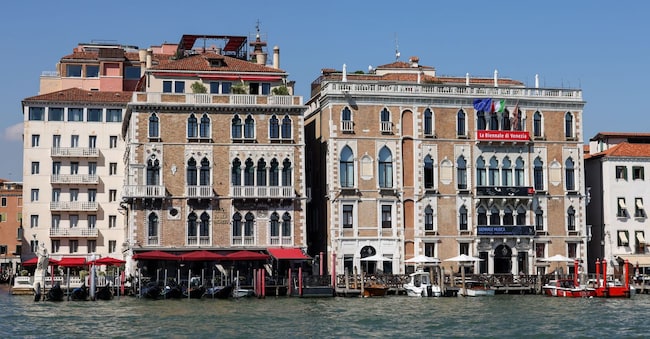
A fundamental misunderstanding runs through the debate rekindled in these days around the Venice Biennale. A misunderstanding that does not concern curatorial choices, nor the quantity of Italian artists in the central exhibition, nor the eternal dispute between 'system' and 'talent'. It is about us.
The 61st. International Art Exhibition of the Venice Biennale is entitled In Minor Keys. It is the exhibition conceived by Koyo Kouoh, the first African curator in the history of the Art Biennale, and carried out by the team she appointed. Among the 111 artists selected, there is no Italian. At the 60th edition there were less than ten out of 331. At Documenta 15 in Kassel, in 2022, they were practically absent. At the big international fairs, Art Basel, Frieze, the presence of Italian galleries is structurally marginal. These are not moods. They are data.
The misunderstanding that paralyses us
Perhaps the word 'superpower' belongs to a lexicon that no longer concerns us. We are not. And continuing to repeat it like a mantra does not strengthen the system: it anaesthetises it. The Colosseum is not a cultural policy. The Uffizi is not a business plan. The history of Italian art is an extraordinary capital, but a capital that is devalued if it is not reinvested, projected into the present. And instead of investing it, we exhibit it. We use it as a shield of identity. As an alibi.
The market we did not build
In 2023, according to the Art Basel & UBS Global Art Market report, Italia will be worth less than 2% of the global art market. Great Britain 17%, the United States 45%. Germany allocates over 14 billion a year to public culture. France has built a cultural export system that passes through diplomacy, publishing, cinema, visual arts. South Korea has multiplied its share in the global contemporary art market by seven in twenty years.
The Italian galleries that operate globally can be counted on the fingers of two hands - Massimo De Carlo, Lia Rumma, Galleria Continua - and they often do so despite the system, not because of it. Italy does not have a global player among fairs of the calibre of Art Basel or Frieze: it has a multitude of mid-level fairs scattered throughout the territory that wage war against each other, a bit like the municipalities in medieval Italia. Each defends its own bell tower, none reaches the critical mass to compete on the international stage. Although we finally have the same VAT that is paid in other countries on transactions of contemporary artworks, taxation on donations to public institutions is still punitive compared to the French or American models.

