
Susan Collins: the defeat of the Senate’s last moderate, swept aside by the Trump era
After thirty years in the Senate, Susan Collins loses her seat in Maine: the story of the last great moderate Republican, caught between her distance from Trump and the contradictions of an increasingly polarised party

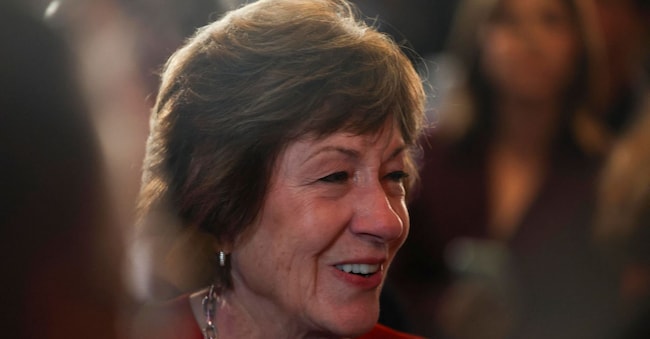
For thirty years, she managed to achieve something that seemed increasingly difficult: being a Republican in a Democratic state, defending centrist positions within a party that had progressively shifted to the right, and holding onto her seat in the US Senate even when Donald Trump had moulded the Grand Old Party in his own image. But this time, Susan Collins did not succeed. At the age of 73, the senator from Maine was defeated by the Democrat Troy Jackson, vacating the seat she had held continuously since 1996. A defeat that is not merely personal: it also marks the twilight of one of the last remaining examples of moderate Republicanism still present in Washington.
Over the years, Collins had become something of an anomaly in American politics. A Republican in a state that had voted for Kamala Harris in the 2024 presidential election, she remained her party’s sole representative in Congress across the whole of New England. Her political survival was built on her ability to present herself to voters as an independent, pragmatic figure who, above all, looked after Maine’s interests, regardless of national affiliations.
Born in 1952 in Caribou, in the north of the state, into a family of entrepreneurs, Collins began her political career far from the spotlight of Washington. After working as a Senate staffer and as an official at the Small Business Administration during the presidency of George H.W. Bush, she unsuccessfully ran for governor of Maine in 1994. Two years later, she succeeded in winning a seat in the Senate, which she would hold for three decades, fending off repeated attempts by the Democrats to oust her.
In Washington, she had built a reputation as a senator willing to break ranks with her own party when she deemed it necessary. In 2017, she had been one of the three Republican senators whose votes were decisive in preventing the repeal of the Affordable Care Act, the healthcare reform introduced by Barack Obama. More recently, she had voted against the confirmation of Pete Hegseth as head of the Pentagon. Her distancing herself from the White House had also earned her public attacks from Trump, who had made no secret of his irritation with her.
And yet, it is precisely his relationship with the president that has become the main problem of her election campaign. Collins had sought to defend her independence by pointing out that she was the Republican who had voted against Trump most frequently in the Senate. But for a growing section of the Democratic electorate, and even for some voters who had supported her in the past, this was no longer enough. The accusation was that she only opposed the president when her vote would not be decisive, whilst continuing to support the Republican majority in other respects.


