Sustainability, art and technology are reshaping Bangkok
The city’s transformation, featuring extensive gardens, AI-managed traffic, innovative restaurants and disused buildings being turned into cultural centres

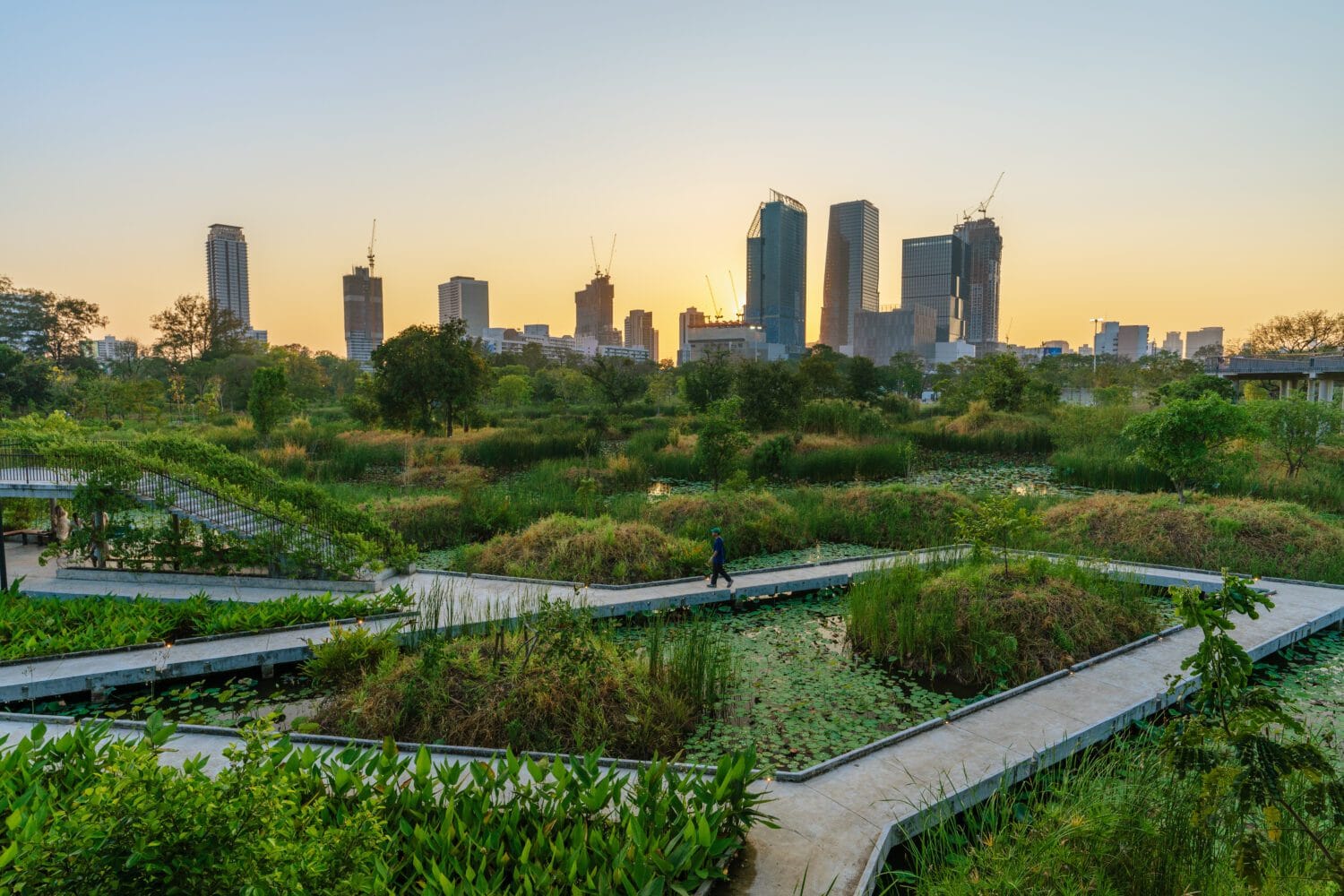
Standing on the new suspended walkway in Benjakitti Park – a kilometre long and overlooking the ponds where lotus flowers bloom and mangroves stretch out their harmless tentacles – one can clearly sense Bangkok’s shift towards sustainability. This green space in the heart of one of Asia’s busiest and most enchanting metropolises is now, in fact, linked to the city’s other green lung, Lumphini Park, via an eight-hectare botanical corridor, where numerous sculptures take centre stage, thus helping to create a natural screen that softens the mass of skyscrapers, dampening noise and odours. Local authorities also highlight the excellent results achieved in urban mobility thanks to the use of artificial intelligence to manage traffic, air-conditioned electric buses and safety regulations imposed on tuk-tuks, the ubiquitous three-wheeled taxis.
The appeal of contemporary art
Contemporary art, too, is acting as a driving force for change. This is demonstrated, for example, by the raw, derelict industrial building of Thai Wattana Panich, a historic printing works in the Chinatown district destroyed by fire in 2001, where Kunsthalle was established – an institution dedicated to art, cinema, music, dance, literature, architecture and many other forms of expression: it is led by the Italian architect Stefano Rabolli Pansera, former founder of the St. Moritz Art Film Festival, and from 14 October will host the exhibition ‘Bright at Midnight’, dedicated to Bas Jan Ader and curated by Leonardo Orion Dal Colle. From there, one could visit the sister venue, the Khao Yai Art Forest, where artists are invited to explore the theme of nature’s healing through site-specific installations (for example, Francesco Arena’s stele ‘God’ or ‘Pilgrimage to Eternity’ by the Thai artist Ubasat). Dib Bangkok, which opened last December, is also of interest as it is the result of the conversion of a warehouse into a venue for contemporary art: the Thai architect Kulapat Yantrasast, who has previously worked on projects at the Louvre and the Metropolitan Museum of Art in New York, designed triangular fins on the roof, a conical tower and a tubular turret, which house immersive works by 40 international and Thai artists, including Lee Bul and Montien Boonma.
Along the river
This process of transformation also extends to private residences on the Chao Phraya River (Lawrence Osborne’s novel *Bangkok* is a must-read), such as the Siri Sala Private Thai Villa, a dazzling property featuring a private jetty for river travel and a flamboyant garden, which was chosen as a location for an episode of the series “White Lotus”. You can venture as far as Thonburi, on the west bank, which was the capital of Siam between 1767 and 1782 and was home to the trading posts of merchants from different ethnic groups, faiths and countries in an atmosphere of coexistence between Buddhists, Christians, Chinese and Muslims, before buying a bunch of flowers or a basket of vegetables at the Pak Klong Talad wholesale market, open 24 hours a day and supplied by traditional long-tail boats. Crossing the Memorial Bridge over the river, you reach Wat Prayurawongsawat Worawihan, the royal temple also known as Tat Rua Lek: this means ‘the enclosed monastery’ because its steel fence replicates the shapes of axes, cannons and spears, whilst the ornate Ordination Hall on the pediment is a fine example of Thai architectural style.
In the Talat neighbourhood
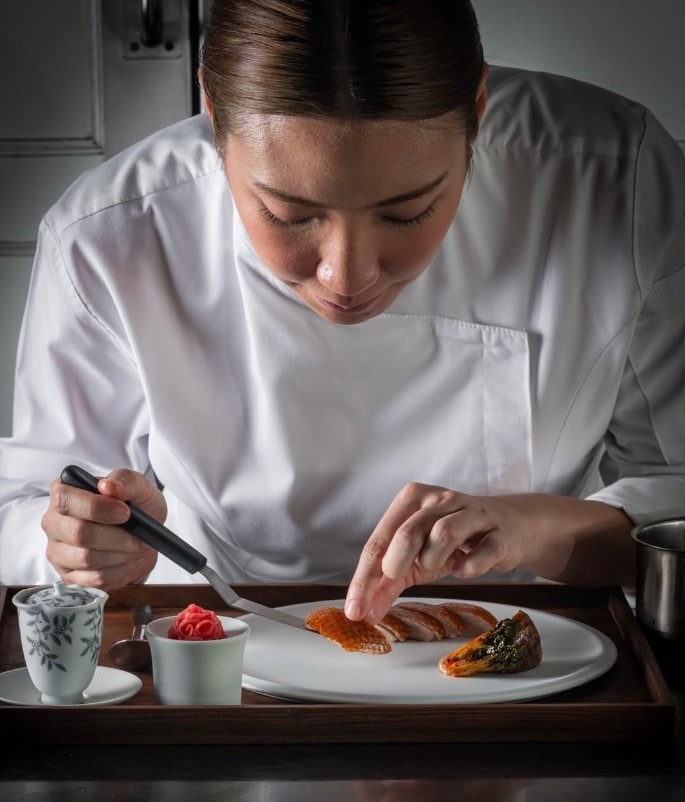
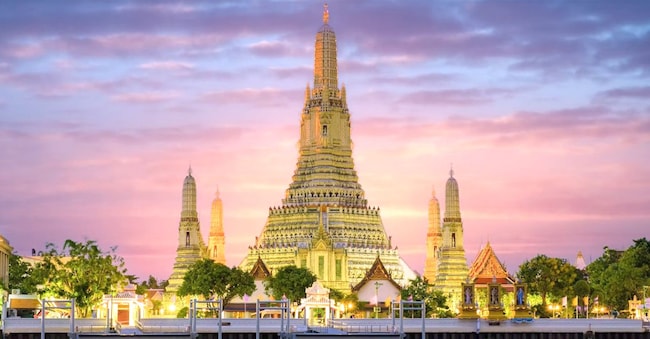
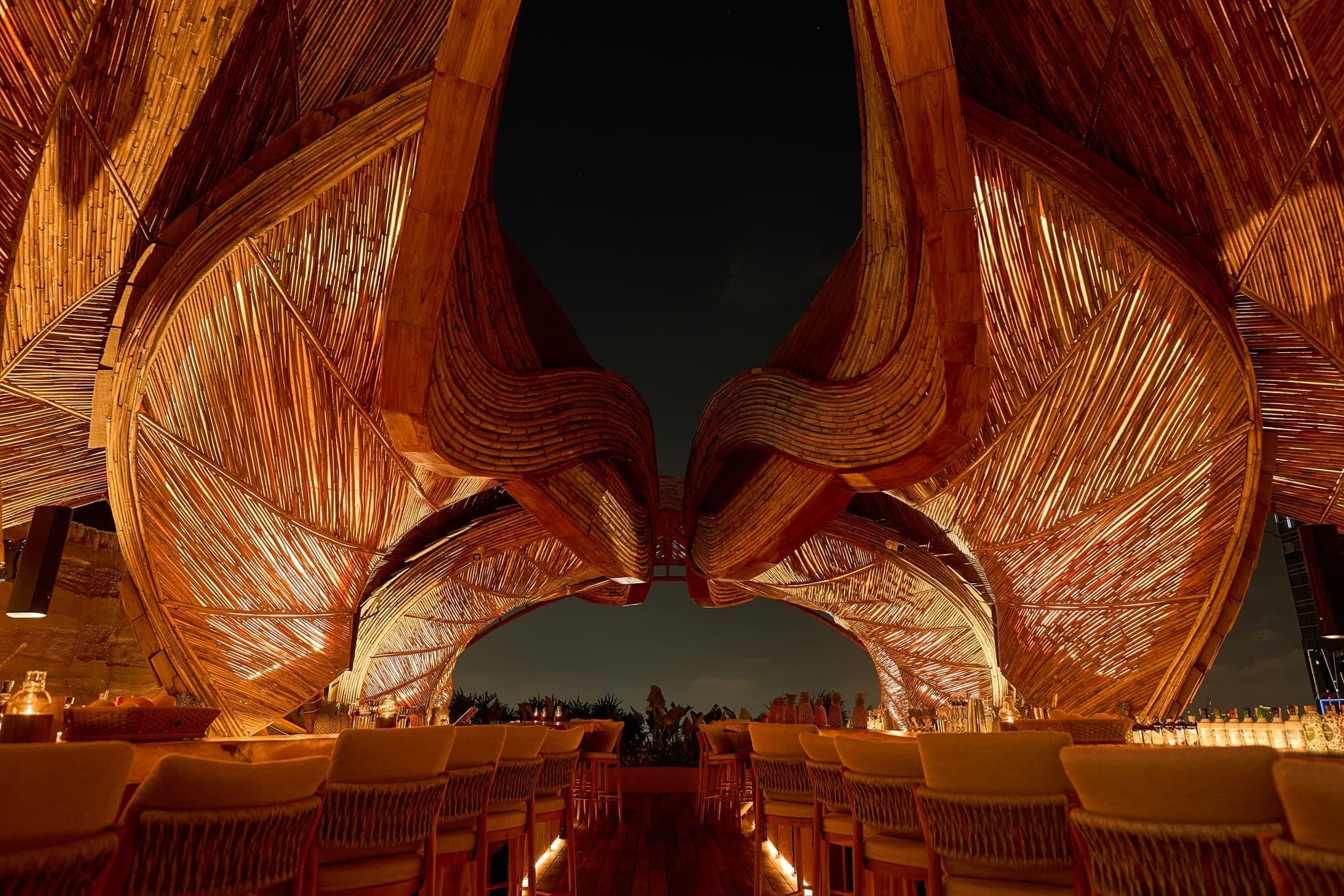
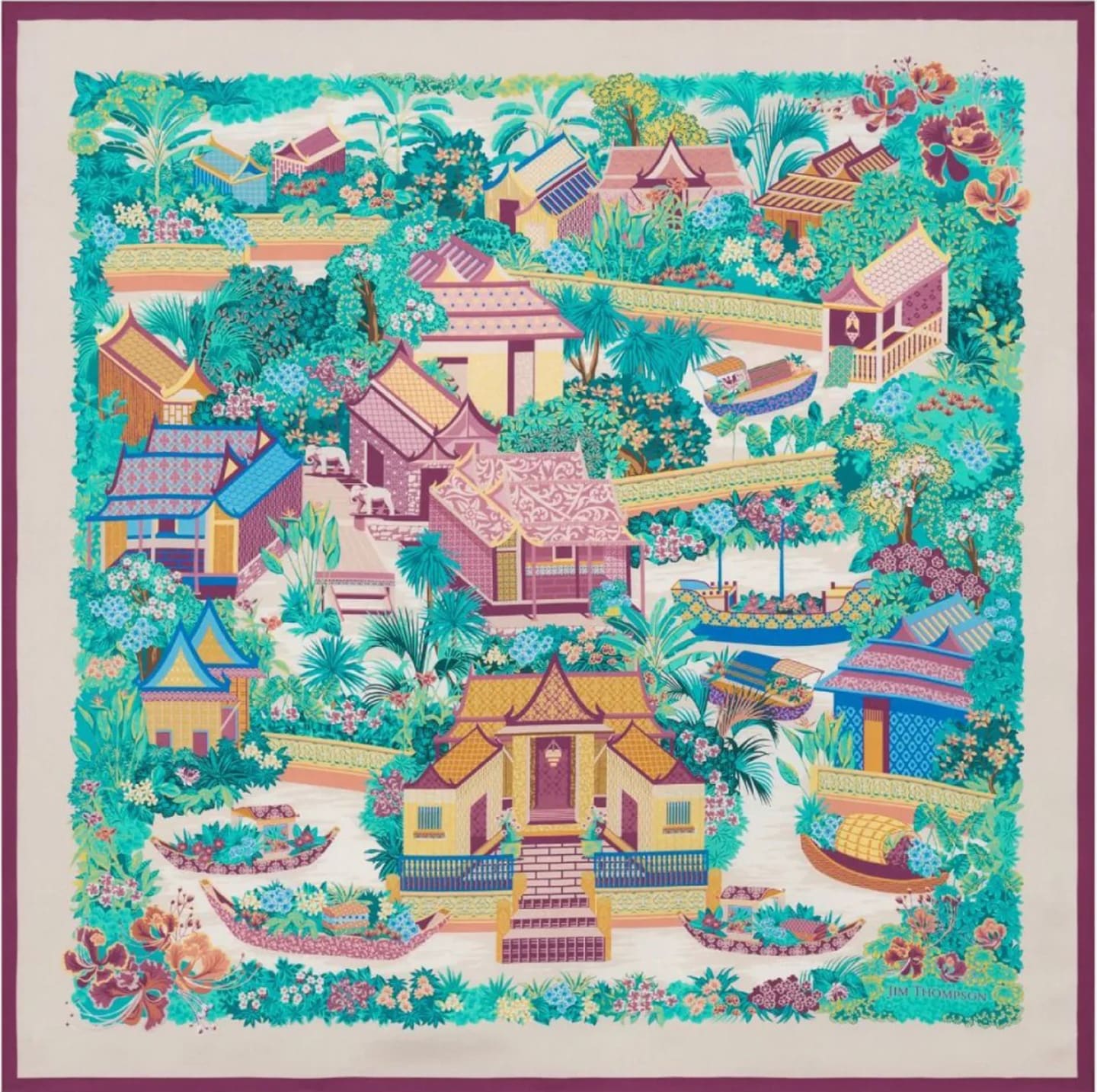
Along the Khlong Saen Saep canal, in the Ratchathewi district, lies the community of Ban Khrua Nuea, in an area inhabited by the Cham people since the reign of King Rama I (1782–1809), the founder of Bangkok. They are renowned for their silk weaving, a craft that the American entrepreneur Jim Thompson helped to revive in the 1950s and 1960s. A trendy place to stay, in the Talat Noi neighbourhood which is teeming with art galleries and designer boutiques, is the Blu Dock Restel Bangkok: from the rooms you can watch the boats set sail, along with the blue and orange tugboats, whilst inside, ceramics and books, wicker statues, pink marble tables and traditional Chinese wooden doors make your stay the very essence of a cultural melting pot. The dining experience at the Michelin-starred Potong, in the heart of Chinatown – the realm of chef Pichaya Soontornyanakij, whom *The World’s 50 Best Restaurants* named the world’s best female chef in 2025 – is also extraordinary; not far away, has also created Khao San Sek, in a setting where street art and mirrored mosaics come together: here, the most renowned dish is slow-cooked fatty beef on toasted brioche bread with spicy satay sauce. At Sakkwa, meanwhile, chef Worathon Tae Udomchalothorn flavours the fish with citrus and serves a captivating yellow curry with cashews, chicken wings and banana slices: it is situated on the fourth floor of a seemingly unremarkable building in the Talat Noi neighbourhood, but inside you’ll be surprised to find yourself in a sort of refined art gallery, where jazz music plays. Later, it’s time for a cocktail with panoramic views at Sanctuary, situated on the 34th floor of a skyscraper overlooking Sukhumvit Road, the city’s ‘Broadway’: whilst savouring a River Prawn Butter – made with an extract of river prawn shells infused with cognac and St. Germain liqueur – it feels as though you’re in a wooden cathedral suspended in the sparkling sky. Then, bid farewell to Bangkok against the backdrop of the pagodas of Wat Arun Ratchawararam Ratchawaramahawihan, illuminated as if in a fairy tale.