
Sustainability, digitisation and flexibility will drive fleet management
Between decarbonisation, taxation and new technologies, the sector must rethink strategies and tools

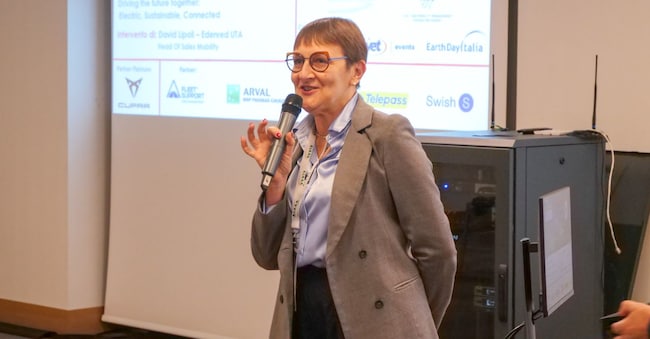
Two hot topics as the main scope and many related thorny issues as a side dish. Company fleets are coming to terms with the path to decarbonisation, which the European Commission has repeatedly emphasised is strategic for the spread of Bev (fully electric vehicles). But there is also the issue of fringe benefits, which does not fail to cause discussion, without forgetting digitalisation and telematics. To take stock, Aiaga, the main Italian fleet managers' association, met in Milan for the event 'Let's turn on the engines - Fleet or non-fleet, the mobility dilemma', bringing together the leading players in the sector to talk about taxation, sustainability, innovation and strategies. A Shakespearean question that is not so exaggerated when one considers the challenges the sector is facing.
"In 2026 corporate mobility will evolve along three lines: sustainability, digitalisation and flexibility of use," explains Laura Echino, president of Aiaga. "Fleets will face a more concrete energy transition, with a focus on the mix of electric, hybrid and thermal efficient vehicles. Choices will be based on data and operational analyses of mission, infrastructure, and overall costs, while also carefully considering the fiscal impact, which continues to penalise corporate fleets'. The use of integrated digital tools to collect and correlate mileage, consumption and maintenance data will grow, with the aim of moving from administrative management to a more strategic and predictive vision.
"Mobility as a service will continue to evolve gradually," says Echino, "Car sharing, pooling or subscription solutions will find their place in specific contexts, but large-scale deployment will still take time. 2026 will therefore be a consolidation stage in a gradual path that will require investment, expertise and realism'.
Meanwhile, rental is growing: long-term rental alone represents a fleet of more than 1.3 million vehicles that cover 27 billion kilometres per year, under contracts that are becoming increasingly long (80% go beyond 36 months). The fleet issue is naturally linked to the broader issue of mobility management and strategies to make employees' home-work journeys more efficient.
There is therefore an increased focus on the 'ninth hour', the hour dedicated to daily commuting. "We know that the focus is not so much on logistics as on people's time, who generally consider commuting time the least pleasant time of the entire day," says Paolo Barbato, CEO of Wiseair, a company that offers dedicated solutions. Here then emerges the importance of increasing efficiency while reducing environmental impact, as in the case of Green Mobility Platform, which assists in the management of vehicle mobility, with particular attention to CO2 emissions.

