We learn from our mistakes

Sustainable communication and digital from an environmental perspective

A conversation with Andrea Melis, poet

4' min read

4' min read

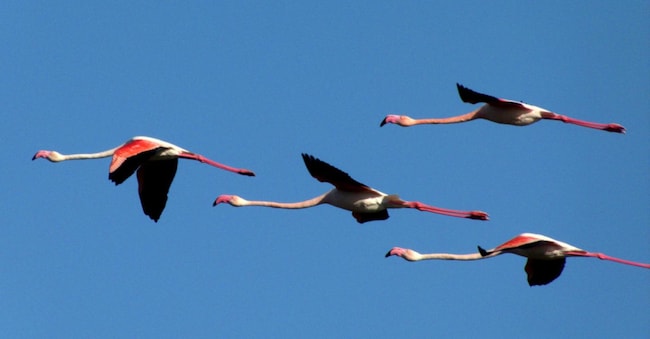
Italy, 2020. While dolphins surfaced in Venice's Grand Canal and flamingos strolled in the centre of Cagliari, humanity suddenly poured into digital. Resigned to enforced seclusion, we discovered dad and smart working, videocalls and Instagram feeds, Spid and digital aperitifs on WhatsApp. Through the window we were witnessing the miracle of a nature that, without us, without cars and planes, with closed businesses, could finally breathe again.

Prodigious beauty or mirage?

Loading...

Who to ask for an answer: the AI algorithm or the heart of a poet?

Maybe I'm wrong, but when it comes to imagining the future I think only poets can answer. Sure, AI collects billions of things that have already passed, 'regenerates' them, projects them, but can it boast a 'vision' for my (and our) after tomorrow?

I choose a poet, then. A Sardinian, moreover, because one can see horizons better from an island, and because his poetising goes hand in hand with being a web pioneer, in a millenary land that was, at the dawn of the internet, Italy's Silicon Valley.

Then: dolphins and flamingos. What do you think?

A breathtaking spell from which we would not wish to awaken.

In those months, in fact, worldwide Internet traffic silently exploded to the extent that some famous streaming platforms were forced to reduce video quality so that the entire web infrastructure would not collapse.

And we, without knowing, without seeing, without hearing, as if the internet was a silent forest growing far from our eyes, have contributed to the leap forward of the greatest environmental danger humanity has ever had to face: the digital.

If the internet were a state, it would be the fourth most polluting nation in the world, after China, the United States and India, and the third in terms of energy consumption. Back in 2018, it was estimated that of the 51 billion Co2 produced that year by mankind, almost 4 per cent was attributable to the web, i.e. double the emissions of all air flights in the world. Streaming videos alone produced 300 million tonnes of Co2 , as much as the emissions of Spain. Since the pandemic, these numbers have further increased in not mathematical but geometric progression.

Are you telling me that hybrid work and the explosion of digital activities in the pandemic context have aggravated the picture?

I say the numbers are staggering: last year, every minute, the 8 billion humans that crowd the planet shared 1.7 million pieces of content on Facebook, watched 43 years of streaming video, shared 700 thousand Reels on Instagram, sent 360 thousand tweets on X. To repeat: every sixty seconds we sent 241 million emails, 41 million whatsapp messages, ordered almost half a million dollars on Amazon, dialogued with ChatGpt's artificial intelligence 7,000 times, and performed 6.3 million Google searches, each of which produced 7 to 15 grams of Co2. These are numbers that have hitherto escaped our attention because they are elusive: difficult even to imagine, yet known for many years. A hit song like Olivia Rodrigo's 'Drivers License' produced as much Co2 as 4000 London to New York flights in one year. South Korean singer Psy's Gangnam Style video, viewed over 2 billion times in one year, alone consumed 297 GWh of electricity, as much as the annual needs of my city, Cagliari. This pachydermic proliferation of data sets in motion a polluting and energy-consuming mechanism that forces us to ask at least two unprecedented questions: can we afford it? Is it worth it?

To compensate for the staggering numbers of such global pollution, 2.4 trillion trees would have to be planted every year, an area equal to 2.5 times the size of Russia. Driven by high-frequency financial transactions, the advent of 5G and Artificial Intelligence, cryptocurrency mining, and the cyber war for technological dominance (but also by the unseemly mountains of selfies with feet in the sea, and funny videos of kittens produced by ordinary users) by 2040, the digital industry's Co2 emissions will increase by 775%, from 1.6% of total emissions in 2017 to 14%. The magic number is perfect because the trick is not visible: every minute the 102 Mb of data each of us produces travels around the earth in 30 milliseconds, ten times faster than the blink of an eye. Giving an illusory sense of lightness, immediacy and effortlessness to our daily clicks.

What can the individual mouse-user do to mitigate the damage of this huge mountain that is about to collapse?

Little is enough. And as a poet I have great respect for little because it is the measure that separates us from too much and the superfluous. For example, we can all:

- Switch off cameras during meetings and video calls, reducing consumption and pollution by 95%.

- Send only essential e-mails, delete old e-mails regularly, unsubscribe from thousands of useless advertising newsletters, block harmful spam.

- Avoid unnecessary use of Artificial Intelligence programmes: each interaction consumes half a litre of water as the cooling of data centres and new virtual super brains is estimated to consume over 600 billion litres of water per year.

- Give preference to text messages over voice messages. This also makes communication more effective and concise, allows information to be retrieved with a text search, and saves recipients from voice ramblings that in length defy podcasts or audio books.

- Compress the size of documents (zip, as in the old days) when sending them to reduce data. Use links to files instead of attachments if possible. However, make local downloads of everything we will need for future reference.

- Avoid 'Reply to all' when unnecessary in e-mails. Reducing our activity by as little as 20 e-mails a day will save the planet an annual pollution equal to 1000 km travelled by car.

These attentions can also make us aware of the digital din in which we are immersed, and thus improve people's attention spans and the organisational quality of lives.

Aspects that other Newton colleagues will soon write about.

* Partner of Newton Spa

Copyright reserved ©

Brand connect

Loading...

Newsletter

Notizie e approfondimenti sugli avvenimenti politici, economici e finanziari.

Iscriviti