
Sustainable cashmere, the most ambitious project in Italia
For years, entrepreneur Francesco Saldarini has been working with Mongolia on a supply chain that protects shepherds, animals and the environment: 'Igp certification from Europe is on the way, but we also need the support of companies'

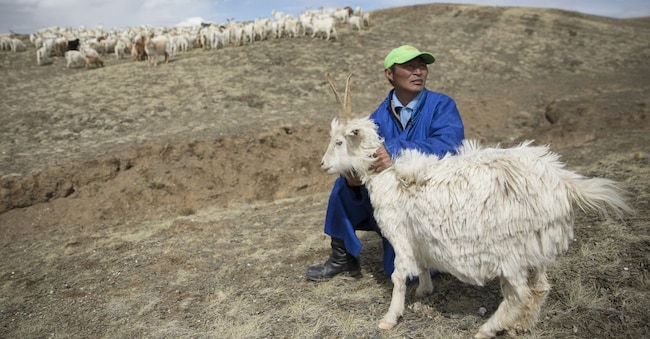
Since it evolved into a 'democratic' fibre, also widely used by fast fashion, cashmere production in Mongolia has increased exponentially: in 2025, the country, the world's leading producer with a 40% share, exported around USD 700 million worth of cashmere, an increase of almost 28% compared to 2024. And it is expected to grow further. The same positive trend, unfortunately, has not affected the breeders of the hircus, the goats from which the precious fibre is obtained, who are struggling with low remuneration, climate change damage on the ecosystem and animals, and the lack of a proximity chain that can add value to their product.
It comes from Italia, the first importer after China, an important and ambitious project that aims to improve the living conditions of shepherds, to make the supply chain fairer and more traceable, and to enhance Italian textile know-how. It is called 'Sustainable Cashmere of Mongolia PGI' and it is promoted, for years and with passion, by Francesco Saldarini, a member of the fifth generation of a historic textile company from Como (Saldarini 1882), who arrived in Mongolia thanks to his patented Cashmere Flakes, a cashmere fibre padding alternative to feathers, a success that brought him closer to the world, and to the problems, of nomadic shepherds.

After years of contacts and collaboration with the 'Mongolian National Federation of Pasture User Groups', the Mongolian Wool & Cashmere Association and the country's government, the 'Responsible Nomads' specification has been finalised, certifying the sustainable production of cashmere for the environment, animals and breeders using blockchain. The next step will be to obtain IGP certification for the Mongolian fibre from the European Commission, a path that has encountered several bureaucratic obstacles but that now seems to have finally come to fruition: 'It is a world first for fashion, because it is a public certification, not managed by private bodies and large groups in the sector, and therefore with transparency for end consumers and much stricter and more effective restrictions and controls,' says Saldarini. Once it has been obtained, the second phase of the project can begin, the creation of a national consortium production and logistics pole for cashmere, from washing to spinning: 'In Mongolia, textile machinery is obsolete,' he continues. The production hub that we plan to set up, with an investment of about 60 million, with the intervention also of Cdp and Sace, and we hope with the entry of Italian luxury companies, will bring there the excellence of national textile machinery, which is also more energy efficient, with many advantages for our own industry'.
Direct cashmere exports will then become the main item of trade with Europe, potentially tripling Mongolia's textile GDP: 'Today, the cashmere trade is largely managed by Chinese companies, with which companies all over the world have to contend. By buying directly from the breeders and managing the supply chain, we will shorten times and be able to guarantee Italian buyers a source of supply and breeders certain, transparent and adequately remunerated trade relations'.


