
Sustainable reporting, the paper sector is the most active in the world
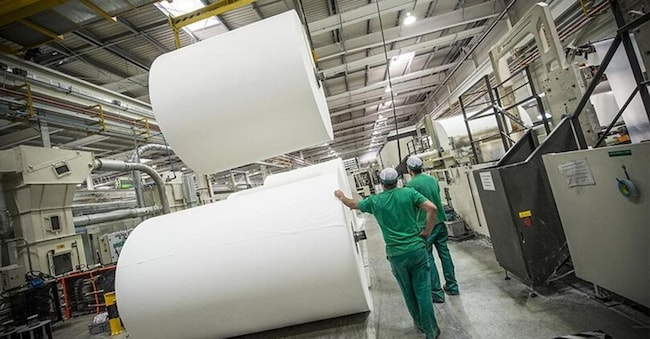
According to the Kpmg study, among the top 100 companies worldwide, it is the segment with the highest percentage (89%) of reporting. This is followed by cars and utilities

3' min read
3' min read
Sustainability reporting is now an established practice for large international companies. This is the finding of the latest edition of Kpmg's biennial Sustainability Report, which analyses the sustainability documentation of 5,800 companies in 58 countries and jurisdictions. The research offers a comprehensive analysis of the current progress in sustainability reporting of the world's largest companies and includes data on the world's top 100 companies (N100) for the individual countries analysed and the world's top 250 companies by revenue (G250). For the latter, reporting on ESG and sustainability is an activity in which 96% of the sample is engaged, the same figure as in 2020 and 2022. Nine of the 11 cases where no reporting is done involve Chinese companies, the other two Indonesia and Russia. Among the N100, on the other hand, 79% report on sustainability, the same as two years ago.The forestry and paper sector is the most active on the reporting front for the N100 (89%), followed by automotive (86%) and utilities (85%). Healthcare companies are the least inclined, with 67% of the N100 groups doing this type of reporting.
Objectives and remuneration of managers
"Sustainability reporting," comments Lorenzo Solimene, partner Kpmg Advisory Sustainable Transformation, "is of interest to a growing number of companies, even in emerging countries. In the last two years, the figures have not changed significantly because companies are now aware that the sustainability balance sheet and report are no longer just distinctive elements but are steps required by the market, driven by regulations, including local ones, and by the new needs of customers and the supply chain, which increasingly demand transparency and responsibility from suppliers. Significant growth in the number of companies that have chosen to link top management remuneration to sustainability objectives, 41% of Global Fortune 250 companies. Disclosure of CO2-related indicators and the setting of decarbonisation targets are also increasing, both in the largest companies and in the N100.
According to the analysis, 95 per cent of the world's top 250 companies by turnover already publish carbon reduction targets, while 56 per cent have a sustainability manager. Almost a third of the top 100 companies consider sustainability in their management remuneration systems.
The six trends in action
.The Kpmg survey highlights six main trends in sustainability reporting that are emerging internationally.
The first concerns the reporting activities themselves and the setting of carbon reduction targets, which are becoming established as an integral part of corporate activities. In addition, some companies have already changed their reporting practices in preparation for the transition to mandatory sustainability reporting under the EU Corporate Sustainability Reporting Directive (CSRD). The directive, for the first year, will apply to an initial group of companies for reporting on financial years ending 31 December 2024, but will be extended to other companies falling within the scope of the directive until 2029. Almost half of the European companies in research have already reported on the indicators required by the EU Taxonomy. Italy is among the countries with the highest levels of N100 companies that refer to this tool (61 per cent). The third trend concerns the double relevance (society and environment) required by the CSRD, already used by half of the largest G250 companies.

