The report

Sustainable tourism, a value-seeking network in Palermo

The Study and Evaluation Centre of NeXt Economia analysed the activities and prospects of four historical associations: Addiopizzo Travel, Palma Nana, Rigenerazioni Onlus, Capaci No Mafia

by Nino Amadore
3' min read

Translated by AI
Versione italiana

3' min read

Translated by AI
Versione italiana

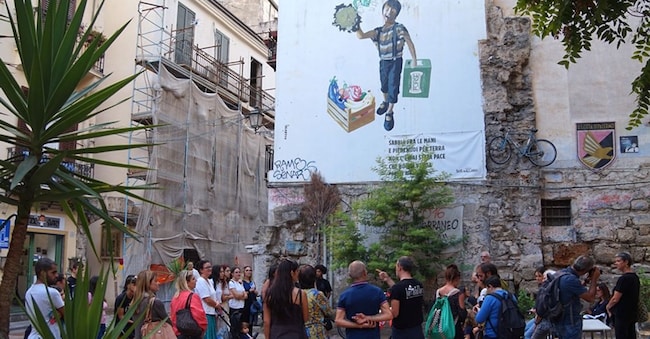
In Palermo, sustainable tourism is born in smaller and less visible realities, often rooted in the city's symbolic neighbourhoods and territories: Addiopizzo Travel, Palma Nana, Rigenerazioni Onlus, Capaci No Mafia. Organisations with different missions and histories, united by a precise choice: to network.

Not to add up offers or presences, but to try to influence the city's tourism development model, linking the visitor experience to themes such as inclusion, civil memory, work and urban regeneration. It is from this path that the network for sustainable and inclusive tourism in Palermo takes shape, analysed by the NeXt Economia Study and Evaluation Centre through the Civil Impact - Network® model.

Loading...

The report does not measure turnover or immediate economic returns. It measures what comes first: the ability to generate value. And it does so starting with the people involved in the processes, rather than short-term results.

The network effect

The most relevant data concerns generativity: the capacity of organisations to activate skills, relationships, participation and opportunities. It is here that a key element for the economic interpretation of the phenomenon emerges: more than two-thirds of the impact on people's generativity does not depend on individual realities, but on the network effect. In other words, it is the cooperation between different actors that produces the most significant added value.

This data helps to read the concrete stories behind the network. Realities which, taken individually, would have had a limited range of action, but which together manage to share planning, training, institutional relations and communication skills. These are not traditional economies of scale, but relational economies, where value arises from trust and complementarity.

The same dynamic emerges on the organisational level. The ESG performance of the organisations involved shows solid results especially in the social and governance dimensions. Again, the most interesting fact is not so much the absolute score as the fact that a significant share of the overall performance is directly attributable to being in a network, a sign of a maturity that goes beyond individual experiences.

Future challenges

The research also identifies future challenges. The network works very well on the level of informal relations, but could make an even greater impact if it became more structured, for example through a shared legal form such as a community cooperative. This would strengthen the governance, representative capacity and overall economic weight of the project.

Another key area concerns social finance. Innovative shared financing tools could help organisations to access resources more easily, supporting high social impact projects and strengthening the economic stability of the network. It is in this area that the value produced today risks remaining unrealised: it exists, it is measurable, but it cannot yet be transformed into financial leverage.

"This journey has shown us how valuable it is to work in a network," says Fabrizio Giacalone, president of Palma Nana. "Bringing together the experiences of individual cooperatives has allowed us not only to identify common indicators to measure social impact, but also to strengthen trust in shared work and mutual care. We believe that responsible and regenerative tourism cannot disregard the active involvement of local communities: they are the heart of the choices that guide a tourism capable of generating value, inclusion and respect. Collaboration between different realities is the key to transforming good practices into concrete and lasting change'.

Next steps

The Palermo sustainable tourism network thus recounts an intermediate phase, often little visible in the public debate: that in which value exists and is recognised, but is not yet fully accounted for. Telling about it means shifting attention from the immediate numbers to the processes that make them possible.

Because value always comes first. But it is on the ability to structure it that the possibility of transforming it into lasting economic development depends.

Copyright reserved ©
Loading...

Brand connect

Loading...

Newsletter

Notizie e approfondimenti sugli avvenimenti politici, economici e finanziari.

Iscriviti