
Svimez, more renewables to boost employment in the South
Achieving the PNIEC targets, with 27 GW of green assets in the Mezzogiorno, would generate 73,000 new jobs by 2030, of which 15,000 under 35, retaining skills and graduates in the area, thanks to the demand for highly qualified professional profiles

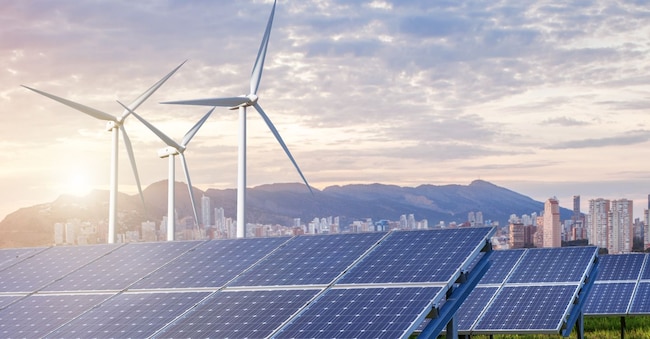
The energy transition represents an unprecedented employment opportunity for Southern Italy. According to the Svimez-A2A study, the achievement of the targets set by the PNIEC (Integrated National Plan for Energy and Climate), particularly on renewables with the realisation of 27 GW over the next five years, would generate about 73 thousand new jobs in Southern Italy by 2030, of which 15 thousand for young people under 35. This process would make it possible to retain skills and graduates in the area, thanks to the strong demand for highly qualified and well-paid professional profiles, finally reversing the exodus of young people towards abroad or the North.
The central role of Southern Italy in the national challenge
The South is no longer just a geographical area to be supported, but is confirming itself as the real engine of Italian employment growth. Between 2021 and 2024, the South has driven the increase in employment at a national level with an increase of 8%, a performance higher than both the Italian average (+6.1%) and that of the Centre-North (+5.4%). Precisely within this framework of dynamism, the role of industrial players such as A2A becomes fundamental in transforming energy potential into social wealth and economic stability.
As emphasised by Director Svimez Luca Bianchi: "The fate of the national energy transition depends on the South: without the South, we will not achieve the decarbonisation targets, but without the transition, the South will lose its opportunity for qualitative development". He was echoed by A2A's Chief Executive Officer Renato Mazzoncini, highlighting the need for strategic concreteness: "To transform the South's potential into reality, we need to accelerate the grounding of mature projects: the transition is not just a climate objective, but a citizenship infrastructure that creates qualified work and shared value in the territories".
Quality of work to stop the exodus
Despite the positive data on employment volumes, the southern labour market presents a structural paradox that risks thwarting the efforts made. Although youth employment has grown by 101,000 and 3 out of 5 new employees in the South are graduates (a percentage higher than 45% in the Centre-North), more than 57% of them are still absorbed by low productivity sectors. Tourism, despite being the leading sector in terms of youth employment, often does not offer career paths suited to high skills. This mismatch fuels an unstoppable exodus: between 2022 and 2024, the average number of young people leaving the Mezzogiorno rose to over 106,000 per year, with an increase in migration of 5.3%. The energy transition stands as the natural solution to this haemorrhaging of talent. By 2024, renewable capacity in the South reached 32.7 GW, up 41% from 2021. However, in order to meet the 2030 targets, a decisive turnaround is needed: 54 additional GW are needed in Italia, of which as many as 27 GW (50% of the total) must be installed in the South. In this scenario, Sicily, Apulia and Sardinia play a pivotal role, being called upon to guarantee 18 GW of new power alone.
Investments and spin-offs: a map of the future
The 'raw material' for this quantum leap already exists. As of August 2025, connection requests at an advanced stage - i.e. projects with clearance or signed contracts - amount to 80 GW nationwide. What is remarkable is that 88% of these requests (or 71 GW) are concentrated in the South, with a predominance of solar (41.3 GW) and wind power plants. The rapid realisation of these plants, overcoming bureaucratic delays, is the key to activating massive investments estimated at 30.5 billion euro for the South alone.


