
Sweden: centre-left leads by three seats, far right loses ground. Government puzzle
According to figures from the electoral authority, with 94 per cent of polling stations counted, the opposition led by the Social Democrats is narrowly ahead of the centre-right bloc led by outgoing Prime Minister Kristersson. We will have to wait until Wednesday for the final results, once the votes cast abroad have been counted.

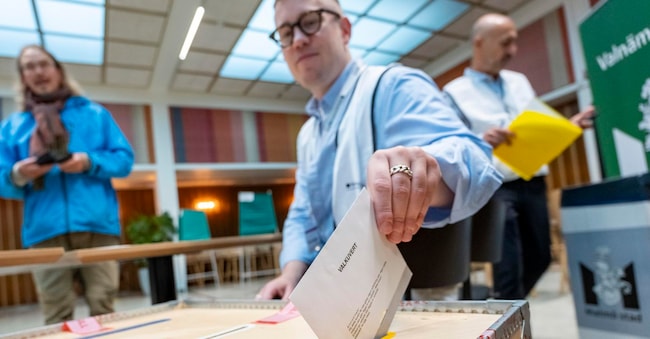
It is a neck-and-neck race, with the centre-left opposition leading by a whisker, making the formation of the next Swedish government a real puzzle, one that will be difficult to solve until all the votes have been counted, including those cast abroad.
The final result is not expected until Wednesday, but the partial results show a slight lead for the centre-left opposition over the right-wing government. According to the electoral authority, the left-wing coalition, led by Social Democratic leader Magdalena Andersson, currently holds 176 of the 349 seats in Parliament, the Riksdag, based on votes cast in 6,195 of Sweden’s 6,312 electoral districts. The ruling right-wing alliance, led by Prime Minister Ulf Kristersson, is currently projected to have 173 seats.
The opposition’s lead is not sufficient to say with certainty whether Sweden will return to its social-democratic roots after four years of right-wing government, even though the opposition leader, Magdalena Andersson, speaking to her supporters late last night, put her heart on the line: ‘We Social Democrats,’ she said, ‘will always be ready to shoulder our responsibilities (...) for the time being, we are in the lead. And if this result is confirmed, then Sweden will have a new government. But,’ she added, ‘all the votes must be counted.’
Among the few figures that appear certain is the decline of the far-right Sweden Democrats, who are set to lose nearly three percentage points compared with 2022 and who may have paid the price for the strong results they achieved during the parliamentary term on their ‘core’ issues, the fight against crime and a crackdown on immigration, which have lost the central role they played in the previous election campaign; Furthermore, some voters may have been put off by the prospect of seeing the party – which has neo-Nazi roots, albeit one that has been gradually normalised under the leadership of Jimmie Åkesson – enter government, following the external support it had provided to the outgoing government. So, whilst the vote was also seen as a sort of referendum on the Sweden Democrats, the polls have delivered this verdict. And the European establishment breathes a sigh of relief.
The results
Looking more closely at the results for the individual parties, the Social Democrats remain the most popular, with 28 per cent of the vote, although they continue to lose support; among the other parties in the centre-left bloc, the Left (8.2 per cent) and the Greens (6.1 per cent) have seen an increase, whilst the Centre Party (7.1 per cent) has remained broadly stable.


